
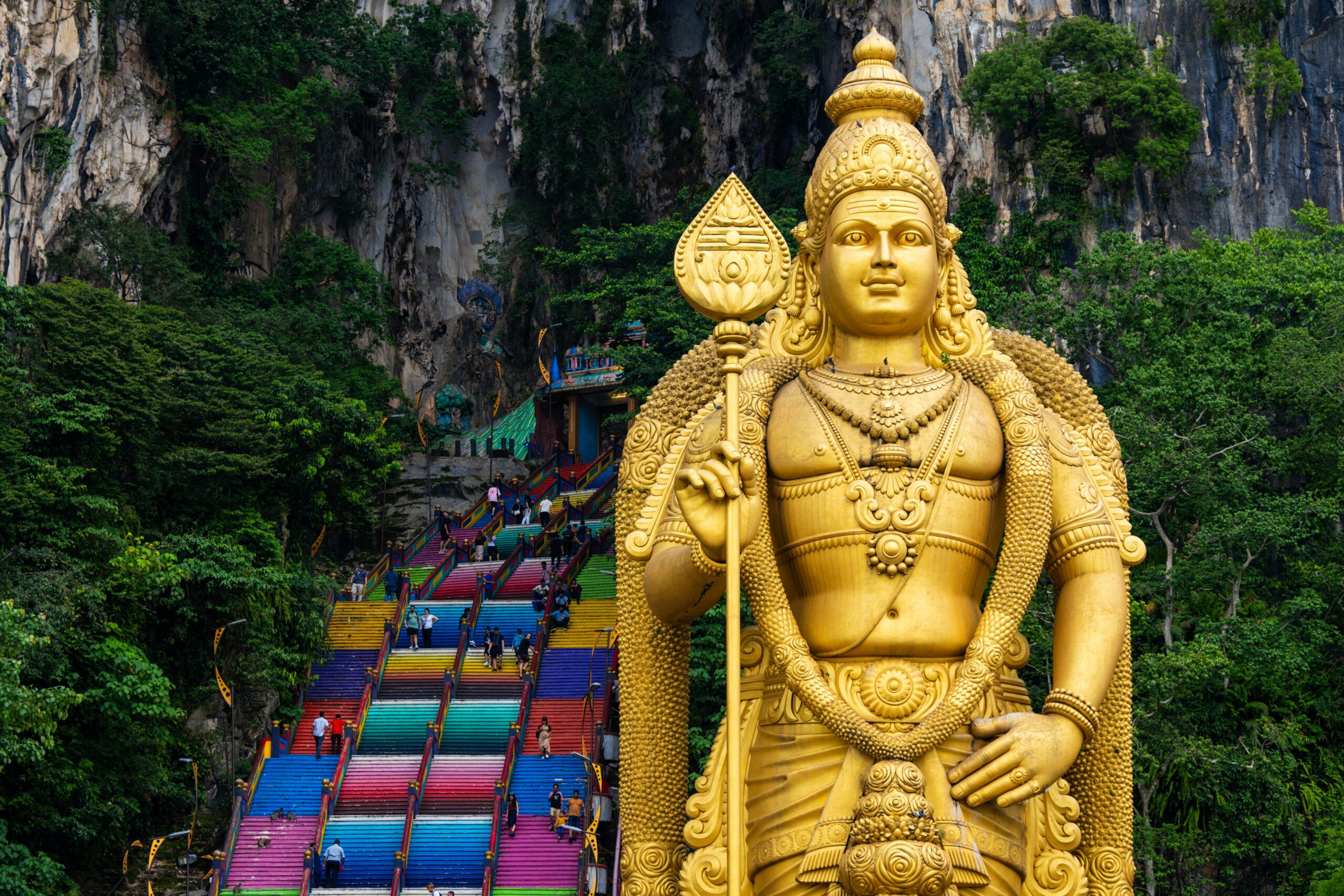
Malaysia is a Southeast Asian country divided between the Malay Peninsula and Borneo. Planning an independent trip to Malaysia means moving from modern, multicultural Kuala Lumpur to tropical beaches, tea plantations and the wildlife-rich jungles of Borneo. The climate is hot and humid almost all year round and, of all the Southeast Asian countries we visited, this was probably the one where we struggled with the heat the most!
One of the most interesting things about Malaysia is its mix of cultures. Malay, Chinese, Indian and Indigenous communities have lived side by side for generations, and this diversity is reflected in the language, food, festivals and architecture. In our opinion, this meeting of cultures is exactly what makes Malaysia so interesting.
Our Malaysia video
Best time to visit Malaysia and Malaysian Borneo
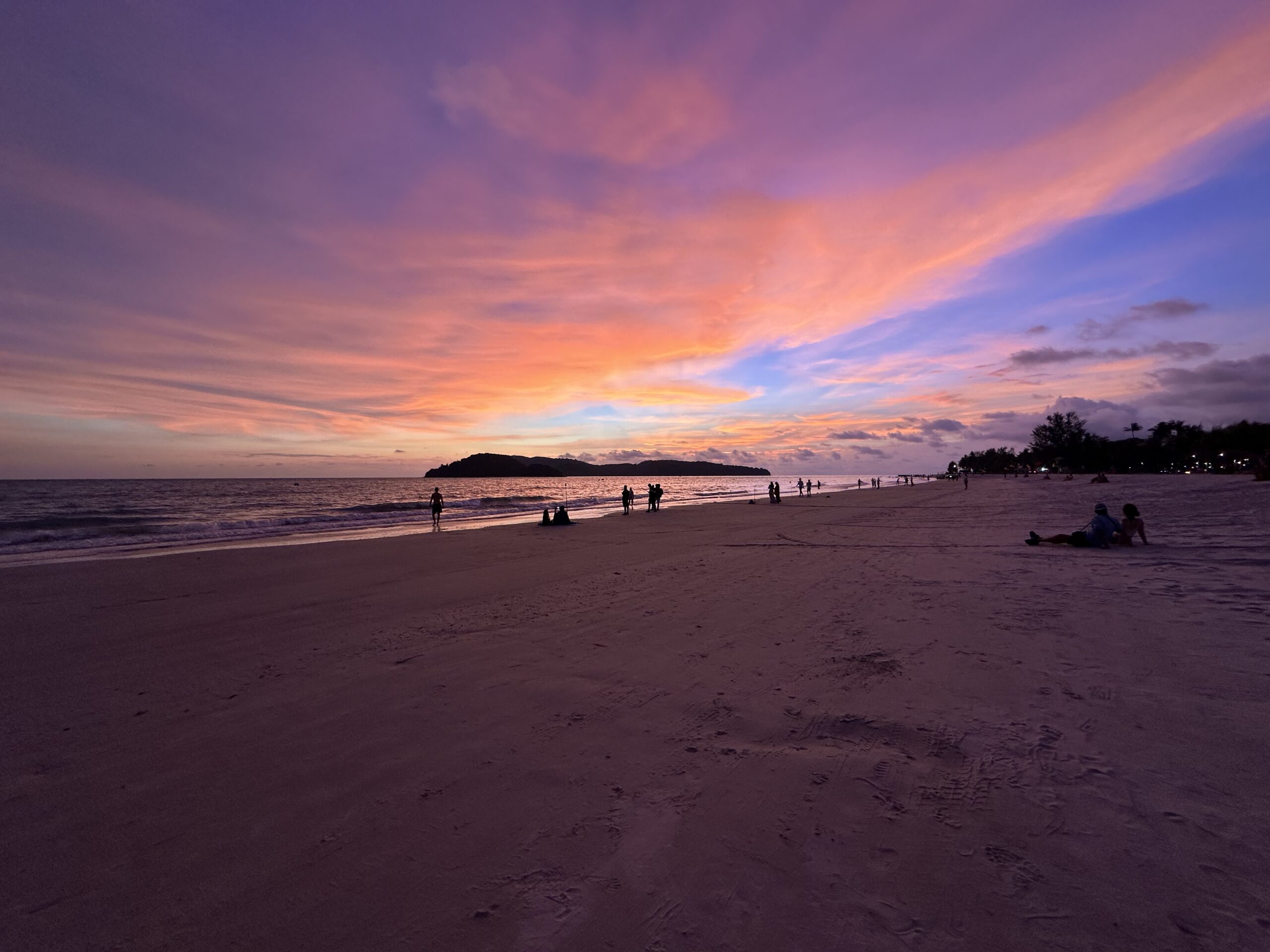
The best time to visit Malaysia depends on the region. The west coast of the peninsula, including Kuala Lumpur, Malacca, Langkawi and Penang, generally has better weather between December and March, when rainfall is less frequent.
In the Cameron Highlands, the higher altitude keeps temperatures cooler throughout the year. It is a great place to escape the heat for a few days. Rain is common in every season, but it tends to be heavier between October and January and again between March and April.
The east coast, home to islands such as Perhentian, Redang and Tioman, is affected by the monsoon between November and February. The sea can be rough during this period and many tourist facilities close, so the best time to visit is generally from April to October.
Malaysian Borneo, divided between the states of Sabah and Sarawak, can be visited all year round. The generally more favourable period is from March to October, when rainfall tends to be less intense and jungle excursions are easier.
Entry requirements for Malaysia and Malaysian Borneo
To enter Malaysia, you need a passport with at least six months of remaining validity from the date of entry. Italian citizens do not need a visa for tourist stays of up to 90 days. You must also complete the Malaysia Digital Arrival Card (MDAC) before entering the country. Registration can be completed online from three days before arrival through the official Malaysian Immigration website.
For vaccinations, we recommend checking the Viaggiare Sicuri website and speaking with your doctor or a travel medicine clinic before departure. This will help you confirm any required or recommended vaccinations for your itinerary.
Immigration checks in Malaysian Borneo
Sabah and Sarawak have their own immigration controls, so when travelling around Malaysian Borneo, always make sure your entry has been recorded correctly.
❗ We are mentioning this because it happened to us personally. If you start your Borneo trip in Sarawak, make sure you go through immigration control. When we arrived, nobody at the airport exit asked where we were going and we did not realise there was an additional check to complete. We only discovered the problem when we reached the border with Brunei, where we were sent back because our entry into Sarawak had not been recorded. In Sabah, by contrast, the process was much more obvious in our experience because we passed directly through immigration on arrival.
Entry requirements and procedures can change over time, so before travelling always check the Italian Foreign Ministry’s Viaggiare Sicuri website or app for the latest information.
How to get around Malaysia and Malaysian Borneo
Bus
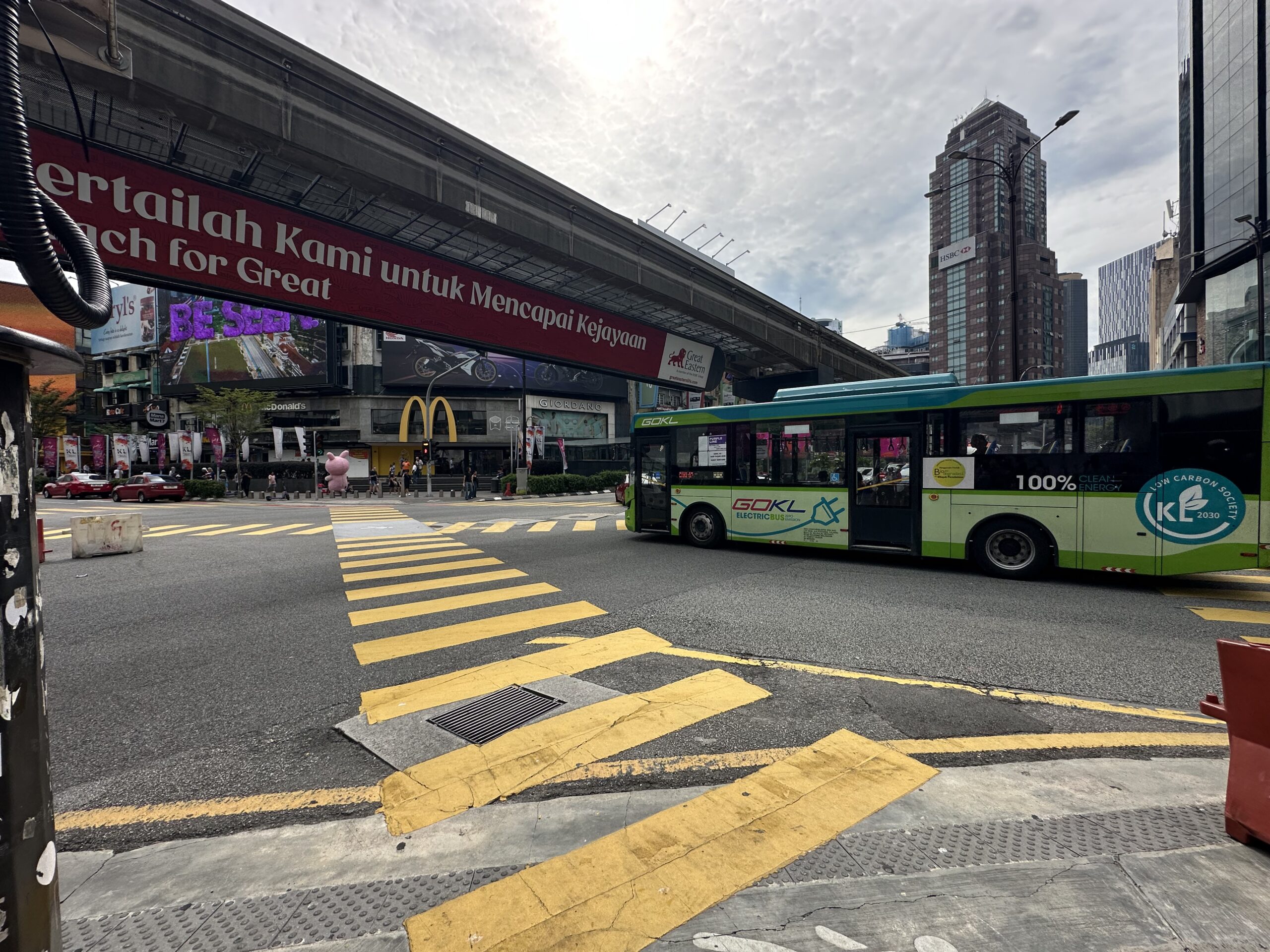
Malaysia’s bus network is efficient, well connected and generally one of the cheapest ways to travel around the country. Numerous companies connect the main cities and tourist destinations. On the most popular routes, we recommend booking one or two days in advance.
We often bought tickets online through redBus Malaysia, one of the main bus-booking platforms in the country. Alternatively, you can buy tickets directly at the stations. We often found them slightly cheaper there than online.
Train
In Malaysia, trains are a good alternative to buses, especially along the west coast of the peninsula. The rail network is operated by KTM (Keretapi Tanah Melayu). It does not reach every part of the country, but it connects several major cities well.
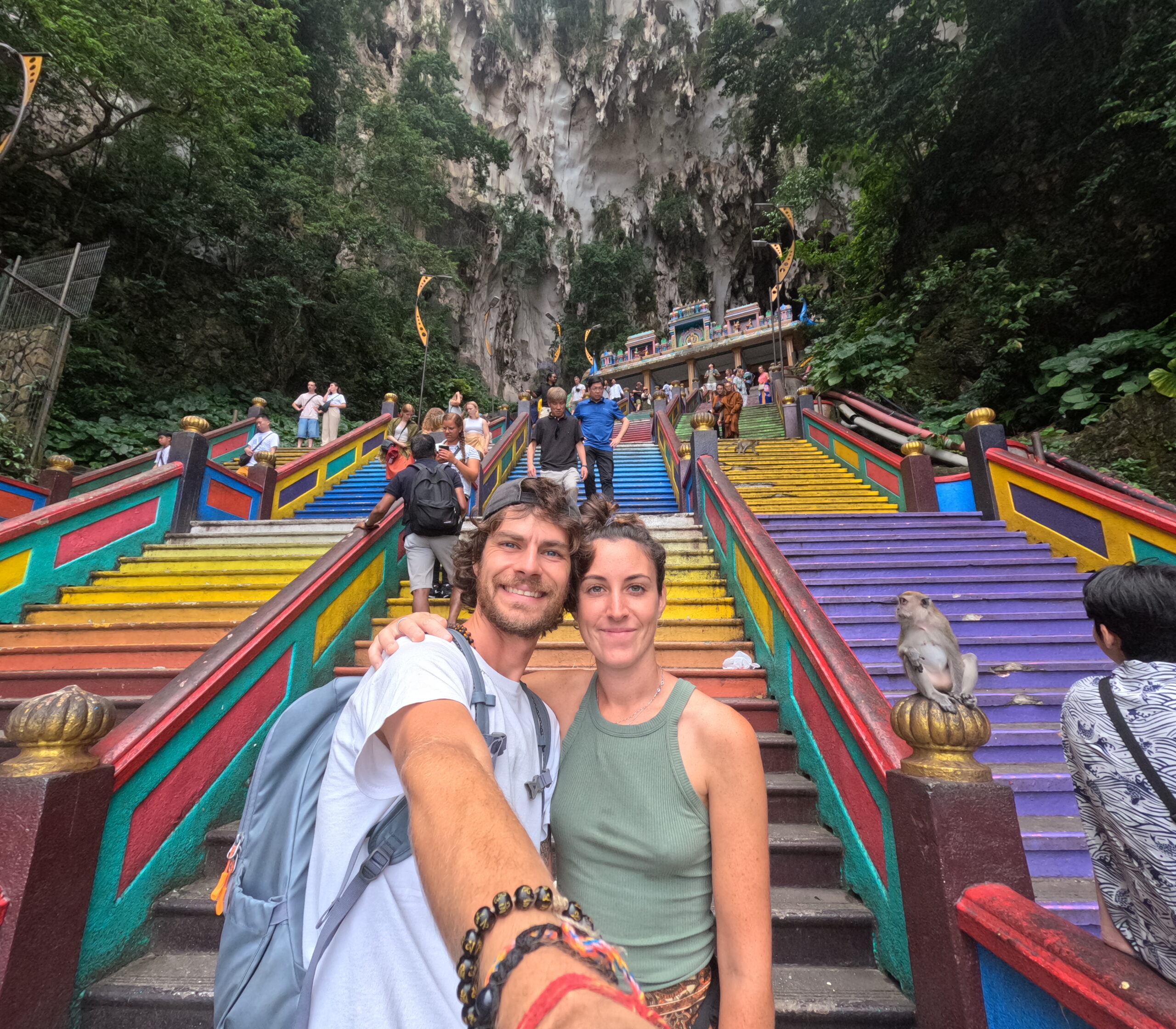
The fastest and most modern trains are the ETS (Electric Train Service). They connect Kuala Lumpur with cities such as Ipoh and Butterworth, the main gateway to Penang, and continue as far as Padang Besar on the Thai border. Around Kuala Lumpur, you can use the KTM Komuter, which is convenient for places such as the Batu Caves. In areas with limited rail coverage, buses are generally the easiest alternative.
Tickets can be purchased online through the official KTMB website or via the app. We recommend booking in advance at weekends and during public holidays, especially on popular routes.
Jungle Train
The Jungle Train is the common name for the railway line that crosses the interior of Peninsular Malaysia through small villages, rural areas and stretches of forest. The main service is the Ekspres Rakyat Timuran, a long-distance train connecting Johor Bahru with Tumpat in the north-east, also passing through Gemas. It is not a tourist train. It is mainly used by local people, which makes it a different way to cross Malaysia away from the most travelled routes. The journey is long and part of it takes place overnight.
Tickets can be purchased online through the official KTMB railway website. If you want to try this journey, we recommend booking a little in advance, especially if you need to travel on a specific date.
Flights
We used flights only for travelling around Malaysian Borneo, where long distances and limited overland connections can make journeys very time-consuming. Domestic flights in Malaysia can be quite affordable, especially with AirAsia, an airline we used many times during our year in Asia. It is also worth comparing fares with Malaysia Airlines, the national carrier.
To reach some of Borneo’s more remote destinations, such as Gunung Mulu National Park, you can use AirBorneo. This regional airline took over the operations previously run by MASwings in 2026.
Taxi
When public transport is not practical, Grab is one of the most convenient options. It is widely available in Malaysia and, in our experience, efficient and inexpensive compared with traditional taxis. If you use a taxi instead, always agree on the price before getting in, especially when the meter is not being used. This helps avoid unpleasant discussions at the end of the journey.
Payments and internet
As in many Southeast Asian countries, cash is still very useful in Malaysia, especially at markets, small restaurants and local businesses. Cards and electronic payments are widely accepted in hotels, shopping centres, supermarkets and larger restaurants.
ATMs are easy to find, and any withdrawal fees depend on the local bank and the card you use. In this article, we share the cards we use when travelling and some tips for reducing withdrawal costs abroad.
For SIM cards and internet, Malaysia was one of the best-value countries of our trip around Asia. We bought two SIM cards from one of the small shops near Malacca station and chose CelcomDigi. We paid 39 MYR for a high-speed unlimited-data plan, plus 10 MYR for the physical SIM. At the exchange rate at the time, the total was around €19 for two SIM cards. Coverage was excellent, including during our trip around Malaysian Borneo.
In our guide to SIM vs eSIM for travel, we compare the options we have used abroad.
Overall, Malaysia was also one of the countries where we found the best mobile data and Wi-Fi during our trip around Asia.
What to see in Malaysia and Malaysian Borneo
Malaysia is divided into two very different regions: Peninsular Malaysia, connected to mainland Asia, and Malaysian Borneo, which occupies part of the island of Borneo together with Indonesia and the small Sultanate of Brunei. They also offer very different travel experiences. On the peninsula, you will find large cities, temples, tea plantations and tropical islands. Borneo is more about nature, rainforest, wildlife and Indigenous cultures.
To keep this guide from becoming endless, we have divided what to see in Malaysia into separate articles. Choose the area that interests you to see our itinerary and all the stops.
Peninsular Malaysia
Peninsular Malaysia offers a wide variety of things to do and see. You can move from modern Kuala Lumpur to the tea plantations of the Cameron Highlands, the rainforest of Taman Negara and the culture and food of Penang. There are also tropical beaches and islands, including Langkawi and the Perhentians.
We had also planned to spend a few days on the Perhentian Islands, with our transfer and hostel already booked. Unfortunately, I got sick in the Cameron Highlands and we had to change our plans completely, losing the bookings we had already paid for. Next time!
Malaysian Borneo
Malaysian Borneo, divided between Sarawak and Sabah, is the place to go if you are mainly looking for nature and wildlife. Rainforests, caves, trekking and river safaris give you the chance to see orangutans, proboscis monkeys, hornbills and, with a little luck, Bornean pygmy elephants.
Cost of travelling in Malaysia and Malaysian Borneo
Malaysia is a fairly inexpensive destination for independent travel. For a trip of a few weeks, your international flight will probably be the biggest single expense.
Once you arrive, it is possible to travel on a relatively small budget. We averaged around €20–25 per person per day, staying in guesthouses and budget accommodation and eating mainly at local restaurants and markets. Transport is also very affordable: buses, public transport and Grab make it easy to get around without adding too much to your daily costs.
In Malaysian Borneo, everyday costs remain fairly low, but some experiences can increase your budget. Wildlife tours, boats, guides and private transfers to remote areas naturally cost more. Solo travel can also be more expensive, while couples and groups can split many private costs. For example, our three-day Kinabatangan River tour cost around €120 per person.
For payments, cards are widely accepted in cities. At markets, small restaurants and in more remote areas, it is still a good idea to carry cash.
Overall, €20–25 per person per day is a useful reference for budget travel in Malaysia, excluding international flights and the more expensive excursions. Malaysian Borneo can also be visited without spending a fortune. The biggest difference comes from the activities you choose and how many people can share any private costs.
Safety and cleanliness in Malaysia and Malaysian Borneo
During our trip, we always felt safe, both in Peninsular Malaysia and Malaysian Borneo. As usual, normal precautions are sensible, especially in cities and crowded places. Personally, we never experienced any unpleasant situations or felt particularly unsafe.
As for cleanliness, we did not encounter anything unusual worth mentioning. Cities and tourist destinations were generally well maintained, as were the accommodation and transport we used. Of course, conditions vary from place to place, but overall Malaysia felt fairly clean and organised to us.
Malaysia and Malaysian Borneo itineraries
Below you will find a possible two-week Malaysia itinerary, designed to cover some of the main stops without squeezing too many transfers into a few days. Use it as a starting point and adapt it to your interests and, above all, the time of year you are travelling.
If you have more time, even better: instead of giving you almost identical three- and four-week itineraries, we simply suggest which extra stops to add and where it is worth staying a little longer.
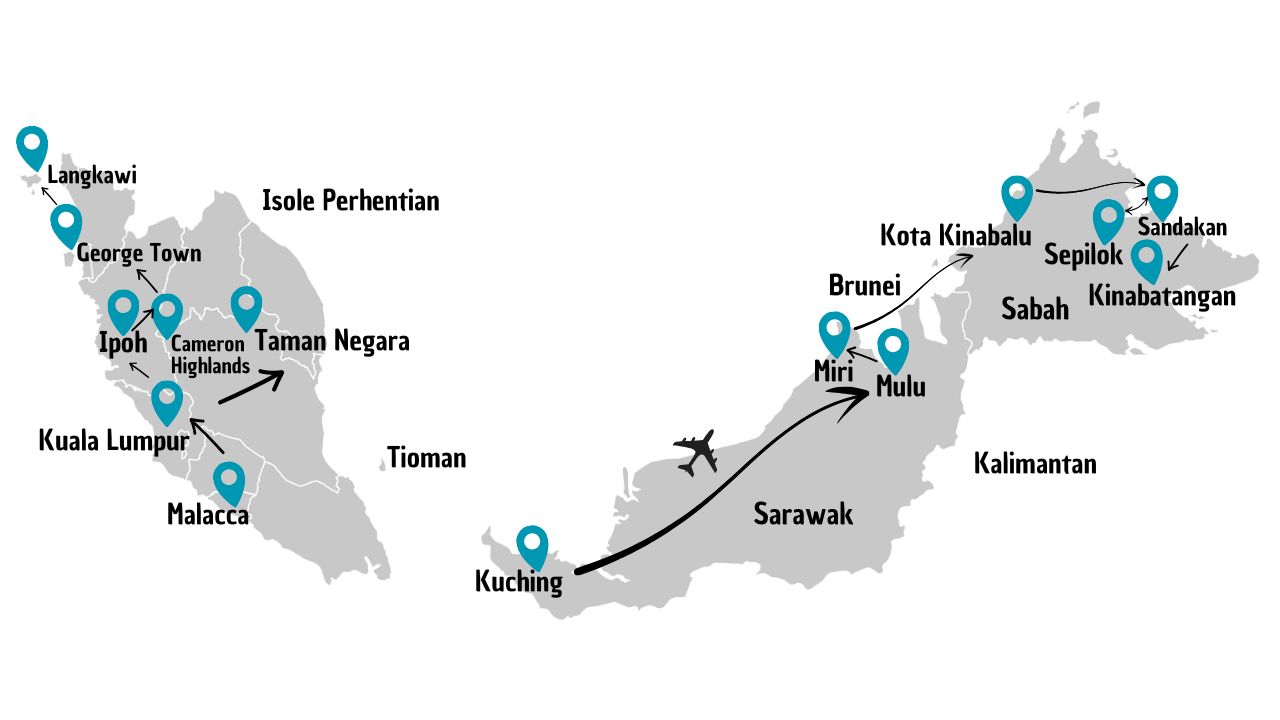
For the beach part of your trip, choose the island according to the time of year. If you travel during the European summer, the Perhentian Islands are generally the better choice. The recommended period runs from March to October, while many transport services and resorts stop operating during the monsoon.
If you travel during the European winter, you can choose Langkawi on the west coast, where the drier season generally runs from November to March. That does not mean you should rule Langkawi out at other times. We visited in August, during the rainy season, and still had very good weather overall.
15-day itinerary: Peninsular Malaysia and the Perhentian Islands
Kuala Lumpur – 3 nights
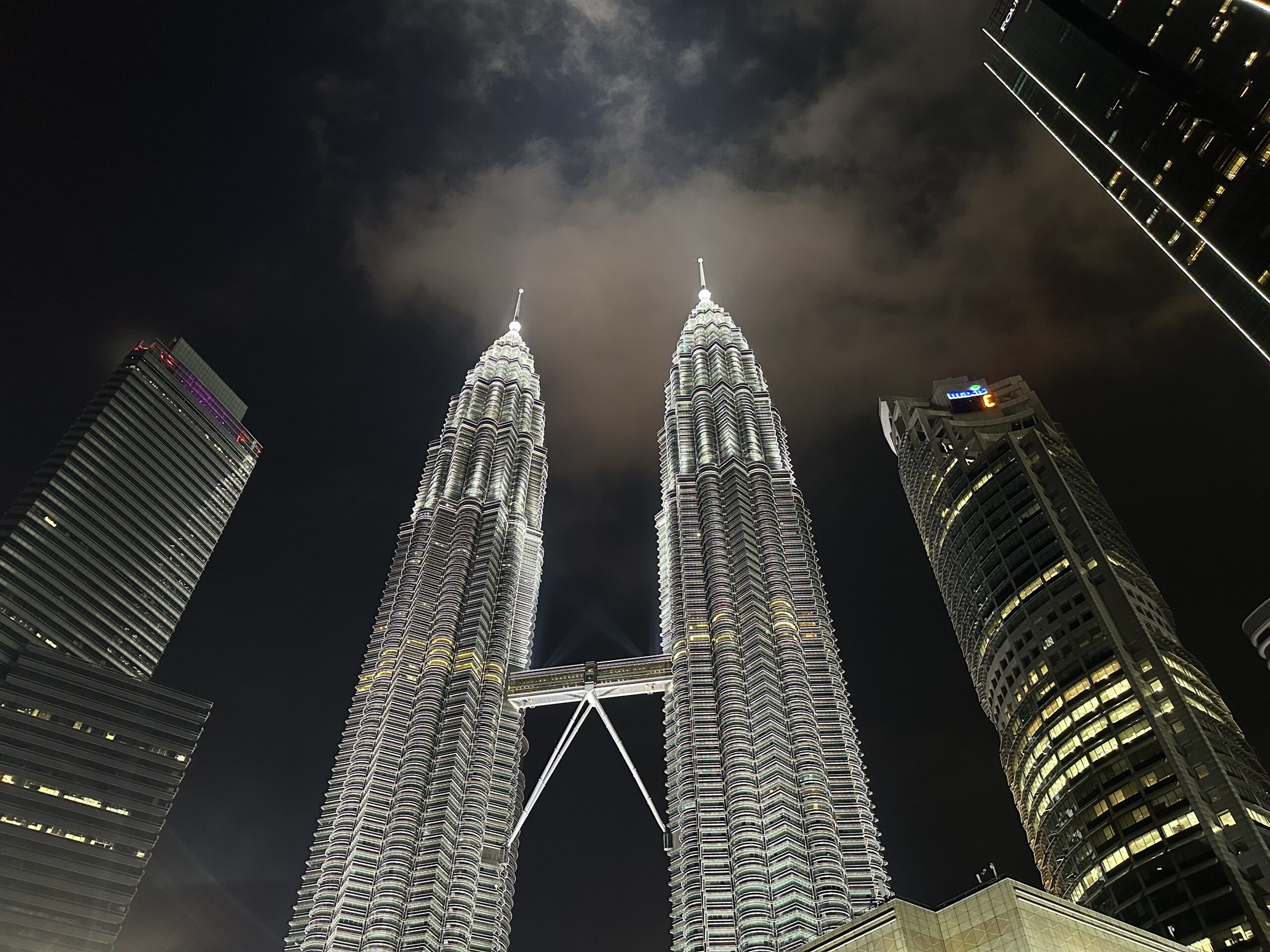
Days 1–4: Kuala Lumpur and the Batu Caves. On day 4, travel to the Cameron Highlands.
Cameron Highlands – 2 nights
Days 4–6: trekking, tea plantations and Tanah Rata.
Kuala Besut – 1 night
Day 6: travel from the Cameron Highlands to Kuala Besut. Spend the night near the port and leave for the Perhentians the following morning.
Perhentian Islands – 4 nights
Days 7–11: beaches, snorkelling and relaxation.
Penang – 3 nights
Day 11: return to Kuala Besut and continue to Penang.
Days 12–13: explore George Town and the surrounding area.
Kuala Lumpur – 1 night
Day 14: return to Kuala Lumpur.
Day 15: fly home.
15-day itinerary: Peninsular Malaysia and Langkawi
Kuala Lumpur – 3 nights
Days 1–4: arrive in Kuala Lumpur and explore the city, including the Batu Caves. On day 4, leave for Ipoh.
Ipoh – 2 nights
Days 4–6: explore the historic centre, street art and the famous cave temples. On day 6, leave for the Cameron Highlands.
Cameron Highlands – 2 nights
Days 6–8: trekking, tea plantations and the area around Tanah Rata. On day 8, travel to Penang.
Penang – 3 nights
Days 8–11: explore George Town, street art, temples, markets and Penang Hill. On day 11, leave for Langkawi.
Langkawi – 3 nights
Days 11–14: spend three days exploring the island, seeing the main attractions and relaxing. In our opinion, you do not need much longer. Langkawi is pleasant, but if your priority is the sea and beautiful beaches, the Perhentians are much better.
Kuala Lumpur – 1 night
Day 14: return to Kuala Lumpur.
Day 15: fly home.
If you have a few extra days, you can add 2–3 nights in Taman Negara, one of Malaysia’s best-known national parks. If you still have only 15 days but prefer nature and trekking to cities, you can replace Ipoh with Taman Negara. Just keep in mind that the transfers will be longer.
15-day itinerary: Peninsular Malaysia and Malaysian Borneo
Kuala Lumpur – 2 nights
Days 1–3: Kuala Lumpur and the Batu Caves. On day 3, fly to Kuching.
Kuching – 3 nights
Days 3–6: explore the city, visit Semenggoh and spend a day in Bako National Park.
Mulu – 3 nights
Days 6–9: Gunung Mulu National Park, caves, trekking and the bat exodus.
Kota Kinabalu – 3 nights
Days 9–12: travel to Kota Kinabalu and spend a couple of days exploring the city and surrounding area, possibly including a day in Tunku Abdul Rahman Marine Park.
Sandakan / Sepilok or Kinabatangan – 2 nights
Days 12–14: fly from KK to Sandakan. From here, choose according to your interests: Sepilok if you want to visit the orangutan and sun bear conservation centres; Kinabatangan if you prefer a wildlife-focused experience in nature.
Day 14: return and fly to Kuala Lumpur.
Day 15: fly home.
If you have a few extra days, Sabah offers several other possibilities. If your budget allows, you can add the Mount Kinabalu climb, which requires at least two days and costs considerably more than most activities in Malaysia.
Another option is to continue to Semporna, the gateway to the islands off Sabah’s east coast, especially famous for snorkelling and diving.
With three weeks available, you do not necessarily have to choose between Sepilok and Kinabatangan. You can include both and build a much more complete Borneo itinerary, possibly adding Mount Kinabalu or Semporna as well.
Conclusion
Malaysia surprised us much more than we expected, but Malaysian Borneo was the part that really won us over. If you love nature, we think it is one of the most beautiful parts of Southeast Asia, and the Kinabatangan remains one of the experiences we remember most fondly. We hope this guide helps you plan your trip. If you made it all the way here, terima kasih! And if you have any questions, leave us a comment: we will be happy to help.