
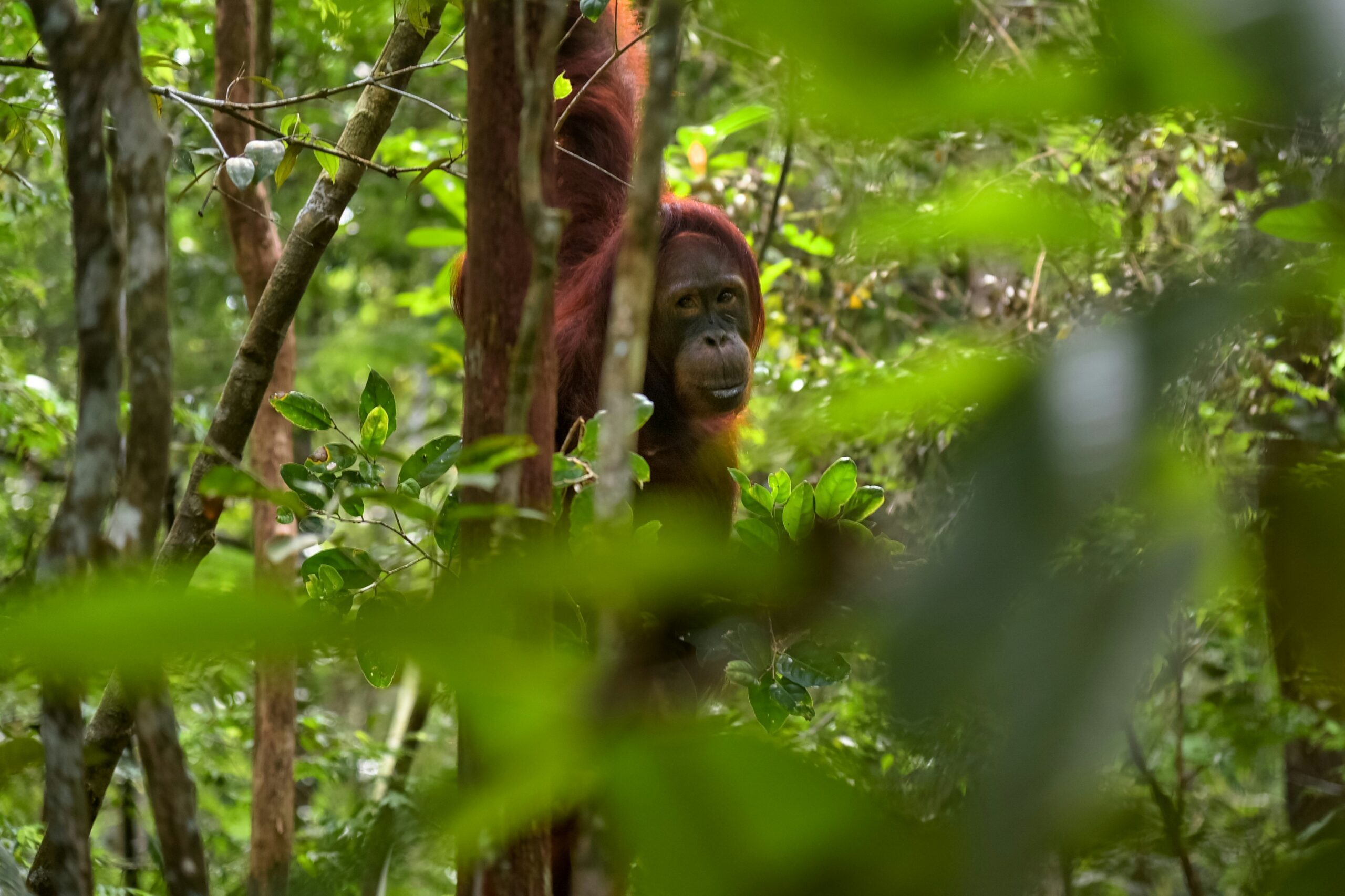
Borneo is the third-largest island in the world, after Greenland and New Guinea, and its territory is divided between Indonesia, Malaysia and the small Sultanate of Brunei. The Indonesian part, known as Kalimantan, covers most of the island, while the Malaysian part includes the states of Sarawak and Sabah.
Its history has always been linked to the major trade routes of Southeast Asia and, later, to the European presence in the region. Sarawak was ruled for more than a century by the Brooke dynasty, the so-called “White Rajahs”, while Sabah came under the control of the British North Borneo Company. Both territories became part of Malaysia in 1963.
Even today, Borneo remains relatively far from the main tourist routes of Southeast Asia and is one of the regions we loved most. Ancient rainforests, incredible biodiversity and very different cultures make this part of Malaysia completely different from the peninsula.
A trip through Malaysian Borneo usually crosses Sarawak and Sabah, with Kuching and Kota Kinabalu as two of the main reference points. Both states are part of Malaysia, but they have special autonomy over immigration, an important detail to know if you travel overland between Sarawak, Brunei and Sabah.
Because the island is so large, getting around often means combining overland transport with domestic flights. Kuala Lumpur and Singapore are generally the easiest and cheapest starting points for reaching Borneo, with many flights to Kuching, Kota Kinabalu and other airports on the island. It is also worth checking departures from Penang, where good alternatives sometimes appear.
Our Malaysian Borneo video
Sarawak
Sarawak is Malaysia’s largest state and occupies the north-western part of Borneo. Much of its territory is covered by rainforest, crossed by rivers and interrupted by small settlements and large protected areas.
It is also one of the country’s most multicultural regions, home to many Indigenous groups, including the Iban, Bidayuh and Penan, each with very different traditions and cultures. longhouses, large communal homes shared by several families, are one of the region’s most distinctive features.
A trip through Sarawak is mainly about rainforest, caves, national parks and small towns, in a part of Malaysia where tourism is still relatively undeveloped.
Kuching
Kuching, the capital of Sarawak, is one of the main gateways to Malaysian Borneo. Set on the banks of the Sarawak River, it is a calm and pleasant city to explore, where colonial buildings, temples and markets reflect the different cultures that have shaped its history.
How to get to and around Kuching
We reached Kuching on a direct flight from Kuala Lumpur, which took around two hours. Flying is definitely the most practical way to reach Sarawak from Peninsular Malaysia and, if you book a little in advance, fares can be quite reasonable.
Because of the distances involved, it is also worth checking flights when continuing to other parts of Malaysian Borneo. long-distance buses connect Sarawak’s main cities, but journey times are much longer. Bus routes can be checked and booked through Easybook.
Once in Kuching, the centre is easy to explore on foot. For longer journeys, including transfers to and from the airport, Grab is one of the simplest and cheapest options.
Another possibility is to rent a car, especially if you plan to explore the area around Kuching independently. The main roads are generally in good condition, and having your own vehicle makes it easier to reach places outside the city where public transport is more limited.
Things to do in Kuching
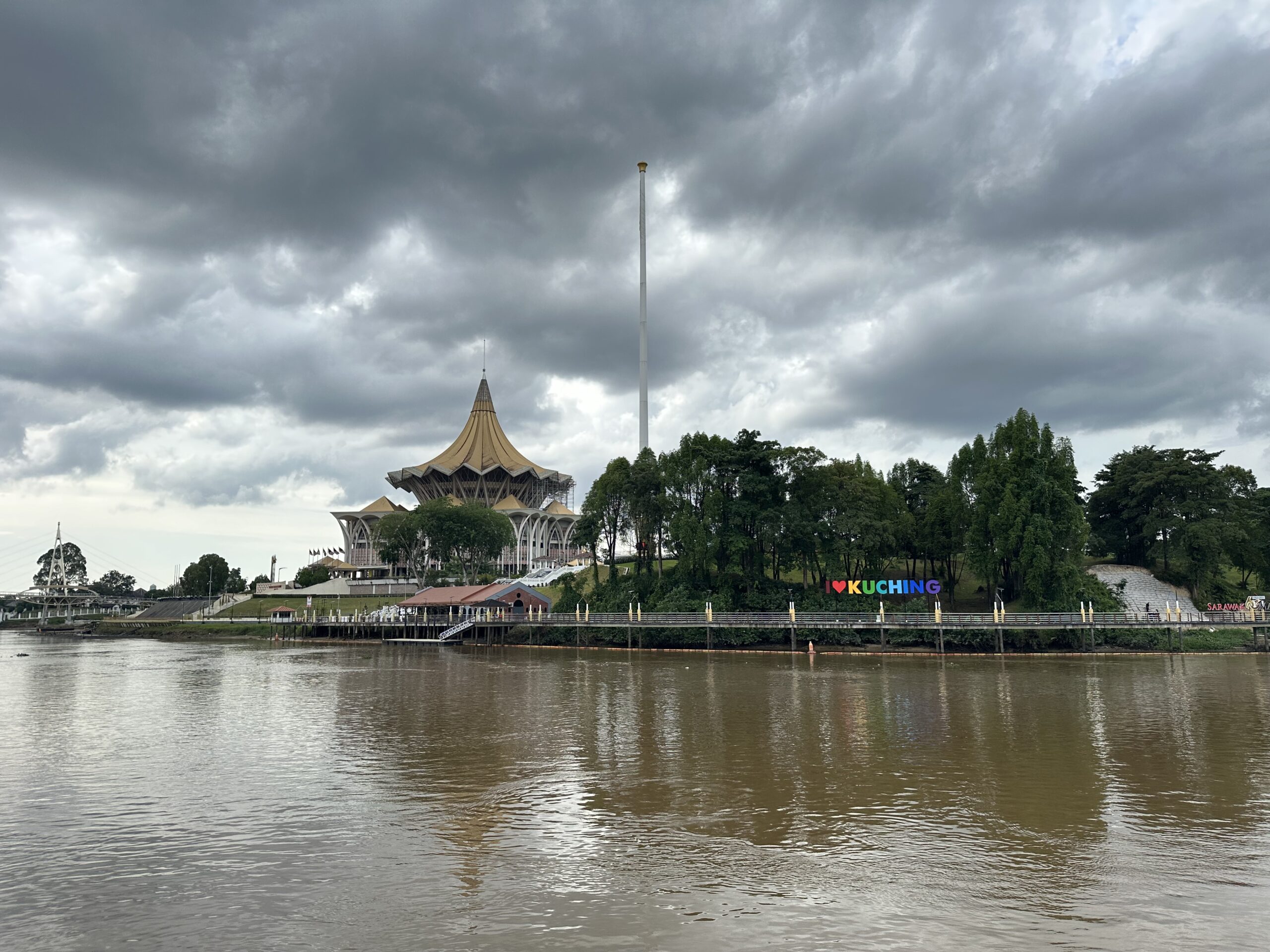
Kuching’s centre is fairly compact and easy to explore on foot. The heart of the city is the Kuching Waterfront, the promenade along the Sarawak River, from where you can reach the distinctive S-shaped Darul Hana Bridge. Crossing it also gives you a good view of the Kuching Floating Mosque, recognisable by its large blue dome.
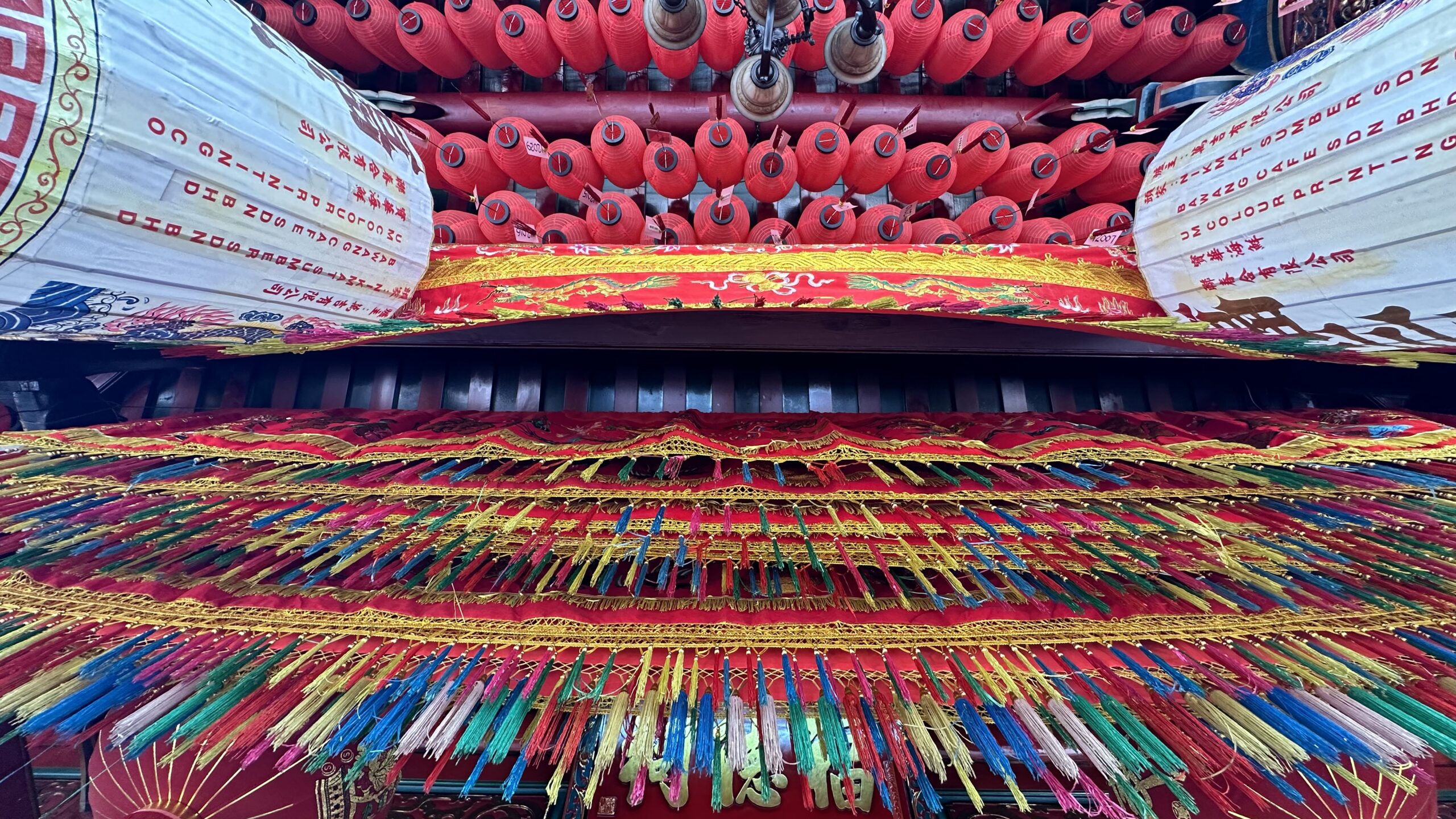
It is also worth walking along Main Bazaar and Carpenter Street, past old shophouses and colourful Chinese temples such as Tua Pek Kong Temple. On the Waterfront you will also find the small Chinese History Museum, which is free and interesting if you want to learn more about Sarawak’s Chinese community.
Finally, it is impossible not to notice Kuching’s many references to cats. Statues and sculptures appear all over the centre and have become one of the city’s symbols. A few hours are enough to see the main sights in central Kuching.
Permai Rainforest
With only two days in Kuching, we chose to spend one day at the Permai Rainforest Resort in Santubong, around 30 km from the city centre.
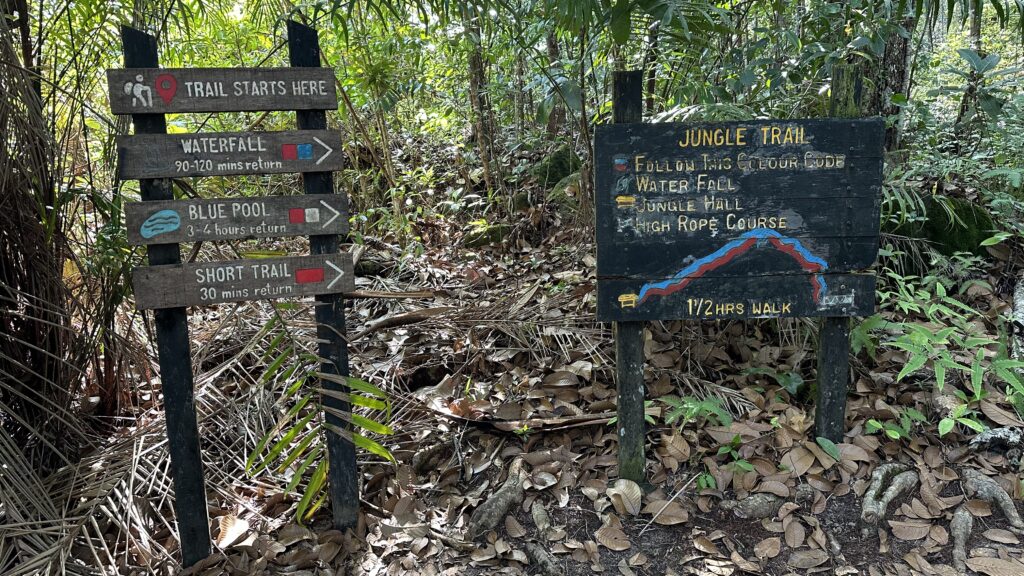
The reserve is part of the Permai Rainforest Resort and lies in tropical forest at the foot of Mount Santubong. You can follow several jungle trails, reach small waterfalls and walk all the way to the beach. It is a good way to get a first taste of Sarawak’s nature without travelling too far from Kuching.
We visited on a Sunday and took advantage of a free bus that, at the time, connected Kuching with the Santubong area and dropped us almost at the destination.
Nearby is the Sarawak Cultural Village, a living museum dedicated to Sarawak’s different peoples, traditional homes and customs.
If you have a few extra days, you can also visit Bako National Park from Kuching. It is Sarawak’s oldest national park and one of the best-known places in the area for seeing proboscis monkeys. We did not manage to visit it, but if you want to add it to your itinerary, you can use this detailed and up-to-date guide to visiting Bako from Kuching.
Another well-known stop is the Semenggoh Wildlife Centre, around 24 km from Kuching, where you can see semi-wild orangutans living in the reserve. We also considered visiting an Iban longhouse, the traditional communal homes where several families live together. The Iban are one of Sarawak’s main Indigenous groups and are also known for their history of headhunting, a practice that has of course long been abandoned. For more details on how to organise a visit and which longhouses to choose, see this guide to Sarawak longhouses.
Where to stay in Kuching
We stayed for a couple of nights at Quiik Cat. It is a nice hostel in a good location, and the owner is very kind and full of useful advice.
Even if you are not vegetarian, we absolutely recommend eating at Fren’s Get Together. For us, it was one of the best meals we had in Malaysia.
Gunung Mulu National Park
Gunung Mulu National Park, in Sarawak, has been a UNESCO World Heritage Site since 2000 and is best known for its karst landscape and the enormous cave system beneath the surface.
As our guide explained during the visit, Mulu contains one of the most extensive known cave systems in the world, with long passages, underground rivers and chambers of impressive size. These include Sarawak Chamber, one of the largest known underground chambers, and Clearwater Cave, part of one of the longest cave systems ever explored.
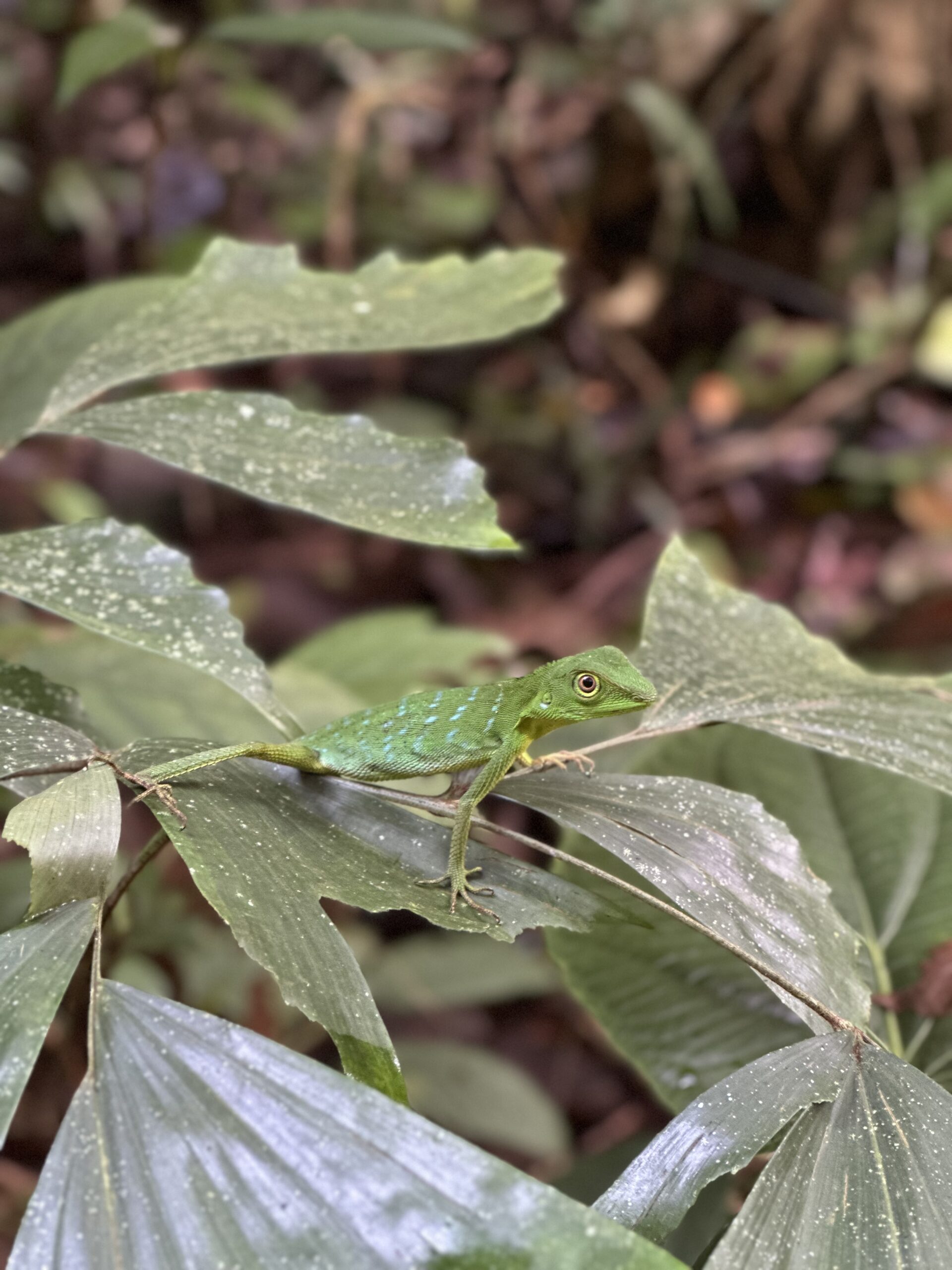
The park also protects a vast area of tropical rainforest crossed by trails and rivers and home to remarkable biodiversity. In addition to the caves, you can go hiking, explore the jungle and walk on suspended routes among the trees.
How to get to and around Mulu
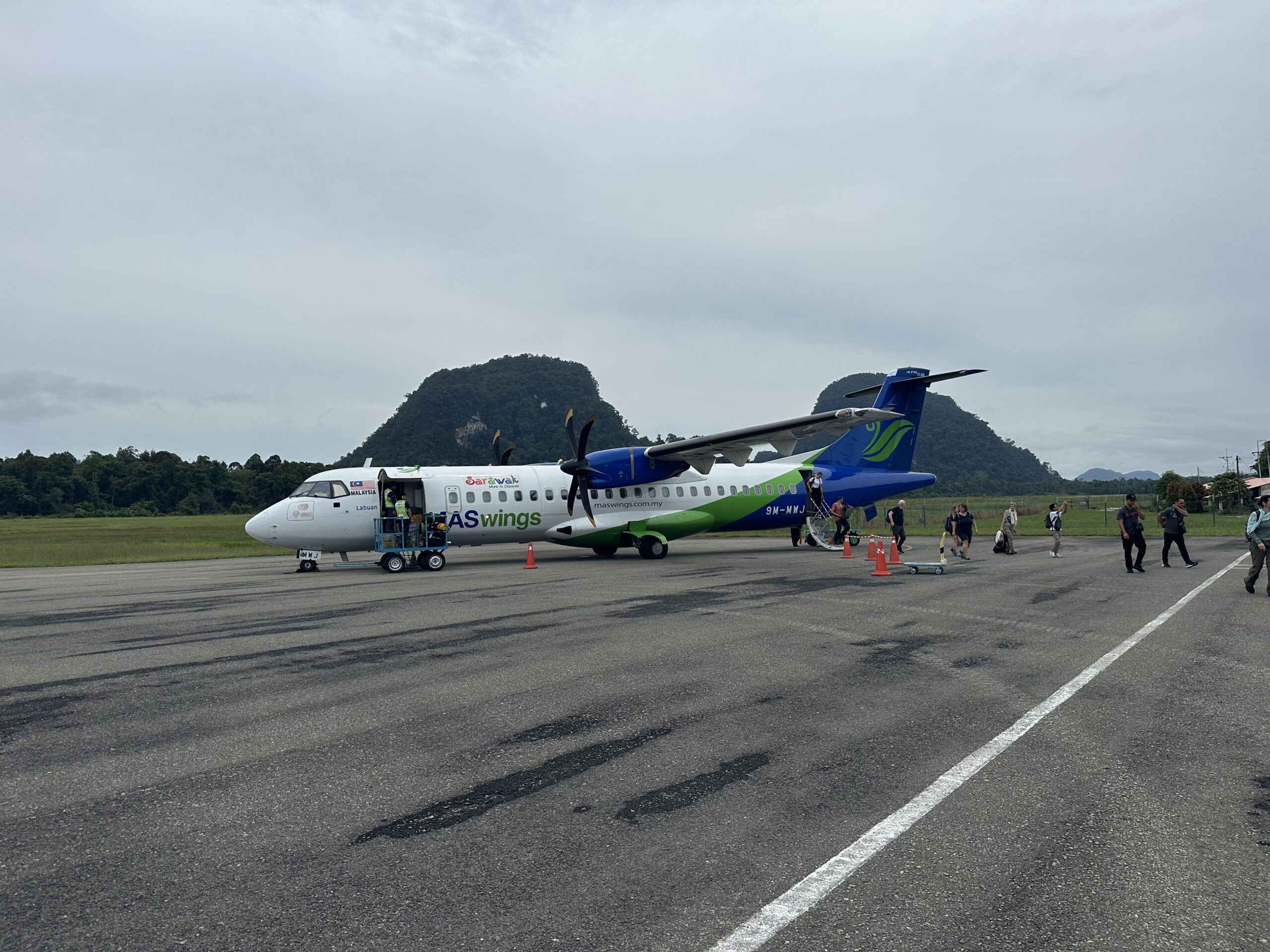
The easiest way to reach Gunung Mulu National Park is by plane. Mulu lies in the heart of Sarawak, surrounded by rainforest, and there are no roads connecting it directly with the region’s main cities.
We flew in from Kuching. Mulu is currently connected directly with Kuching, Miri and Kota Kinabalu by AirBorneo, the airline that took over MASwings’ regional Malaysian Borneo routes in 2026.
The small Mulu Airport is only a few kilometres from the park entrance and nearby accommodation. Once you arrive, you do not need your own vehicle. Distances are short and most activities take place inside the park, with travel on foot or by boat.
It is technically possible to reach Mulu overland and by river by combining several transfers, but the journey is much longer and more complicated. Unless you specifically want the journey itself to be part of the adventure, flying is by far the most practical option.
Things to do in Gunung Mulu National Park
The caves are the main attraction in Gunung Mulu National Park, but they are not the only reason to visit. The park also offers rainforest hikes, a canopy walk and several one- or multi-day excursions. The caves and some hikes can only be visited with a certified guide, while a number of trails can be explored independently.
How to organise excursions in Mulu
For Mulu, we recommend organising your excursions directly through Gunung Mulu National Park rather than using outside agencies. When you arrive, your first stop should be the Visitor Centre, where you can register, buy the park pass and book activities.
The entrance pass is valid for five consecutive days and allows you to enter and leave the park during that period. When you register, you receive a waterproof wristband that you keep on for the duration of the pass.
Guided excursions are booked separately through the park. We decided what to do day by day and, when places were available, we could sometimes book for the same day. You do not necessarily need to arrange every activity before arriving. If you have a specific excursion in mind, especially a multi-day trip such as The Pinnacles, book it as soon as you reach the Visitor Centre. Places are more limited and some activities require a minimum number of participants. The official Gunung Mulu National Park website lists all available excursions so you can decide in advance which ones interest you.
Below are the excursions we personally did during our stay in Mulu.
Deer Cave, Lang Cave and Bat Exodus
If you have limited time, this is one of the excursions we would not miss. The caves must be visited with a park guide, and the tour can be booked directly at the Visitor Centre.
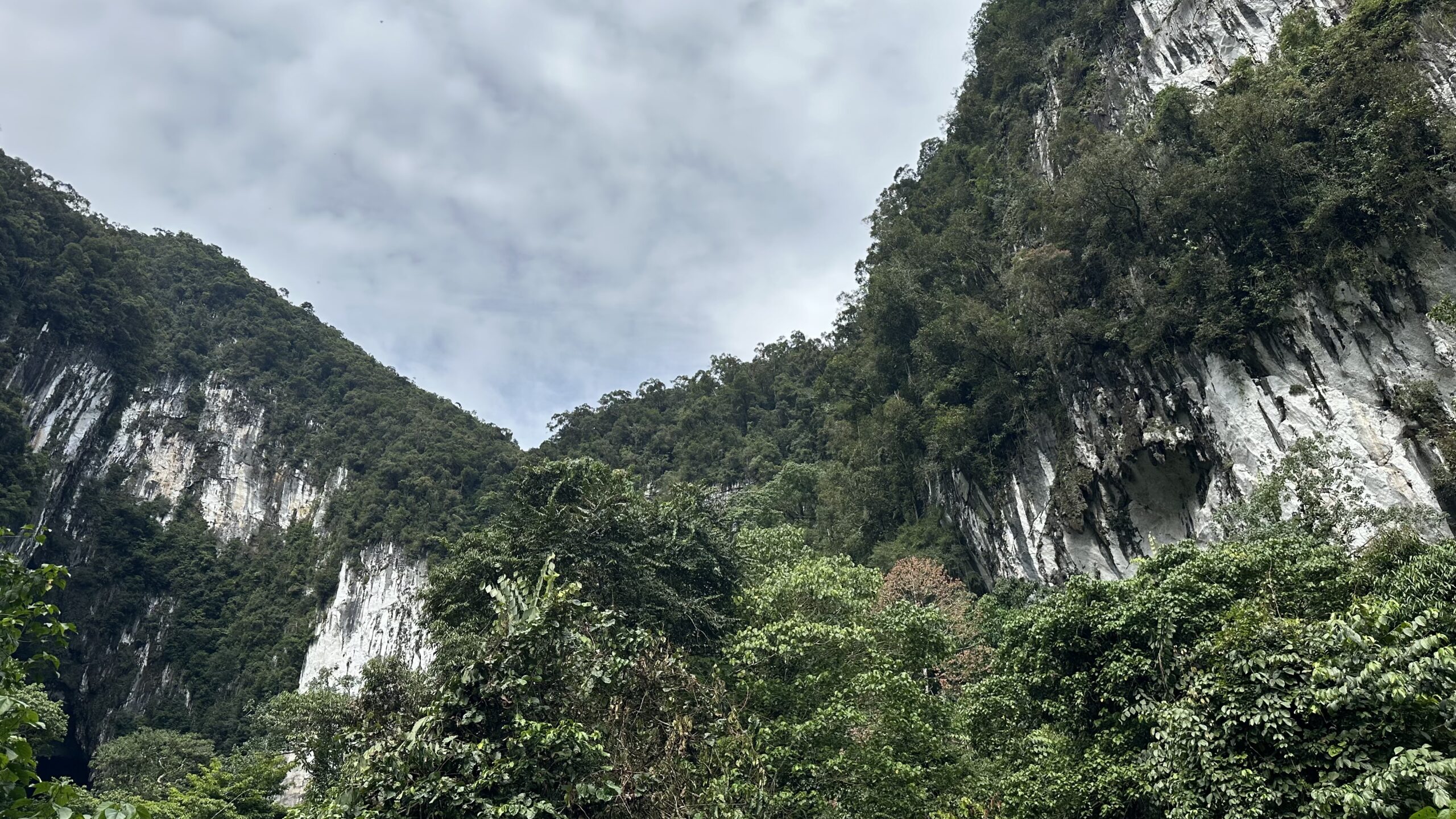
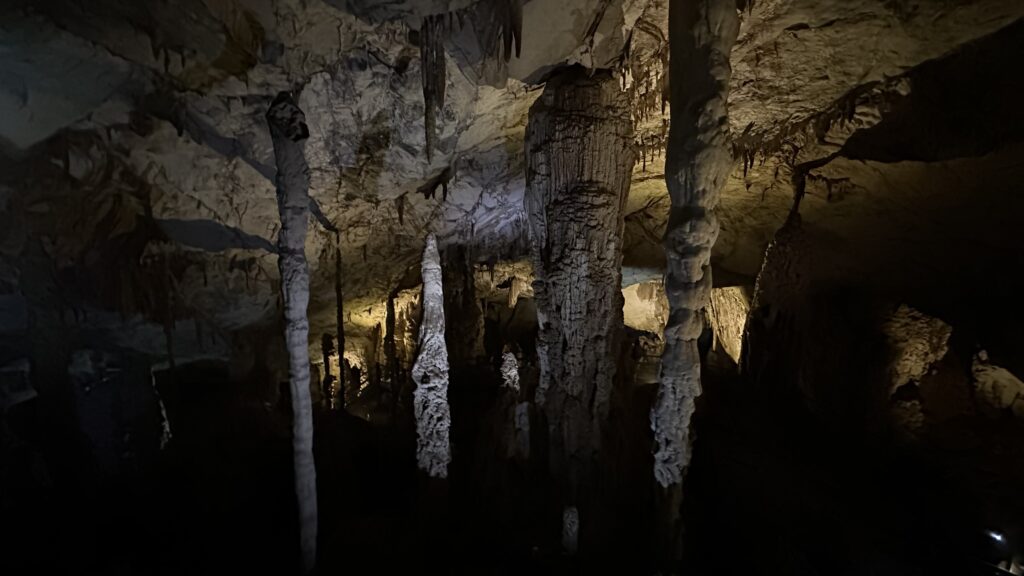
From park headquarters, you walk around 3 km through the forest on well-maintained boardwalks to reach Lang Cave and Deer Cave. Lang Cave is smaller and is especially interesting for its stalactites, stalagmites and limestone formations. Deer Cave is impressive for its enormous size and is home to millions of bats.
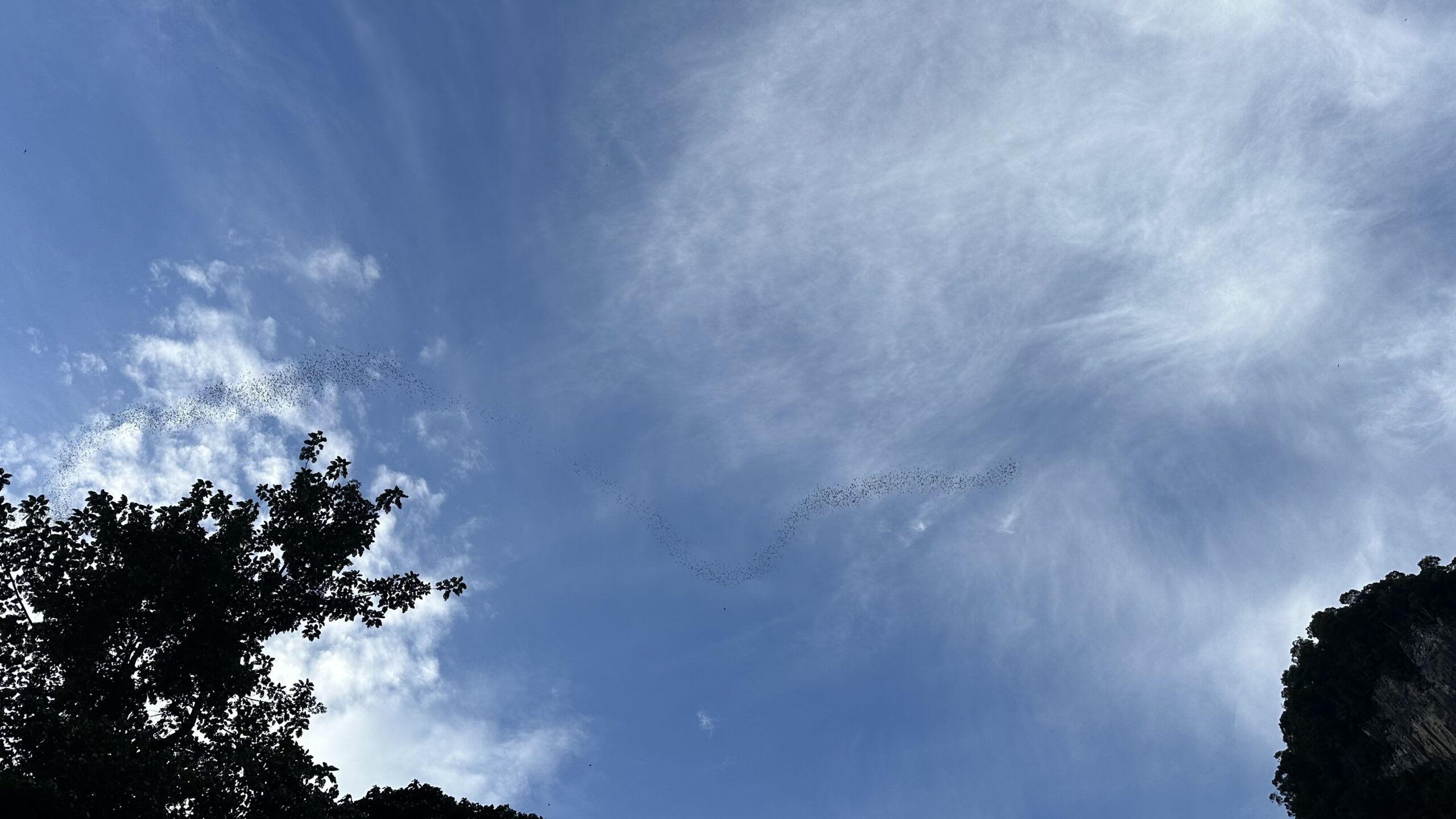
The excursion takes place in the afternoon so that it ends with the famous Bat Exodus. At sunset, weather permitting, millions of bats leave Deer Cave in long streams across the sky to hunt insects in the forest. You watch the spectacle from the Bat Observatory, a short distance from the cave entrance.
The route is mostly flat and well maintained and is not particularly difficult. After the Bat Exodus, you walk back to the Visitor Centre along the same trail.
Clearwater Cave and Wind Cave
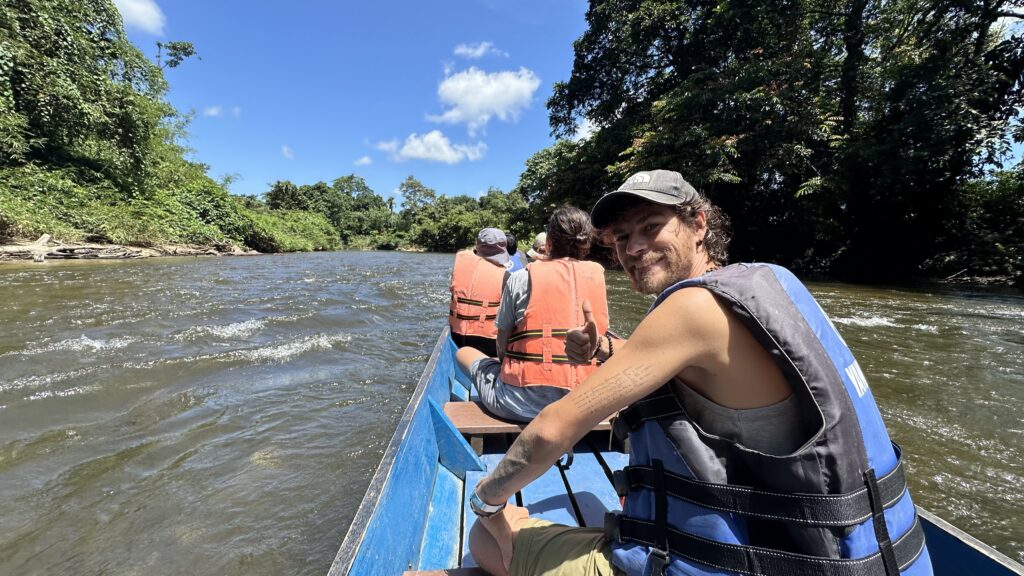
Clearwater Cave and Wind Cave are also visited with a park guide. To reach them, you travel upstream along the Melinau River in a traditional longboat, so the journey itself is part of the excursion.
Before reaching the caves, the tour makes a short stop at Batu Bungan, a Penan settlement with a small local handicraft market. The stalls mainly sell woven rattan items, bracelets, baskets and other handmade souvenirs.
You then continue to Wind Cave, with its large chambers, limestone formations and the air currents that gave it its name, before moving on to Clearwater Cave, part of Mulu’s enormous underground system and crossed by an underground river. Both caves have boardwalks and stairways.
The excursion takes around half a day and can be combined with the Pinnacles trek. In that case, after visiting the caves, you continue to Camp 5 instead of returning to the Visitor Centre. We explain this below.
Paku Valley Loop
If you want to explore part of the forest without joining a guided tour, the Paku Valley Loop starts directly near the Visitor Centre and can be walked independently. It took us around three hours to complete the full loop.
The entire route runs through rainforest and is not especially difficult. We recommend doing it only if there has not been heavy rain the night before, because the ground becomes muddy very quickly and some sections can be quite slippery.
Before setting off, you need to register with park security. During our visit, it was enough to write your name and departure time on the board at the entrance and remember to record your return after the hike.
The trail is free and, in our opinion, a good way to explore Mulu’s rainforest independently between guided cave excursions.
Mulu Canopy Skywalk
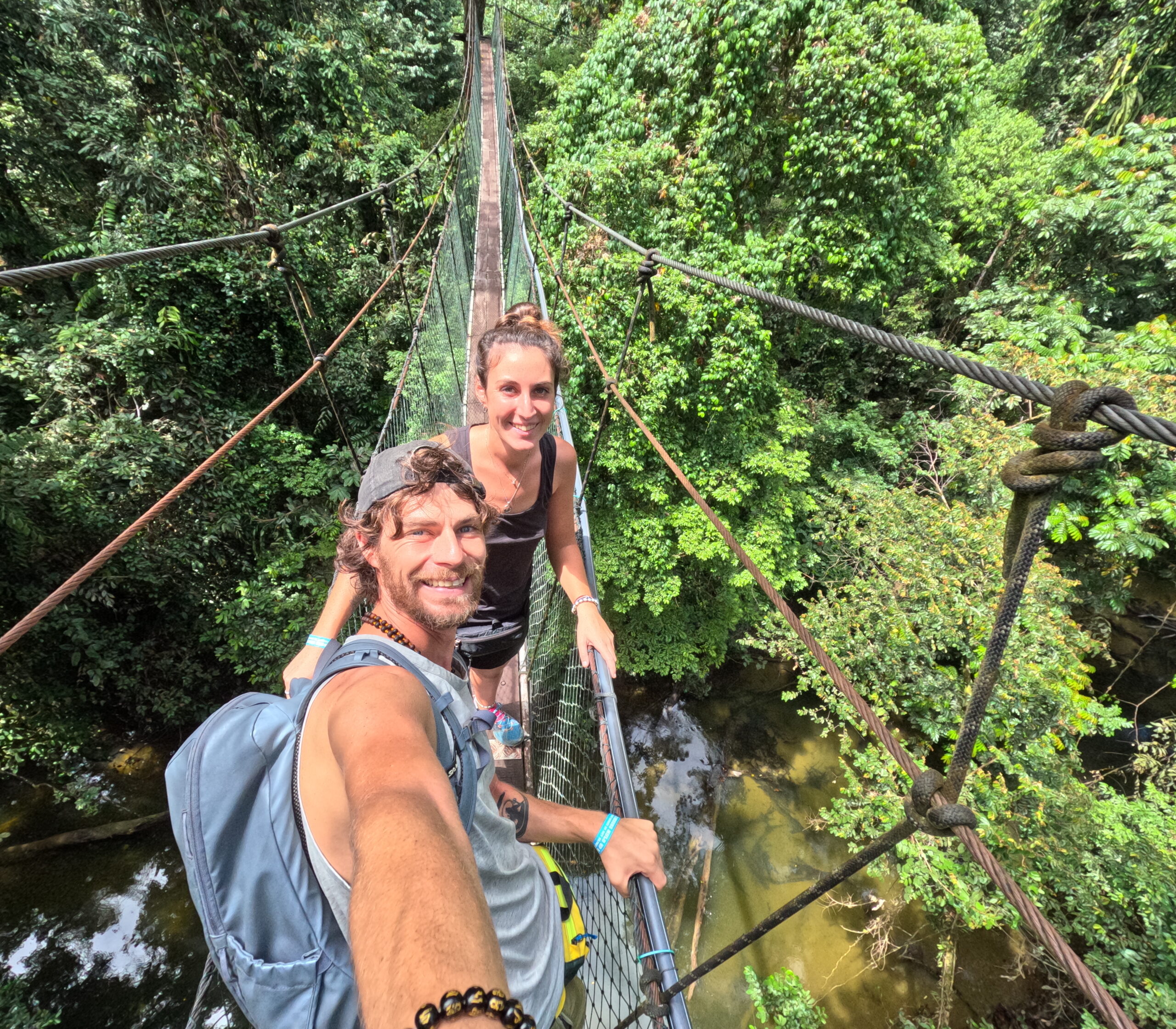
Another activity we did was the Canopy Skywalk, a suspended route through the rainforest canopy that is around 480 metres long and reaches about 20 metres above the ground in places. This activity must also be booked through the park and is done with a guide.
From the Visitor Centre, you walk to the start of the route and then cross a series of suspended walkways connected by platforms built around the trees. Because you are at canopy level, with a little luck you may spot wildlife, including hornbills and snakes resting in the trees during the day. We, of course, saw absolutely nothing.
It is not particularly demanding physically, but if you suffer from vertigo it may not be the best choice.
Night Walk
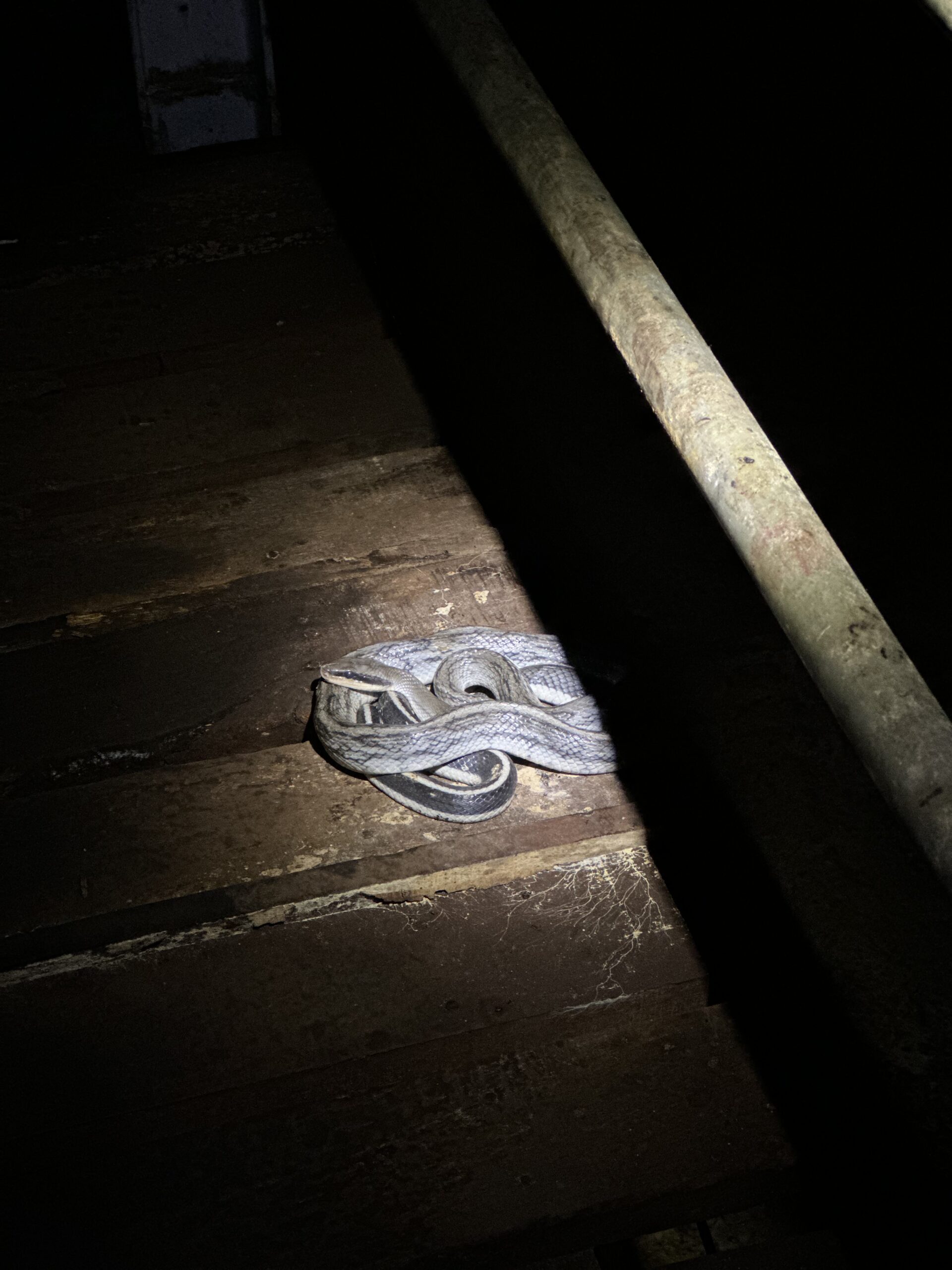
The Night Walk lets you explore the forest after dark, when many animals become active. You walk around the Visitor Centre looking for insects, frogs, snakes and other nocturnal animals that would be difficult to spot without an experienced eye.
It is a popular activity and when we tried to book, it was already full. We still managed to join a second walk that left shortly after the scheduled one by paying the guide directly. If you want to do it, book as soon as you arrive in Mulu.
Some people walk the trails closest to the Visitor Centre independently after dark. We still recommend going with a guide, both to improve your chances of seeing wildlife and because potentially dangerous animals also live in the forest.
The Pinnacles
One of Gunung Mulu National Park’s best-known excursions is the trek to The Pinnacles, blade-shaped limestone formations rising from the forest on the slopes of Gunung Api. We would have liked to do it and had looked into how to organise it, but because it requires three days and two nights we would have needed to add another day to our stay in Mulu, which we had not planned.
The excursion lasts three days and two nights and must be done with a guide. On the first day, you travel up the Melinau River by longboat and can combine the transfer with a visit to Wind Cave and Clearwater Cave. After leaving the boat, you walk for around 2–3 hours to Camp 5, where you spend both nights.
The second day is dedicated to the climb to the Pinnacles viewpoint. The route is not especially long, but it is very steep and demanding, with some sections equipped with ropes and ladders. After reaching the viewpoint, you descend the same trail back to Camp 5. On the third day, you retrace the path to the river and return to Mulu by longboat.
Camp 5 has basic facilities and a kitchen, but you need to organise your own food. Some supplies can be bought in the small shop near the Visitor Centre. If you want more choice, bring something with you before arriving in Mulu.
The official Gunung Mulu National Park website has the latest information on the excursion and how to book it.
Gunung Mulu Summit
For something much more demanding, you can also reach the summit of Gunung Mulu at 2,376 metres. The trek is around 50 km return and requires several days in the forest. The distance may not sound excessive to experienced multi-day hikers, but conditions make the difference here: heat, humidity, often muddy ground and the need to carry everything you require make the route very challenging.
You need to organise enough water, food and equipment for several days, and you can hire a guide for the trek. It is definitely one of the routes we would have liked to do if we had had more time.
Besides the excursions mentioned above, the park has several shorter trails that you can walk independently, ideal if you have a few free hours between activities. Some routes also have birdwatching towers where, with a little luck, you may see hornbills and other forest birds.
Where to stay in Mulu
We stayed at D’Cave Homestay, just a few minutes’ walk from the entrance to Gunung Mulu National Park. The accommodation is very simple, but clean and perfect as a base for visiting the park.
The real reason we recommend it, though, is Dina and Robert, the owners. Of all the homestays we have stayed in during our travels, this one is still our favourite. Rather than feeling like guests, we felt at home: we ate together, talked for hours and spent our evenings with them. Dina also prepares breakfast and dinner at home, while Robert, a former guide, knows the park extremely well and can give plenty of advice about excursions. If we return to Mulu, we will definitely stay here again.
You can also stay inside Gunung Mulu National Park itself. There are several accommodation options managed by the park, as well as a restaurant and a small shop selling drinks, snacks and basic supplies. Outside the park, choices are quite limited, especially for food. There are very few restaurants and they are not always open, so it is worth planning ahead.
Miri
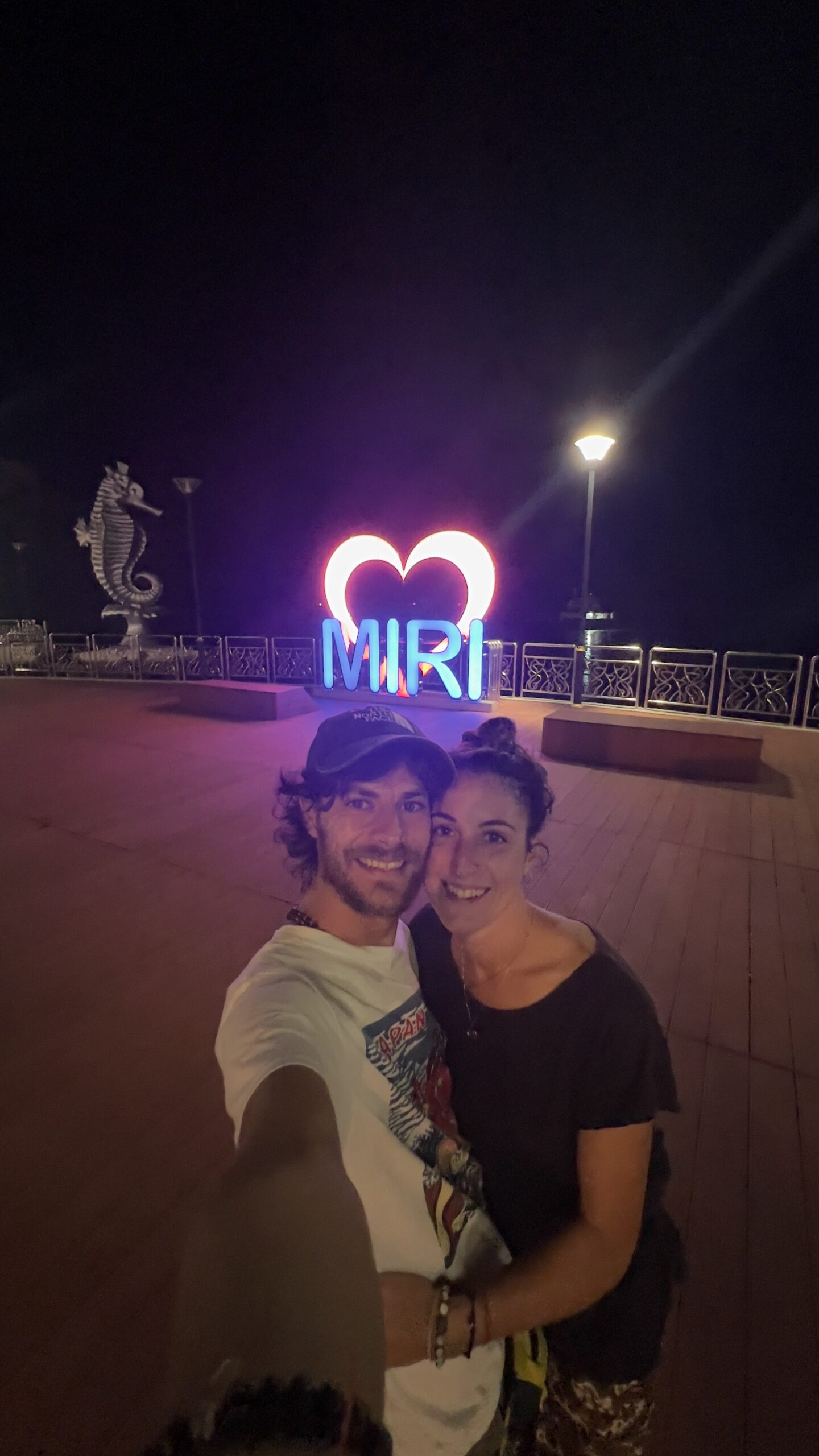
Miri was not in our plans. We reached it from Mulu on a very short flight of around 15 minutes and were supposed to continue overland to Brunei and then Kota Kinabalu. Instead, we ended up staying for five nights.
When we reached the Brunei border, we were turned back because our passports did not have a Sarawak entry stamp. Sabah and Sarawak are part of Malaysia, but they have special autonomy over immigration.
We had arrived in Kuching from Kuala Lumpur and simply walked out of the airport without any immigration check. Before the trip, we had researched entry and exit procedures but had not found clear information about the need for this stamp. We only discovered the issue several days later at the Brunei border.
Because it was Friday and Monday was a public holiday, we had to wait until Tuesday to sort everything out with immigration and also pay a fine. By then we had lost several days and had to skip both Brunei and Kota Kinabalu, even though we had already organised both stops.
If you enter Sarawak from another part of Malaysia and then plan to continue to Brunei or Sabah, check with immigration whether you need a stamp or endorsement in your passport.
How to get to and around Miri
We reached Miri from Mulu on a very short domestic flight of around 15 minutes. The city is also connected overland with other places in Sarawak, including Bintulu, Sibu and Kuching, by buses that can be booked online through Easybook.
From Miri, you can also continue overland to Bandar Seri Begawan in Brunei. Direct bus services, which were suspended after Covid, are operating again and can also be booked through Easybook. We still recommend checking availability for your dates, as schedules and frequency can change.
In central Miri, you can easily get around on foot. For places farther away, Grab is the most convenient option. We mainly walked and used Grab only when necessary.
Things to do in Miri
Miri does not offer a huge amount in terms of sightseeing, and one or two days are more than enough. In the city, you can go up Canada Hill, home to the Grand Old Lady, Malaysia’s first oil well, now next to the Petroleum Museum. For sunset, one of the most popular places is Coco Cabana on the waterfront. The Sarawak Tourism Board website has an overview of the main things to see in the city.
Our taxi driver, who was supposed to take us to Brunei, told us that Miri is a bit like the “Las Vegas of Bruneians”. Because it is close to the border, many people come here at weekends to shop, go out in the evening and drink alcohol, activities that are much more restricted in neighbouring Brunei. After picking us up in Miri, our driver took us to the border, then to immigration and finally back to our hotel without charging us anything for the return journey. We still remember that kindness.
If you have more time, the most interesting places are actually outside the city. These include Niah National Park, now a UNESCO World Heritage Site for its caves and important archaeological sites, and Lambir Hills National Park, with forest trails and waterfalls. For current information, check the official pages for Niah National Park and Lambir Hills National Park.
Where to stay in Miri
We stayed at Old 101 Hotel Miri, a simple and inexpensive option in a central location. We had a good stay: the rooms were clean and the staff were very kind. The location is also convenient for exploring central Miri on foot.
A fairly classic backpacker route through Sarawak starts in Kuching, continues to Gunung Mulu National Park and ends in Miri, from where you can travel overland towards Brunei and Sabah. It is also the route we followed, although in Miri our plans took a very different turn from what we expected.
Sabah
Sabah occupies the north-eastern part of Malaysian Borneo and has a very varied landscape, from inland rainforests to mountains and tropical islands along the coast. It is also home to Mount Kinabalu, which at 4,095 metres is the highest mountain in Malaysia and all of Borneo.
The region has extraordinary biodiversity and is one of the best places in Borneo to see orangutans, proboscis monkeys, Bornean pygmy elephants and many bird species. Sabah is also home to several Indigenous groups, including the Kadazan-Dusun, Bajau and Murut, each with their own traditions and cultures.
A trip through Sabah is mainly about nature and wildlife, with forests, rivers, mountains and rich marine environments. It is generally more visited by travellers than neighbouring Sarawak.
Kota Kinabalu
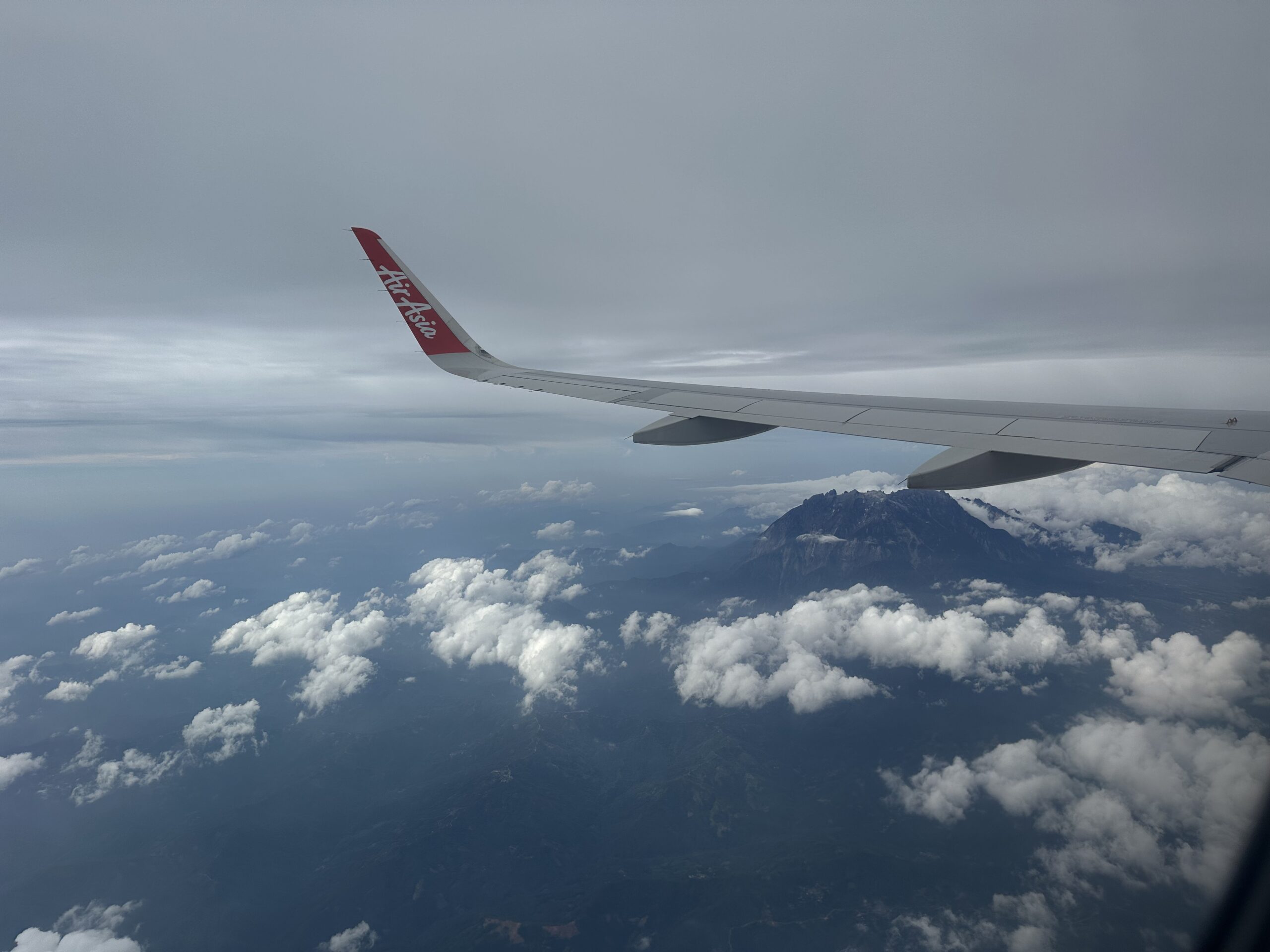
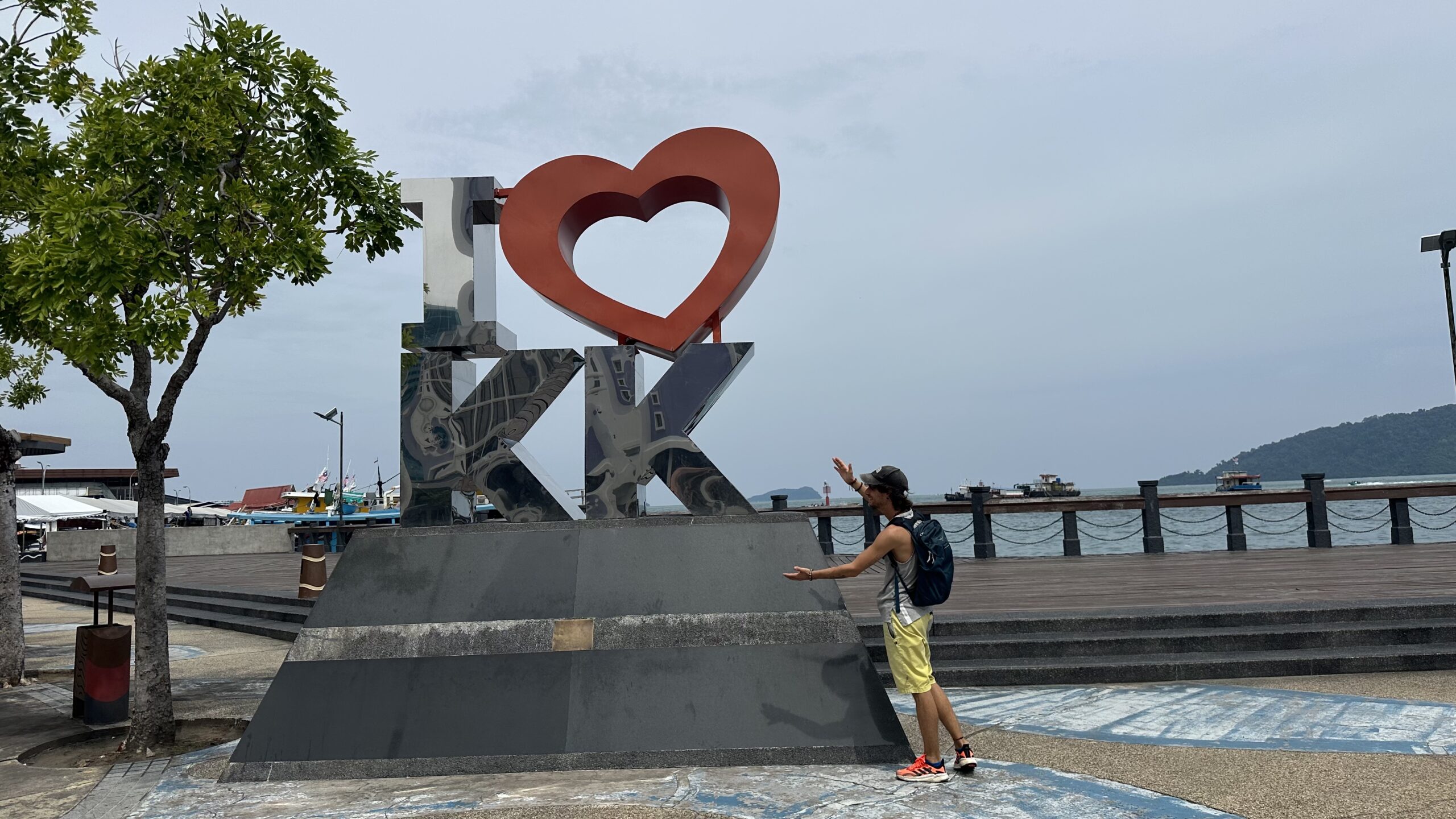
Kota Kinabalu is the capital of Sabah and one of the main gateways to Malaysian Borneo. We had planned to spend a few days here and had booked Faloe Hostel, which looked like a great option and still has excellent reviews. Because of what happened in Miri, however, we had to cancel this stop. We still passed through Kota Kinabalu during a stopover of a few hours and, from the little we saw, the city itself did not particularly excite us.
Kota Kinabalu is mainly a good base for exploring the surrounding area and organising the climb of Mount Kinabalu. Just offshore is Tunku Abdul Rahman Marine Park, made up of five islands that are easy to reach by boat. The most visited are Manukan, Mamutik and Sapi, where you can spend a day on the beach and snorkelling.
We had also planned to visit the marine park, but our change of plans meant we had to skip it. For current information, check Sabah Parks – Tunku Abdul Rahman Park directly.
Sepilok
Sepilok lies around 25 km from Sandakan, surrounded by Sabah’s forest, and is best known for its wildlife conservation centres. It is one of the easiest places in Borneo to see orangutans and sun bears while also exploring a small area of rainforest.
We spent three nights in Sepilok, which we think is enough time to visit the main attractions at a relaxed pace before returning to Sandakan and continuing towards the Kinabatangan River.
How to get to and around Sepilok
We travelled directly from Sandakan Airport to Sepilok by Grab, one of the easiest options. The journey takes around 30–40 minutes depending on traffic. Once in Sepilok, we walked everywhere. The main attractions are fairly close together: the Sepilok Orangutan Rehabilitation Centre and the Bornean Sun Bear Conservation Centre (BSBCC) are almost next to each other, while the Rainforest Discovery Centre (RDC) is a little farther away.
The only exception was the Labuk Bay Proboscis Monkey Sanctuary, which is much farther away. We booked a taxi through our resort and shared the ride with another traveller. The sanctuary can also be reached by taxi or organised transfer.
Things to do in Sepilok
Sepilok is almost entirely about Borneo’s nature and wildlife. The main attractions are concentrated in a fairly small area and, with two or three days, you can visit all of them without rushing.
Sepilok Orangutan Rehabilitation Centre
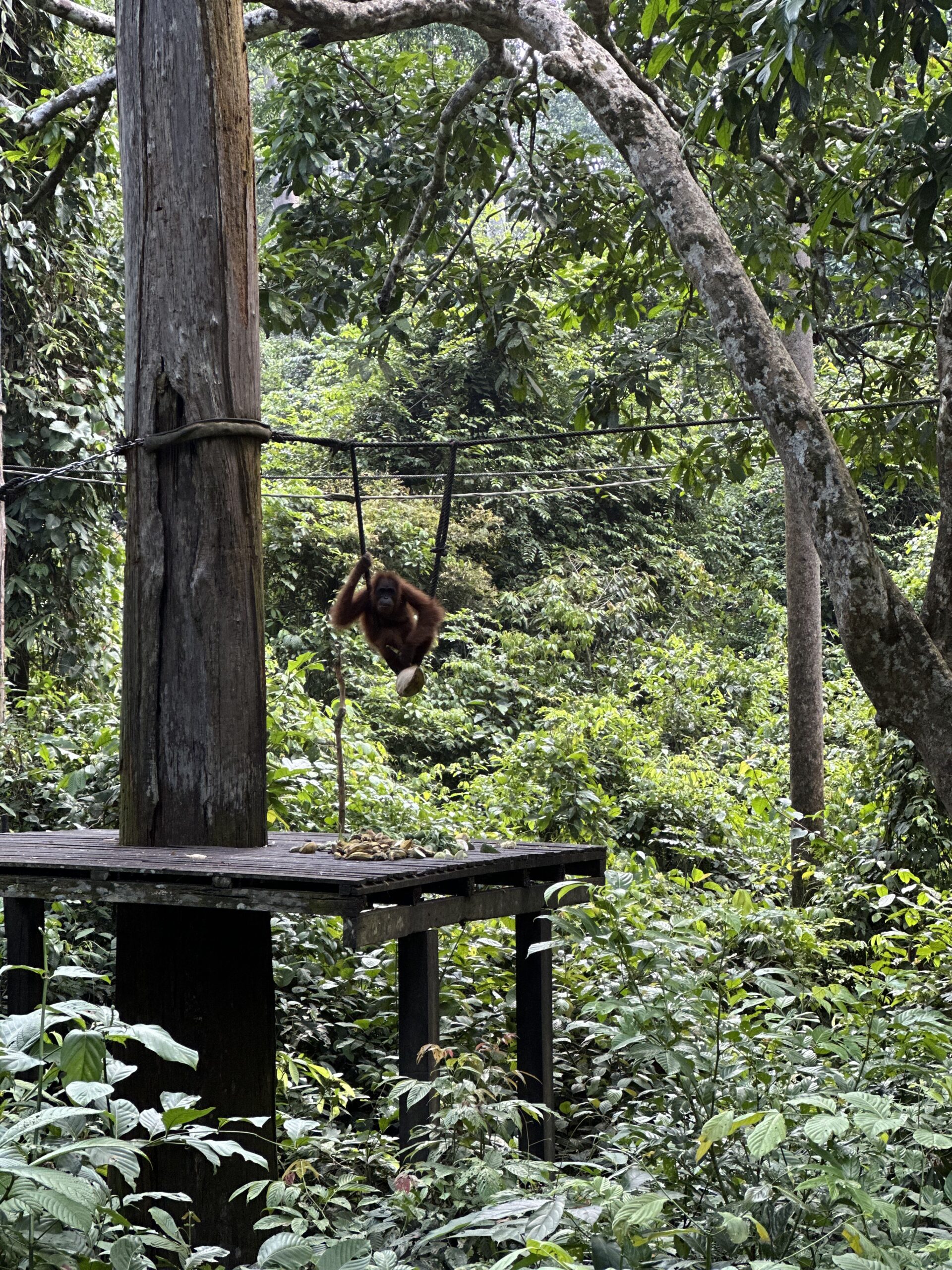
The Sepilok Orangutan Rehabilitation Centre is definitely one of the places that stayed with us most from our trip through Borneo. Founded in 1964, the centre cares for orphaned, injured or rescued orangutans and gradually rehabilitates them with the aim, whenever possible, of returning them to independent life in the forest.
What we appreciated most is the way the centre is organised: the orangutans live freely in the forest and we visitors enter their environment, not the other way around. If an animal decides to come down onto the visitor walkways, those areas are temporarily closed to give it all the space it needs. It is very well managed and makes it clear from the start that we are the guests.
There are two feeding sessions each day, at 10:00 and 15:00, when food is placed on a platform in the forest. The orangutans are free to appear or not. The ticket is valid for the whole day, so we entered in the morning and returned in the afternoon for the second feeding. Admission for foreign visitors currently costs 30 MYR per person.
For us, it was a genuinely moving experience and one of the main reasons Sepilok is worth including in a trip through Sabah.
Bornean Sun Bear Conservation Centre
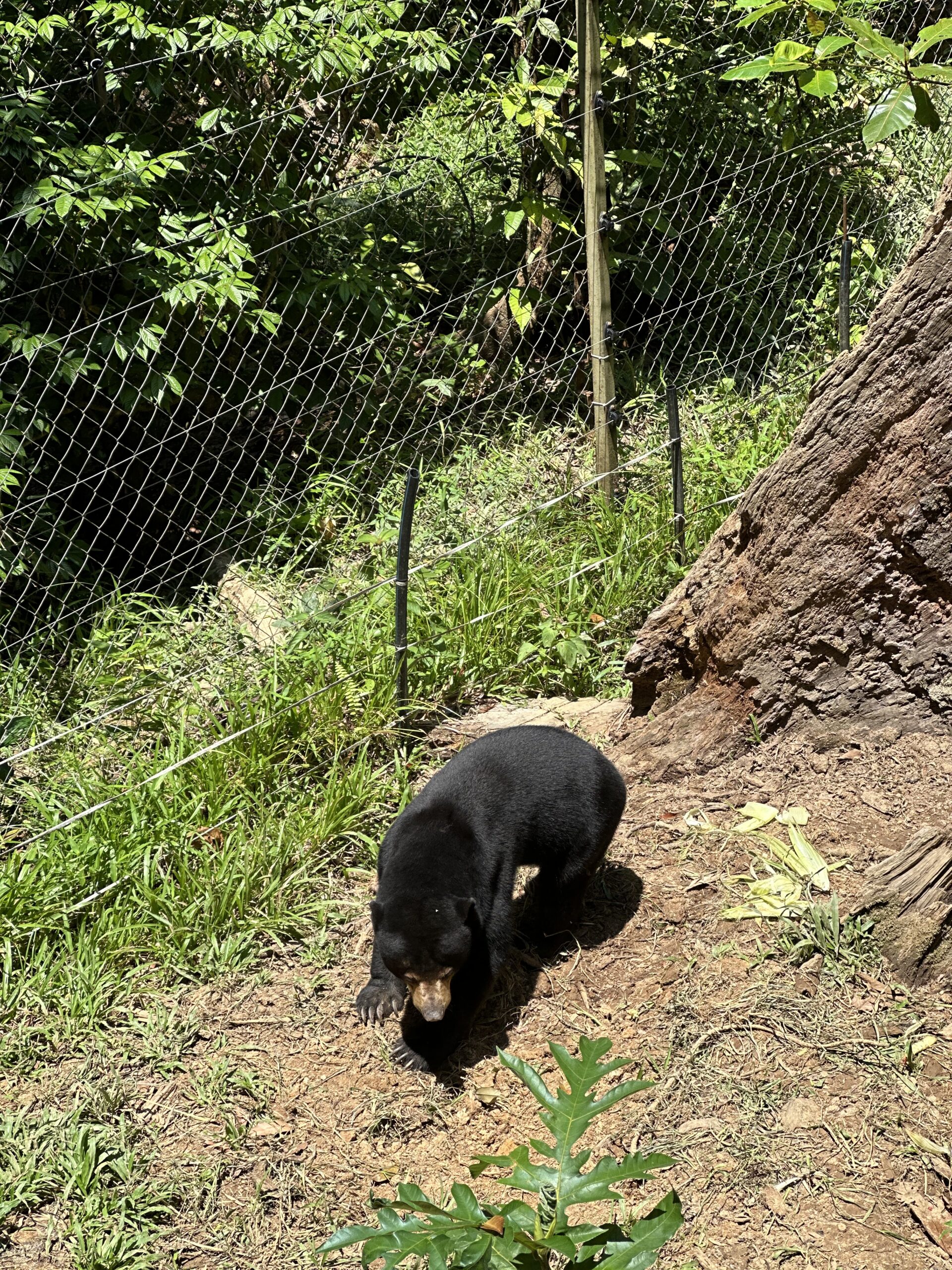
Almost opposite the orangutan centre is the Bornean Sun Bear Conservation Centre, dedicated to protecting the Malayan sun bear, the smallest bear species in the world.
We also really liked the way this centre is set up. Most of the animals come from captive situations and can be observed from raised walkways and platforms overlooking the forest as they move around, search for food and climb trees.
The centre works on rehabilitation and, where possible, eventual release back into the wild. Admission for foreign visitors costs 50 MYR per person and the centre is open every day from 09:00 to 15:30.
The visit does not take very long and, because it is almost next door to the orangutan centre, it makes sense to combine the two on the same day.
Rainforest Discovery Centre
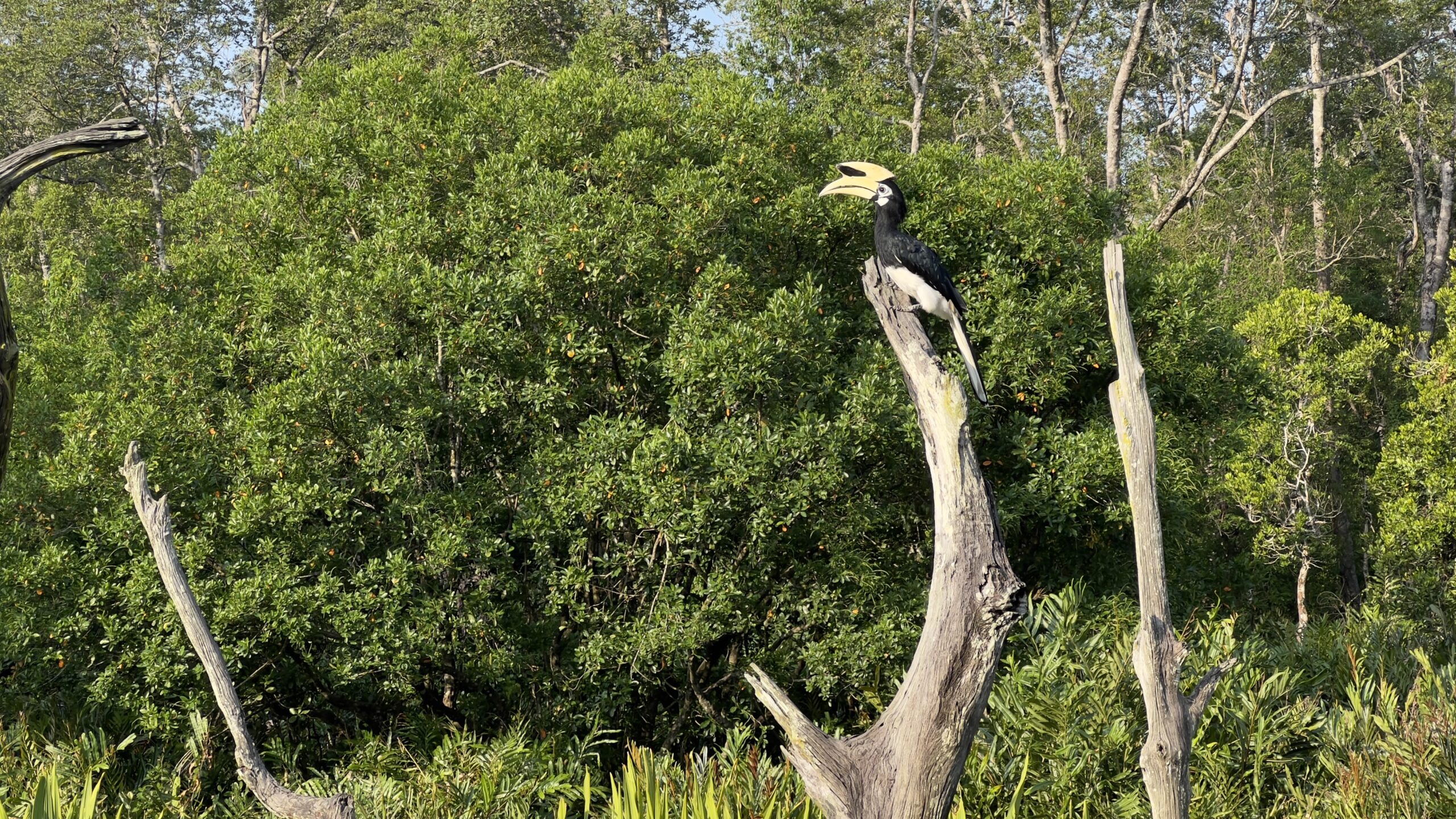
The Rainforest Discovery Centre, or RDC, lets you explore Sepilok’s rainforest along several trails that you can walk independently. One of the most interesting features is the Rainforest Skywalk, a long elevated walkway that takes you up to canopy level.
It is also an excellent place for birdwatching and, with a little luck, you may see hornbills, squirrels and other forest animals. We also visited the Plant Discovery Garden, a small botanical garden where, among the tropical species, you can see the distinctive carnivorous Nepenthes pitcher plants.
The RDC also organises guided night walks, where you may see nocturnal animals such as tarsiers, slow lorises, owls and small mammals. When we visited, these walks were very popular and places filled quickly, so book as soon as you arrive in Sepilok if you want to join one.
Admission for foreign visitors costs 30 MYR and the centre is open every day from 08:00 to 17:00. The night walk costs 50 MYR per person.
Labuk Bay Proboscis Monkey Sanctuary
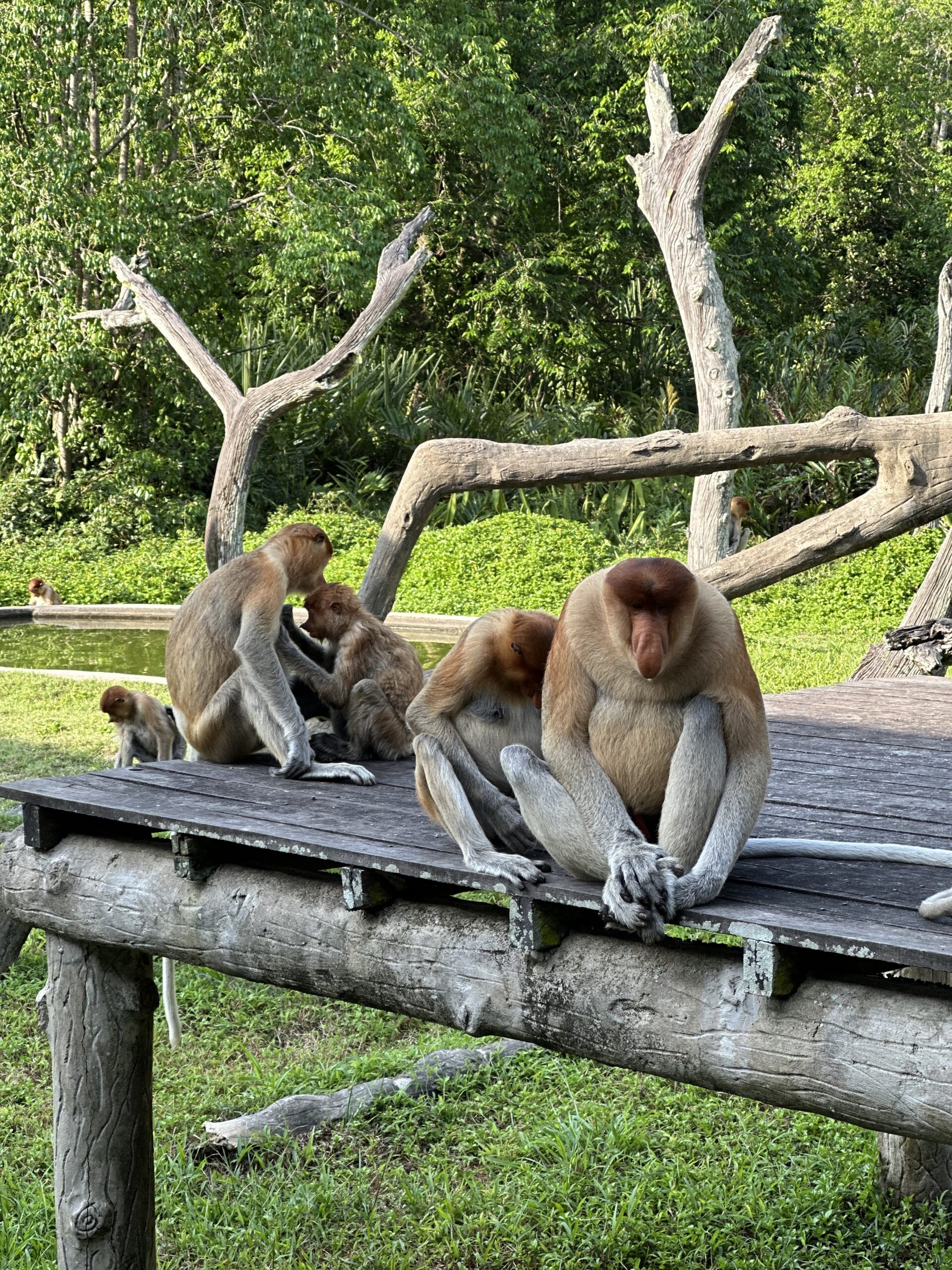
Farther from Sepilok is the Labuk Bay Proboscis Monkey Sanctuary, where you can see the distinctive proboscis monkeys, a species endemic to Borneo and easily recognised by the large noses of the males.
The monkeys live freely in the surrounding vegetation and approach the platforms during feeding times. However, this visit left us with very different feelings from the centres in Sepilok. What struck us most was the landscape around the sanctuary: along the way we saw huge expanses of oil palm where tropical forest once stood. Seeing these animals still living freely but surrounded by such a heavily transformed habitat made us quite sad.
It was one of the images that made one of Borneo’s major problems feel much more concrete to us: the loss and fragmentation of rainforest, also linked to its conversion into oil-palm plantations.
Admission for foreign visitors currently costs 60 MYR. There are two platforms with several feeding sessions during the day: 09:30 and 14:30 at Platform A, and 11:30 and 16:30 at Platform B.
We reached Labuk Bay in a taxi organised directly through our resort and shared the ride with another traveller.
Where to stay in Sepilok
In our opinion, it is worth staying directly in Sepilok rather than travelling back and forth from Sandakan. The area is surrounded by forest and the main attractions can easily be reached on foot.
We spent three nights at Sepilok Forest Edge Resort and had a very good stay. It offers dormitories as well as private rooms and chalets, plus a small swimming pool, which is very welcome in Borneo’s heat and humidity. There is also a small on-site restaurant, and we recommend eating there because there are very few alternatives nearby.
The best part, though, is the location deep in the forest. During our stay, we were lucky enough to see a couple of orangutans directly from the resort. There was a jackfruit tree outside our room and they were there eating the fruit. It was one of those moments we will never forget.
Sandakan
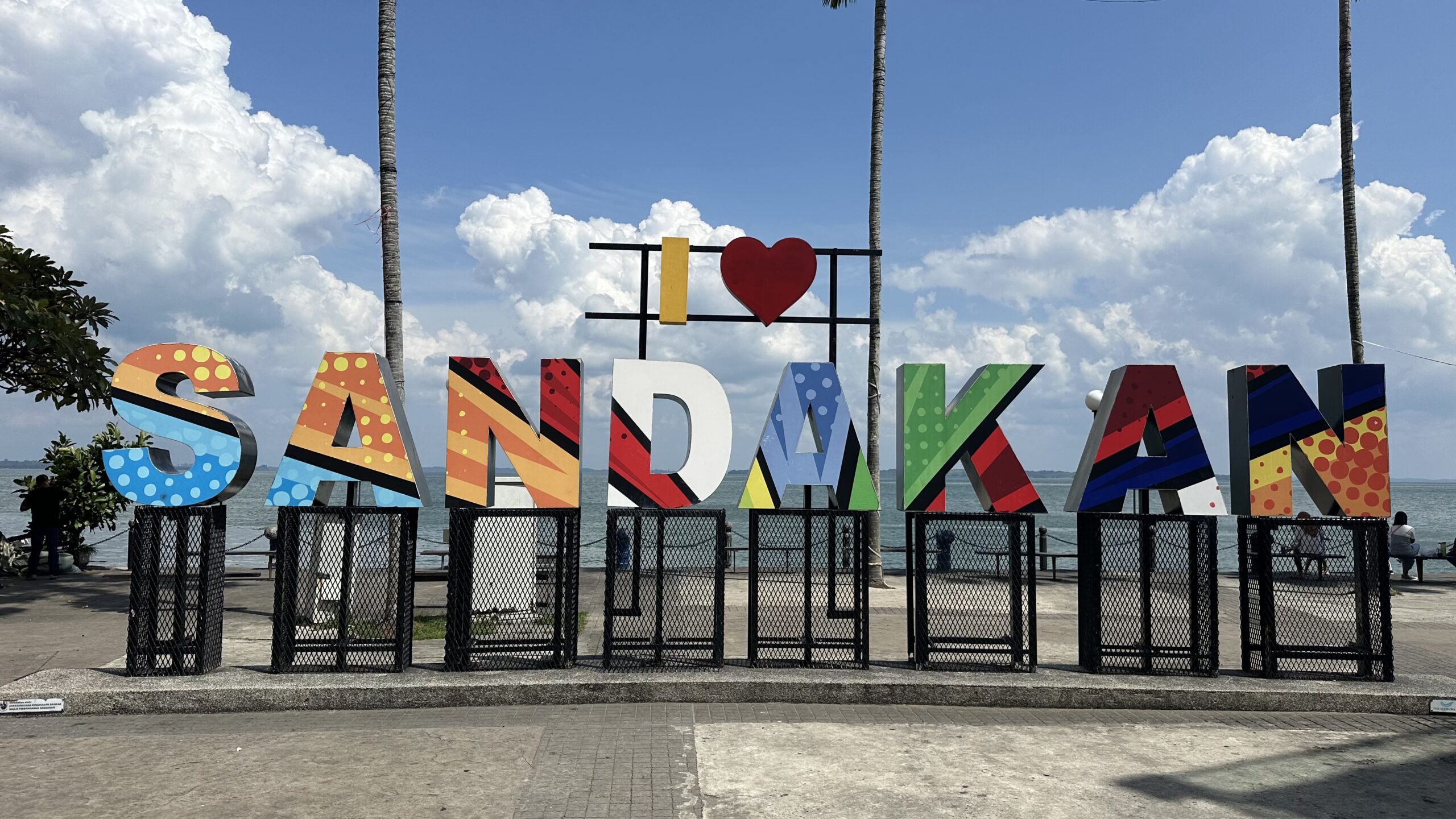
We arrived in Sandakan by plane from Kota Kinabalu and took a Grab directly from the airport to Sepilok. After visiting Sepilok, we returned to Sandakan and spent one night there before continuing towards the Kinabatangan River.
We have to admit that the city itself did not particularly impress us, and we do not think it is worth spending much time there. We stayed at Sandakan Backpackers Hostel, a simple and central option that was convenient for one night in transit.
From Sandakan, you can also organise a trip to Turtle Islands Park offshore, where green turtles and hawksbill turtles nest. We chose not to include it in our itinerary, but if you are interested, you can find more information on the official Turtle Islands Park website.
Kinabatangan River
At around 560 km long, the Kinabatangan is Malaysia’s second-longest river and crosses one of Sabah’s richest areas for biodiversity. orangutans, proboscis monkeys, crocodiles, hornbills and many other species live along its banks, along with the rare Bornean pygmy elephant.
The best way to explore the area is to spend a few days at one of the lodges along the river and join river safaris, which let you observe wildlife directly in its natural habitat. We chose the classic three-day, two-night package.
How to organise a Kinabatangan tour
“Who did you book your Kinabatangan tour with?” is easily one of the questions we have been asked most often. We chose Nasalis Larvatus Tours and booked the classic three-day, two-night package, staying at Tanini Kinabatangan in a natural setting along the river. We had a very good experience and, once booked, we barely had to organise anything else: transfers, accommodation, meals, guide and activities were all handled by them. We paid around €120 per person, including the transfer from Kinabatangan to Sandakan Airport.
The programme is fairly intense and focuses mainly on wildlife watching. You arrive at the lodge in the afternoon and, after dinner on the first evening, head out for a night walk in the forest. The following days start very early with a sunrise river safari, followed by breakfast and a forest walk. After lunch there is some free time before another boat trip in the late afternoon and a second night walk to finish the day.
The best thing is that every outing is different. The animals are completely wild and you never know what you may encounter. For that reason, we think three days and two nights is the right length to improve your chances of sightings without making the experience feel repetitive.
Borneo’s Big Five
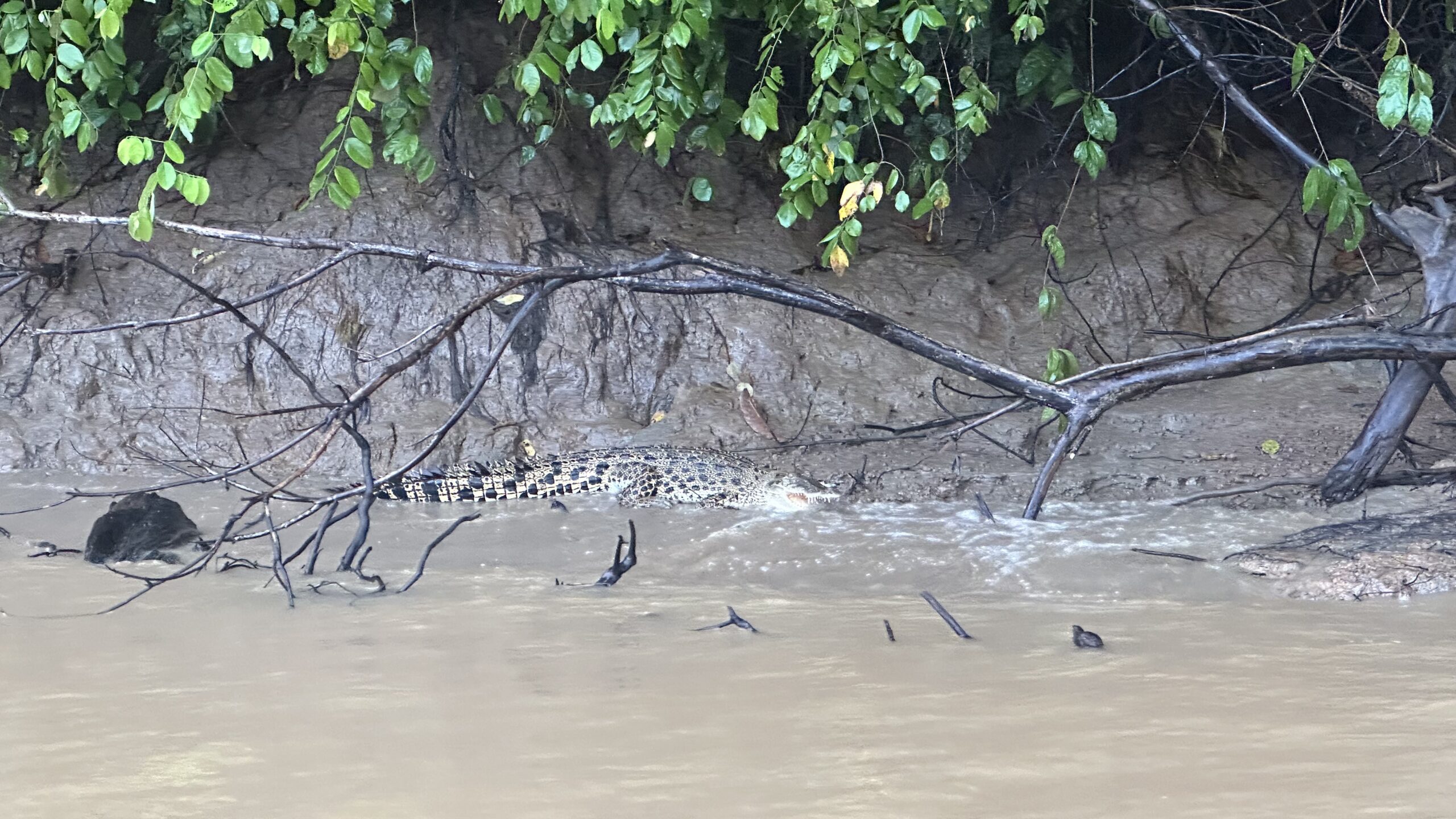
During our trip, we managed to see all five of Borneo’s Big Five: orangutans, pygmy elephants, proboscis monkeys, crocodiles and hornbills. Some we actively looked for; others simply appeared when we least expected them.
One of our best encounters happened at Labuk Bay Proboscis Monkey Sanctuary. We were about to leave when an older man who worked there crushed a red banana and began making calls. Soon afterwards, we heard the loud sound of wings coming from the forest: first one hornbill, then a second, and finally a third. By then almost everyone had left. It was just the two of us, the traveller who had come with us and another couple. It was one of those completely unexpected encounters that you end up remembering more than the planned ones.
But the sighting that stayed with us most happened on the Kinabatangan. We knew elephants were in the area because travellers who had arrived before us told us they had not even been able to leave their lodge for a while. When Bornean pygmy elephants come close, they can be very dangerous.
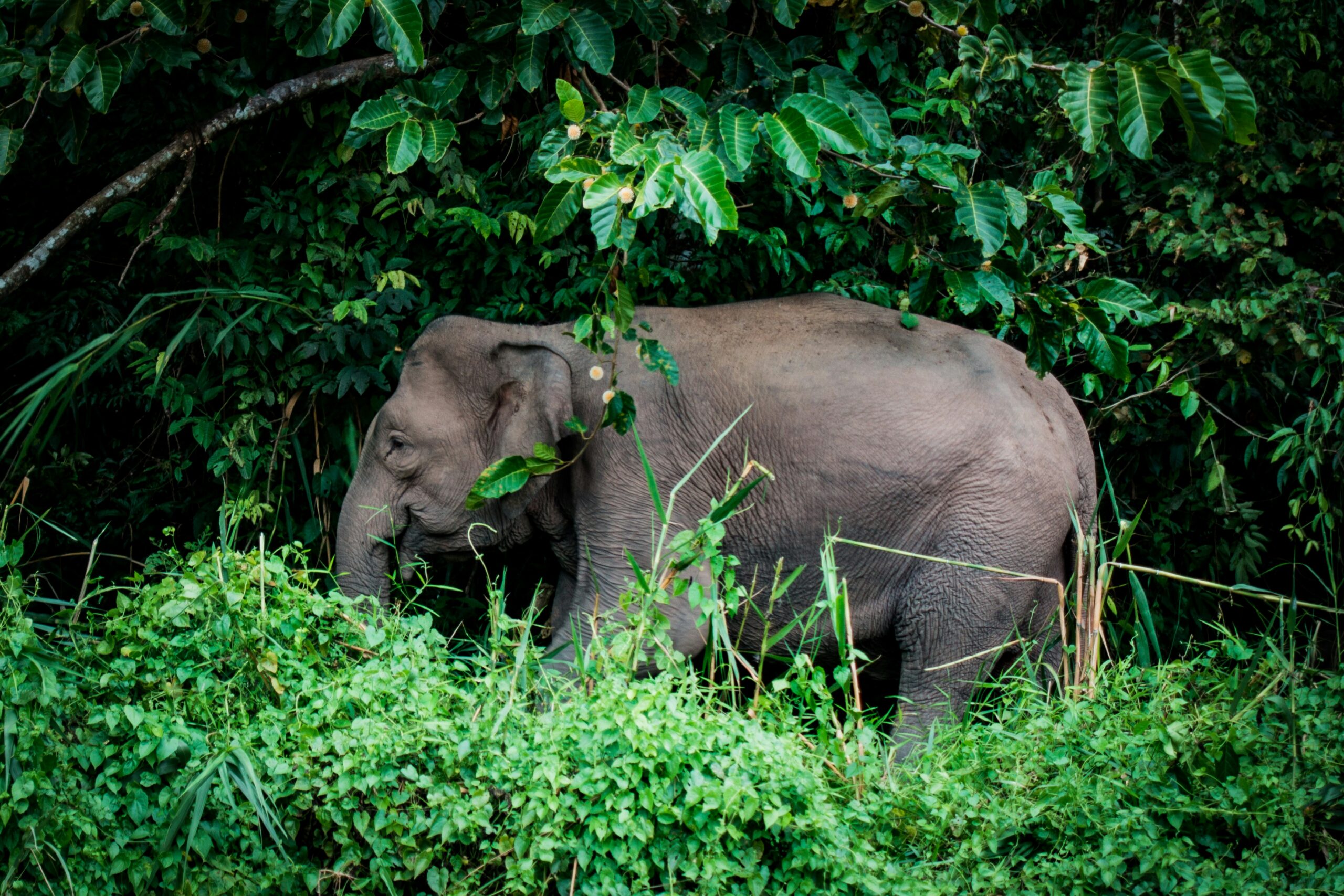
One morning, as we were returning from a river safari, we noticed the boatmen talking to one another. A little later, our guide turned around and simply asked us: “Breakfast or elephants?” Breakfast could wait.
We travelled several kilometres along the river before finding them. There were around thirty. We watched them emerge from the forest and, one after another, enter the water and cross the Kinabatangan right in front of our boat.
Even today, I find it difficult to tell that story without getting emotional. Watching around thirty wild elephants cross the river in front of us remains one of the most beautiful images of the entire journey.
What we would have liked to see in Sabah
There are three places we would have liked to include in our itinerary but mainly had to leave out because of budget. The first is Mount Kinabalu, Malaysia’s highest mountain at 4,095 metres. We seriously considered the climb, but the total cost of the permit, guide and accommodation made us change our minds (€400–600 per person, depending on the package). The climb is normally done over two days and you must use a registered guide.
The second is Semporna, the gateway to some of Sabah’s most famous islands and dive sites. Sipadan in particular is considered one of the world’s top diving destinations and, as divers, it was definitely somewhere we would have loved to see. Access is regulated and the number of daily permits is limited, so if you want to dive at Sipadan it is best to arrange it well in advance through an authorised operator.
Finally, there is Danum Valley, one of Sabah’s large protected rainforest areas. During the trip, we met travellers who were heading there after Mulu and told us they had paid around €900 per person for three nights. That is not necessarily the price of every stay in Danum Valley, but it made us realise pretty quickly that it was outside our budget.
With more time and, above all, a much bigger budget, these are probably the three places we would have added.