
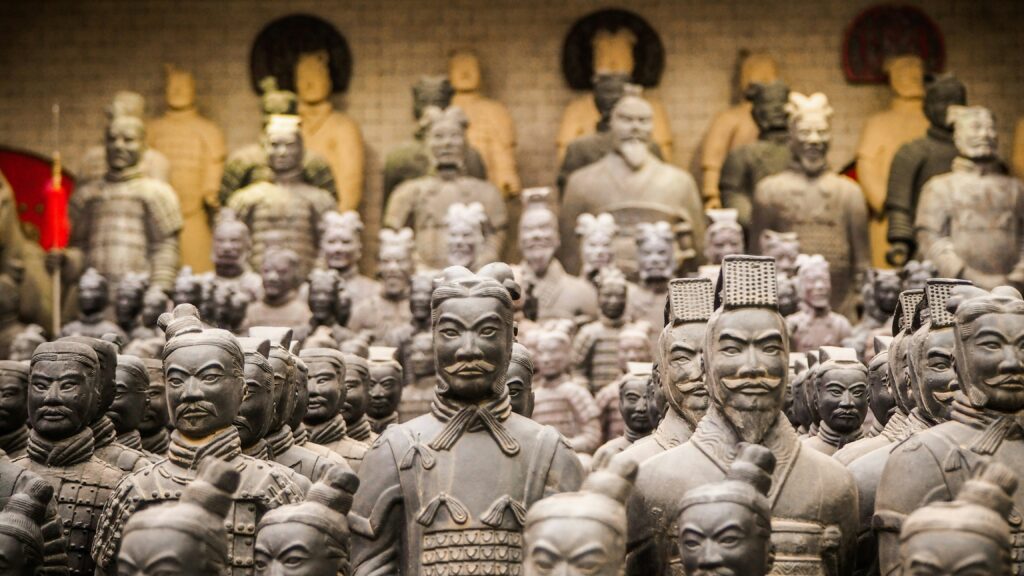
Xi’an is one of the most important cities in Chinese history. With more than 3,000 years of history and a past closely linked to the ancient Silk Road, today it is best known for the famous Terracotta Army.
We really liked Xi’an, but unfortunately our time was limited and we only managed to spend one day there. That is enough to see the main highlights, but with hindsight we would happily have stayed for at least two days and explored the city at a slower pace.
In this guide, we share our experience and the practical information you need to plan your visit: how to get around, where to stay and the best things to do in Xi’an.
How to get to and around Xi’an
We travelled from Beijing to Xi’an on an overnight train. This let us cover the more than 1,000 km between the two cities at night and save the cost of a hotel room.
Xi’an is well connected to China’s major cities by high-speed trains and domestic flights, so it is easy to include in a wider China itinerary. Most high-speed trains arrive at and depart from Xi’an North Railway Station, which is connected to the city centre by metro.
Once we arrived, we mainly got around by metro and on foot. We used the metro to reach our hostel from the railway station and later to travel to the Muslim Quarter. As in other major Chinese cities, the metro is inexpensive and easy to use. For shorter distances, Xi’an is also pleasant to explore on foot.
Things to do in Xi’an
Xi’an definitely deserves more than the single day we were able to give it. Between archaeological sites, ancient city walls and the atmospheric Muslim Quarter, these are the best things to do in Xi’an and the places we visited during our stay.
Terracotta Army
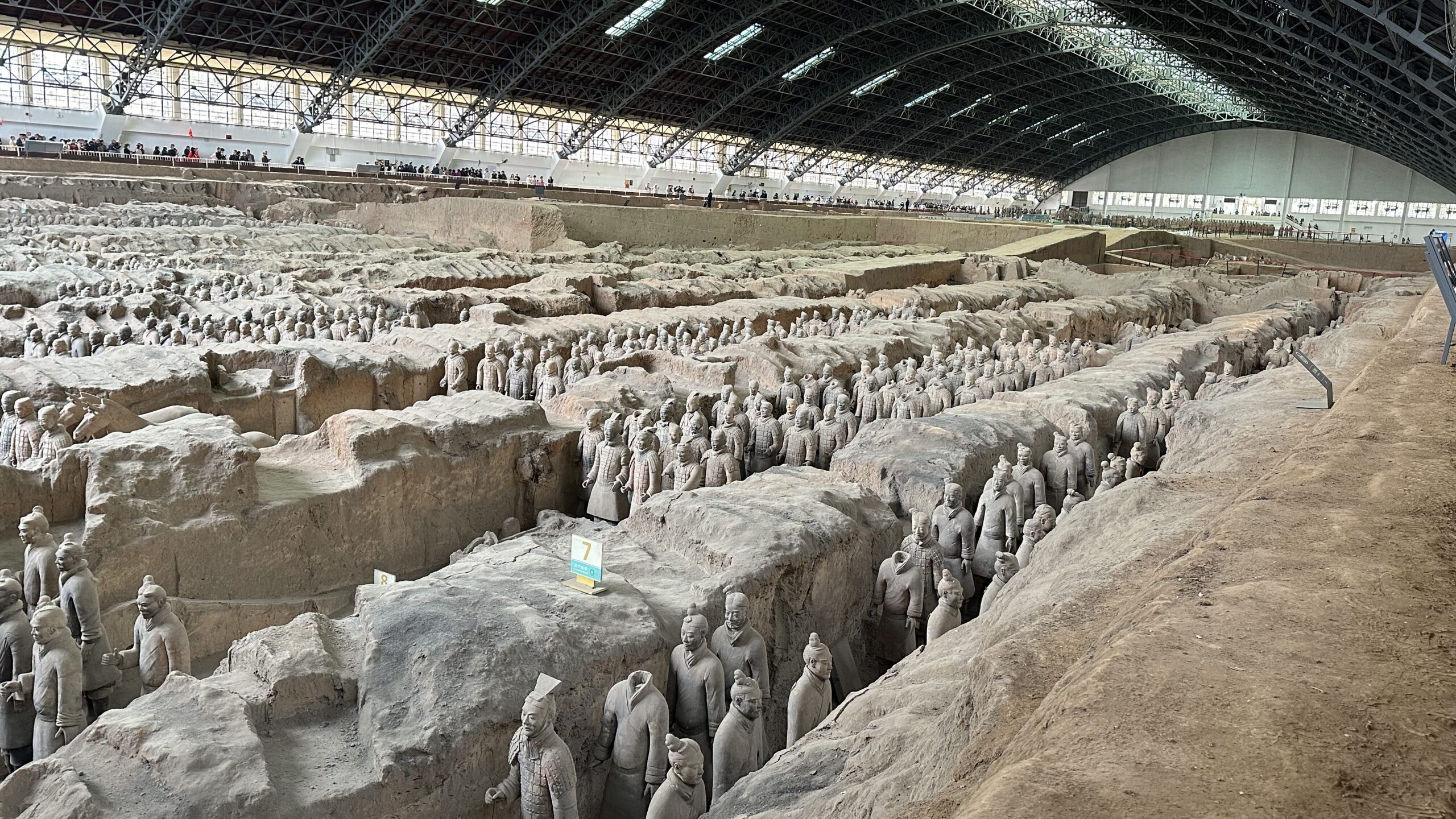
The first thing that comes to mind when you think of Xi’an is the famous Terracotta Army, one of the most important archaeological discoveries of the last century and, in our opinion, one of the highlights of a trip to China.
The army is made up of thousands of life-size terracotta figures, created to protect the tomb of Qin Shi Huang, China’s first emperor, in the afterlife. Soldiers, horses and chariots remained buried for more than two thousand years before being discovered by chance in 1974 by farmers digging a well. Since then, thousands of figures have been uncovered, many with different faces, clothing and poses. Excavation and archaeological research are still continuing today.
Practical information: this is one of China’s most visited attractions, so we recommend booking your ticket in advance. We bought ours through WeChat and paid around €15 per person. Be prepared for crowds: during our visit it was extremely busy and, to be honest, that made the experience less enjoyable for us. Allow around 2–3 hours to visit the complex.
How to get there: we took the metro to Huaqingchi station and then bus 613 to the entrance of the Terracotta Army. Alternatively, you can continue by taxi from the station area. We still recommend checking the latest routes and stops before your visit.
Xi’an Muslim Quarter (Huiminjie)
After visiting the Terracotta Army, we recommend wandering through the lanes of Huiminjie, Xi’an’s Muslim Quarter. It was one of our favourite areas in the city.
The neighbourhood is the heart of the Hui community, one of China’s many ethnic minorities and traditionally Muslim. Several mosques are found among its streets, including the well-known Great Mosque of Xi’an.
Huiminjie is best known for its street food and lively lanes packed with stalls, small shops, aromas and all kinds of products. At times, walking around here did not even feel like being in China. It reminded us more of some of the chaotic markets we had encountered elsewhere in Asia. We tried several local foods and, something we could not always take for granted in China, we also found a good choice of vegetarian options.
How to get there: one of the most convenient metro stops is Zhonglou (Bell Tower) on Line 2. From there, the Muslim Quarter is an easy walk.

Xi’an City Wall
The ancient Xi’an City Wall surrounds the historic centre and is one of the city’s best-known attractions. Built during the Ming dynasty, it is considered one of the best-preserved ancient city walls in China and forms a circuit of around 14 km.
Practical information: the main entrances are at the city gates. We recommend going up onto the Wall around sunset, when the red lanterns begin to light up and the atmosphere changes completely. Entry costs around €7 per person. If you have more time, you can walk part of the Wall or rent a bicycle to complete the circuit.
Where to stay in Xi’an
In Xi’an, we stayed at Sifang Space Hostel, a youthful and very pleasant hostel that we remember as one of the best places we stayed during our trip to China.
The location is convenient, just a short walk from Tiyuchang metro station on Line 2, and the receptionist spoke some English. One thing to keep in mind if you are travelling as a couple: male and female dormitories are separate, so choose the room type that suits you when booking.
Back to our complete China travel guide