
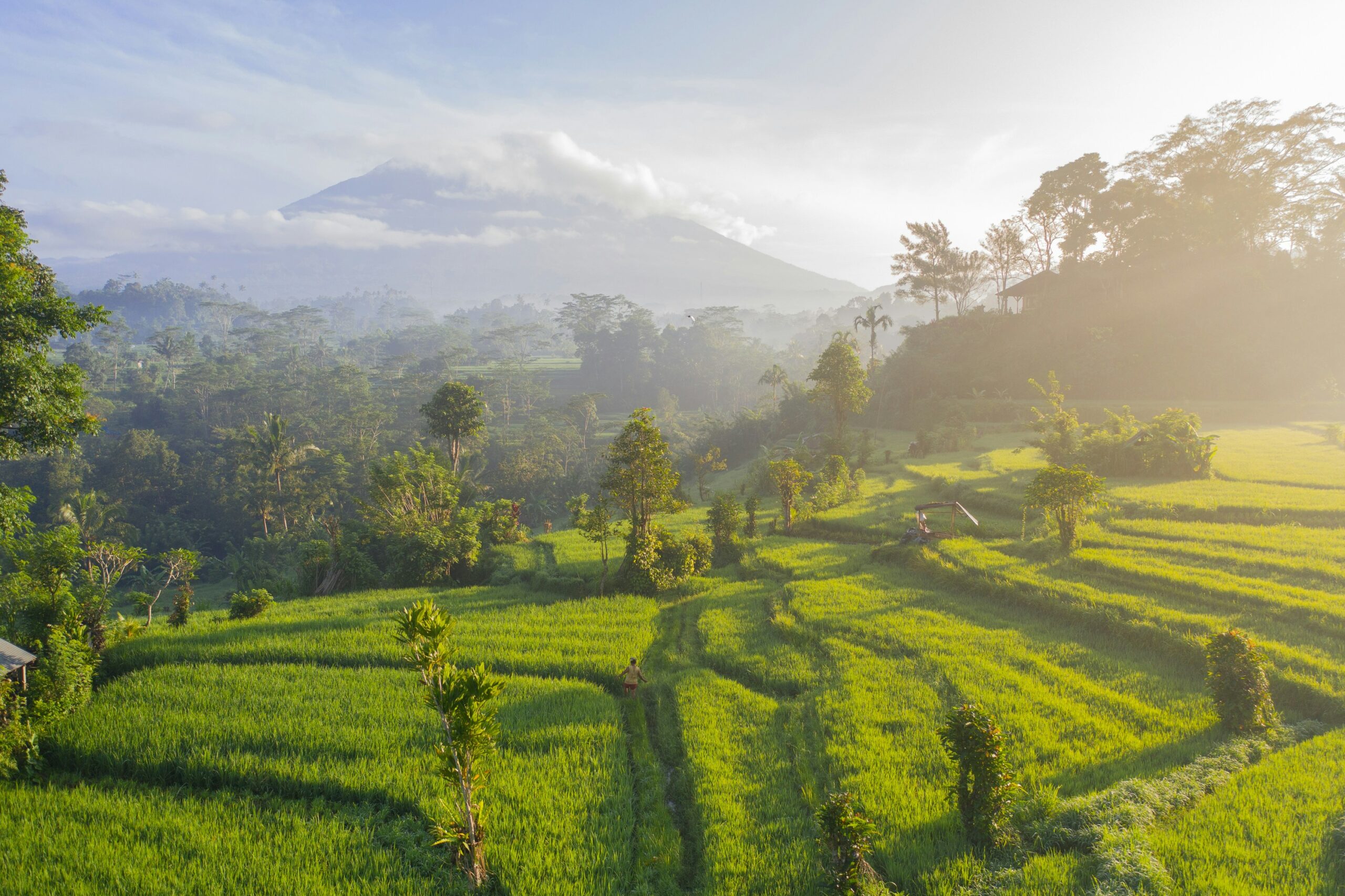
Bali is a deeply spiritual island, where Balinese Hindu culture is visible everywhere, from temples and offerings to daily ceremonies. It is also a place for yoga, surfing, hikes through rice fields and up volcanoes, cooking classes and local crafts, where tradition and modern life constantly meet.
In this guide, we share the best things to do in Bali, from its best-known destinations to quieter corners of the island.
Getting around Bali
Getting around Bali is fairly easy, but do not underestimate the distances. Places can look close on a map, yet traffic often makes journeys much longer, especially in the south and other busy areas.
The most common way to get around is by scooter: it is cheap, nimble and useful for exploring independently. If you would rather not drive, a private driver is a convenient and widely available option, especially for visiting several places in a day. Grab and Gojek work well in more built-up areas, for both cars and motorcycle taxis, although pickups are restricted in some places where local taxis operate. Shared shuttles and minivans also connect the main tourist destinations and are easy to book locally.
The island’s main airport is Ngurah Rai International Airport, in southern Bali between Kuta and Jimbaran.
Things to do in Bali
There is so much to see and do in Bali that we have divided the island into several areas to make planning your itinerary easier.
South Bali
South Bali is the island’s most developed and touristy area, with some of its best-known towns, countless restaurants, beach clubs, bars and hotels at every price point. It is also Bali’s busiest and generally most expensive region.
If you want beaches, surfing and nightlife, it could be the right area for you. If you prefer a quieter side of Bali, we suggest heading north or inland.
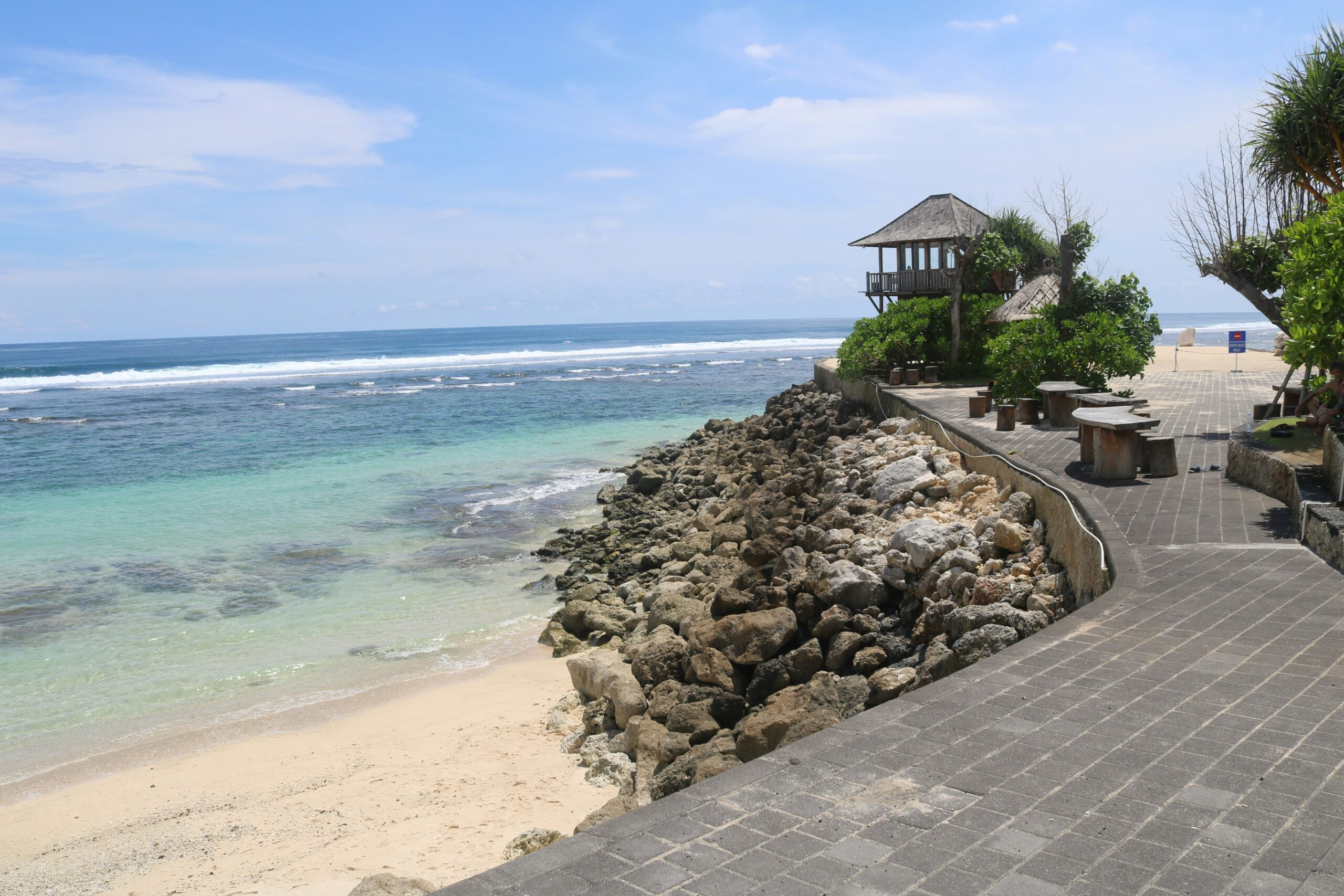
It is still our least favourite part of the island, although on our latest trip the stretch of coast between Pandawa and Melasti made us reconsider it somewhat. In our opinion, Melasti Beach is one of Bali’s most beautiful beaches.
Denpasar
Denpasar is Bali’s capital and main administrative centre, but travellers often skip it altogether.
One of its landmarks is the Bajra Sandhi Monument, dedicated to the history and struggles of the Balinese people and surrounded by the large Niti Mandala Renon park. In the city centre you will find Pura Agung Jagatnatha, one of Denpasar’s main Hindu temples, and the Bali Museum, where you can learn more about the island’s history, art and culture.
We would not call Denpasar essential on a first trip to Bali, but it is worth considering if you have more time and want to see a much less touristy part of the island.
Kuta
Kuta is one of Bali’s busiest tourist areas, known for its nightlife and Kuta Beach, a long stretch popular with surfers, particularly beginners. Head north and you reach Legian and Double Six Beach, with plenty of bars and beachside spots for sunset. Jalan Legian is also home to the Bali Bombing Memorial, which commemorates the victims of the 2002 Bali bombings.
We would not spend much time in Kuta, but its proximity to the airport makes it a convenient base on arrival or before departure.
Seminyak
Seminyak is another popular area in southern Bali, known for its restaurants, boutiques, beach clubs and more polished nightlife compared with nearby Kuta. Seminyak Beach attracts surfers and people gathering for sunset drinks. At the heart of the area is Jalan Kayu Aya, also known as Eat Street, lined with restaurants, cafés and shops. It feels more polished than Kuta, but it is still busy and traffic-heavy.
Canggu
Canggu is one of Bali’s liveliest and youngest-feeling areas, popular with surfers and digital nomads. It is full of cafés, restaurants, yoga studios and bars, while Batu Bolong, Echo Beach and Berawa are best known for surfing and sunsets.
Honestly, to us it felt mostly like a crowd of would-be free spirits ready to post their alternative lifestyle on Instagram. We were not fans.
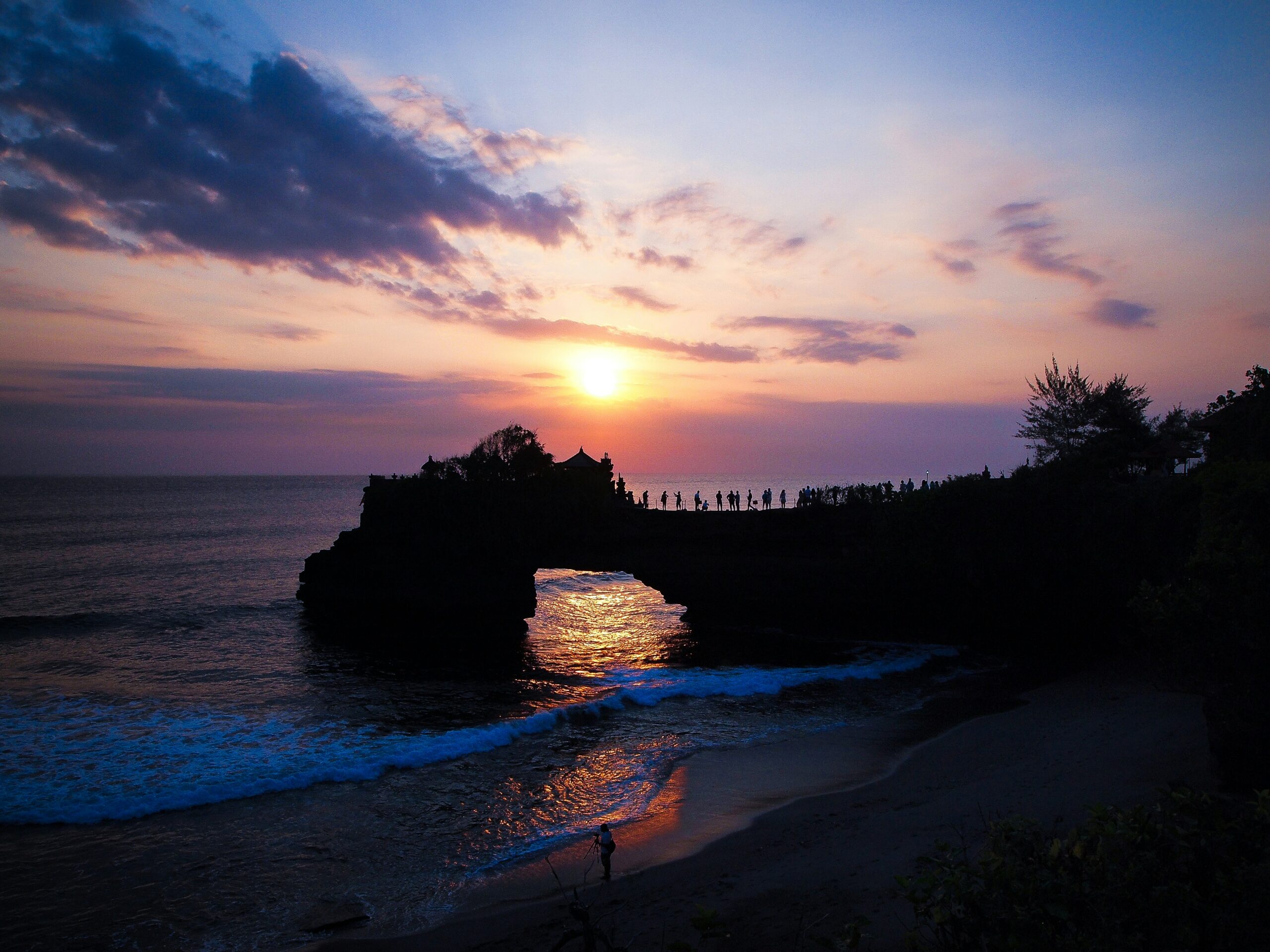
Not far from Canggu is Tanah Lot, one of Bali’s best-known temples. It stands on a rocky outcrop just offshore and is particularly atmospheric at sunset. It is an easy half-day trip from Canggu.
Sanur
Sanur is one of the quieter areas of South Bali and probably our favourite among the popular tourist bases. The Sanur Beach Walk follows the coast and makes for a pleasant walk or cycle ride, while the sea is generally calmer than on the west coast.
It is worth visiting Sindhu Market and the Sindu Dwarawati Turtle Conservation, a small centre that works to protect sea turtles. Eggs are collected and protected until they hatch; when young turtles are ready, visitors may be able to join their release into the sea.
Sanur is also one of the main departure points for fast boats to Nusa Penida, Nusa Lembongan and Nusa Ceningan.
Bukit Peninsula and Uluwatu
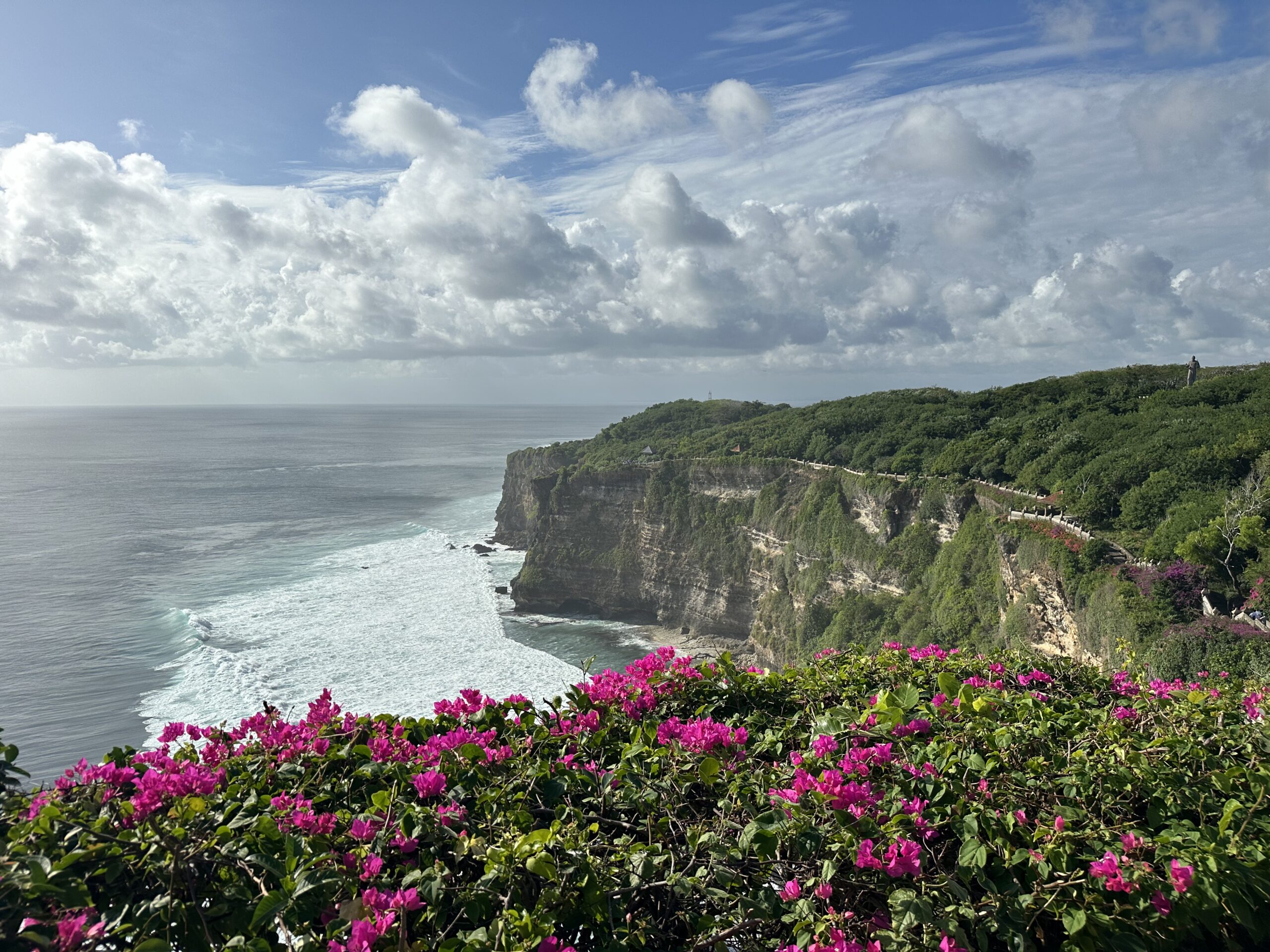
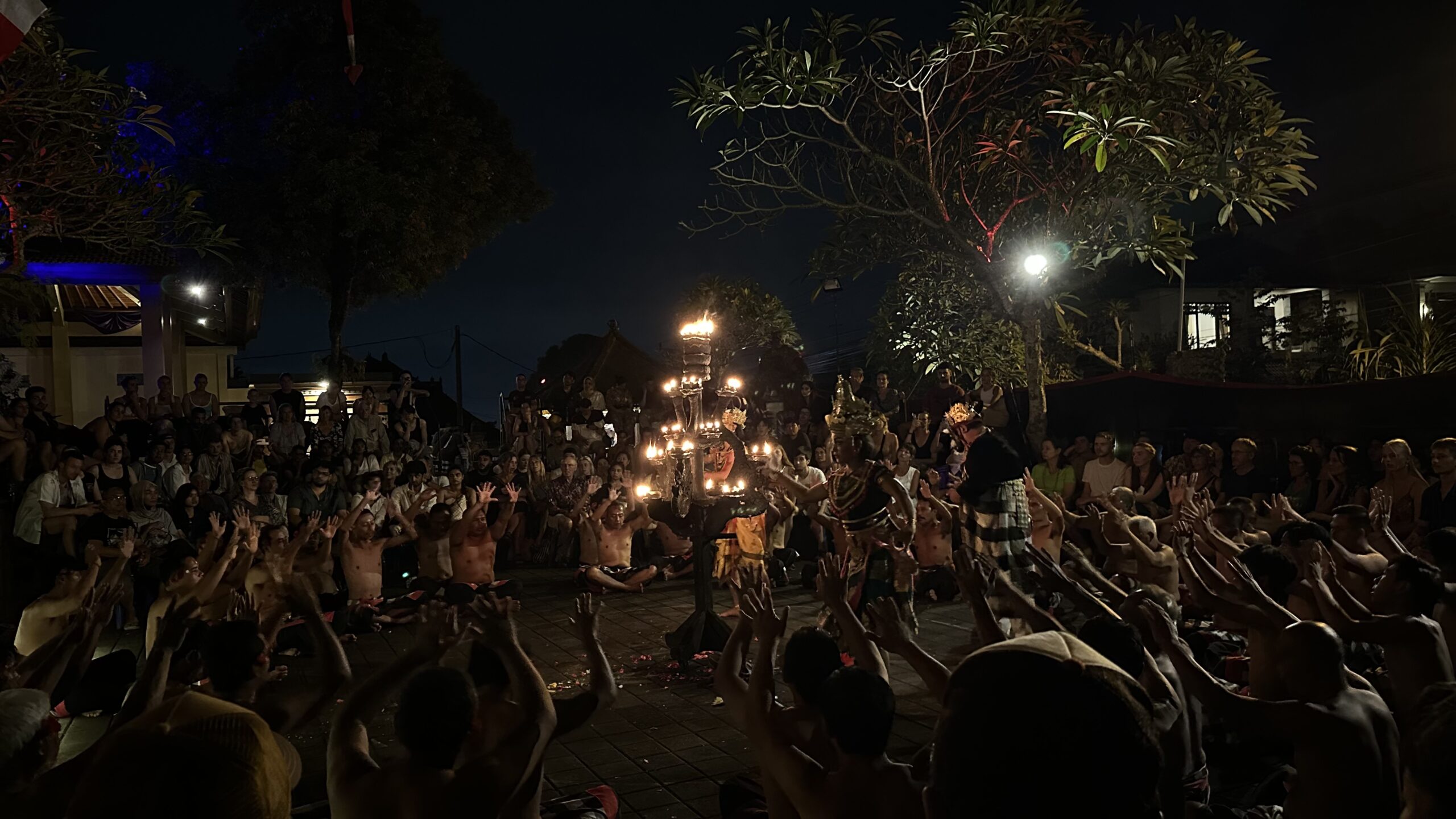
The Bukit Peninsula is home to one of Bali’s best-known temples, Uluwatu Temple, perched on a cliff overlooking the ocean. At sunset you can watch a traditional Kecak dance, though tickets here generally cost more than for other performances on the island.
The Uluwatu coast is especially known for its cliffs and surf beaches. Among the best known are Suluban Beach, reached by walking down between the rocks, and Padang Padang Beach, which also appeared in the film Eat Pray Love.
Farther south are Dreamland, Pandawa and Melasti Beach. We returned to this area on our latest trip and Melasti Beach genuinely surprised us. For us, it is one of the most beautiful beaches in Bali, with high limestone cliffs and turquoise water.
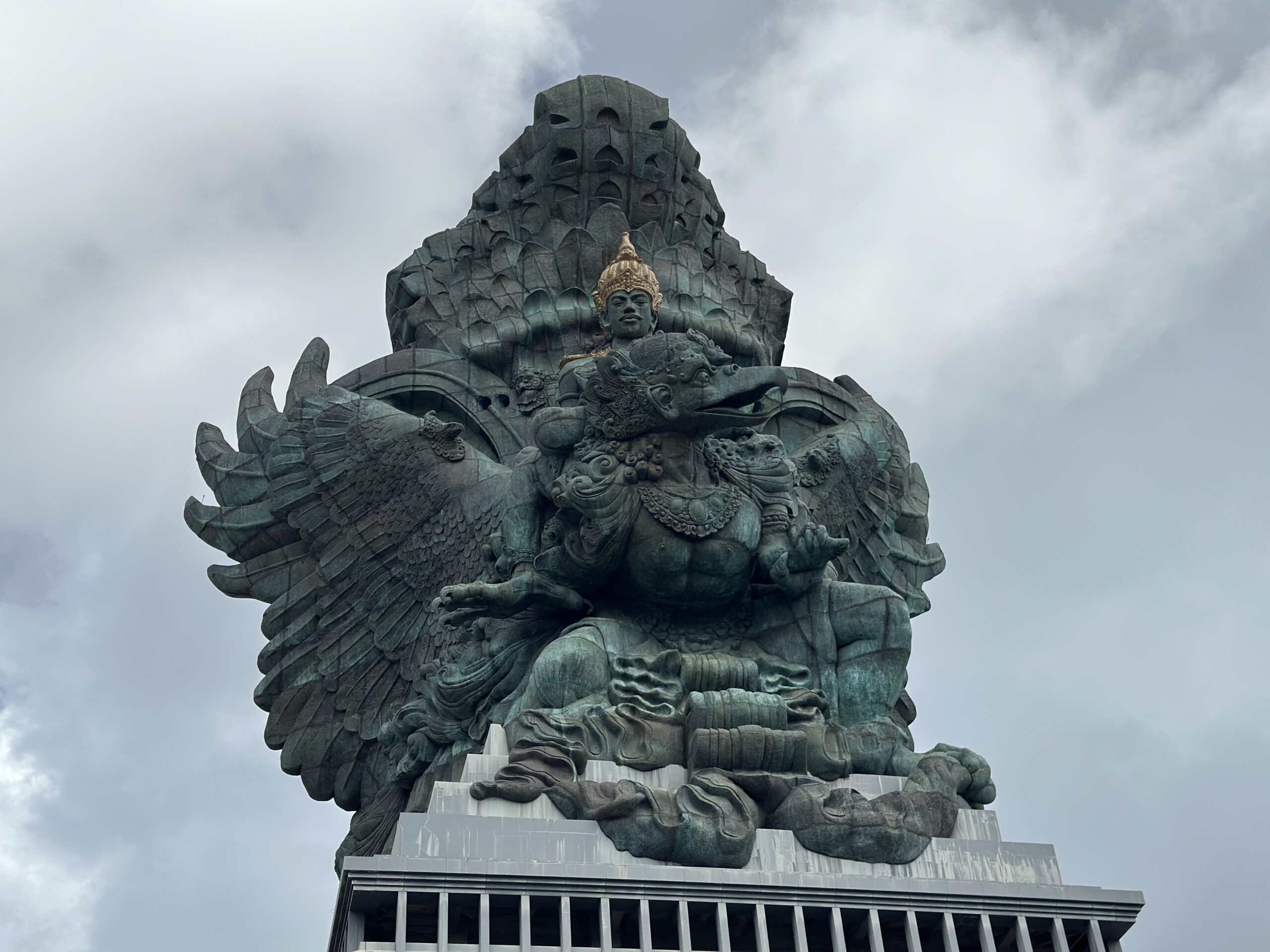
Garuda Wisnu Kencana (GWK) Cultural Park is home to the enormous Garuda Wisnu Kencana statue, dedicated to the Hindu god Vishnu and his mount Garuda. At 121 metres tall, it is one of the world’s tallest statues. The park also hosts traditional Balinese dance and cultural performances.
Where to stay in South Bali
On our trips we have stayed in several parts of South Bali, including Canggu, Sanur, Pandawa and Legian, and were happy with each place we chose.
In Canggu, we stayed at Putu Homestay, which has lovely rooms and genuinely kind staff. The property is split between several buildings, and the newest has a pool. For something a little more comfortable, we recommend Wiras Village.
In Sanur, we tried both Yulia 2 Homestay Sanur and Svastika Guesthouse Sanur: two simple places with good breakfasts and helpful staff.
In Pandawa, we recommend Pandawa Beach Homestay, while in Legian we stayed at The Island Bali.
Central Bali
Central Bali is the island’s green and cultural heart, with rice fields, forests, temples, mountains and volcanic lakes. It is also home to Ubud, one of Bali’s best-known towns and an excellent base for exploring the interior.
The climate is cooler and wetter than on the coast, and rain is by no means limited to the wet season. We visited between June and July, for example, and it rained almost every day. Do not let the forecast put you off too much: even in the rain, this part of Bali is beautiful to explore.
Ubud
Ubud is Bali’s cultural heart and one of the island’s best-known towns, made even more famous by Eat Pray Love. The centre is undeniably touristy, but travel just a little farther out and you find rice fields, small villages and a much quieter Bali.
Over the years, we have spent almost two months in Ubud and we still love it. The town itself does not have endless sights; it is the atmosphere and the surrounding area that make it special. It is also a great base for exploring Central Bali, from temples and rice terraces to waterfalls.
Things to do in and around Ubud
In central Ubud you will find the main market and Puri Saren Agung Royal Palace, which you can visit for free. A short walk away is Taman Saraswati, also known as the Ubud Water Palace and easy to recognise by its lotus-covered ponds.
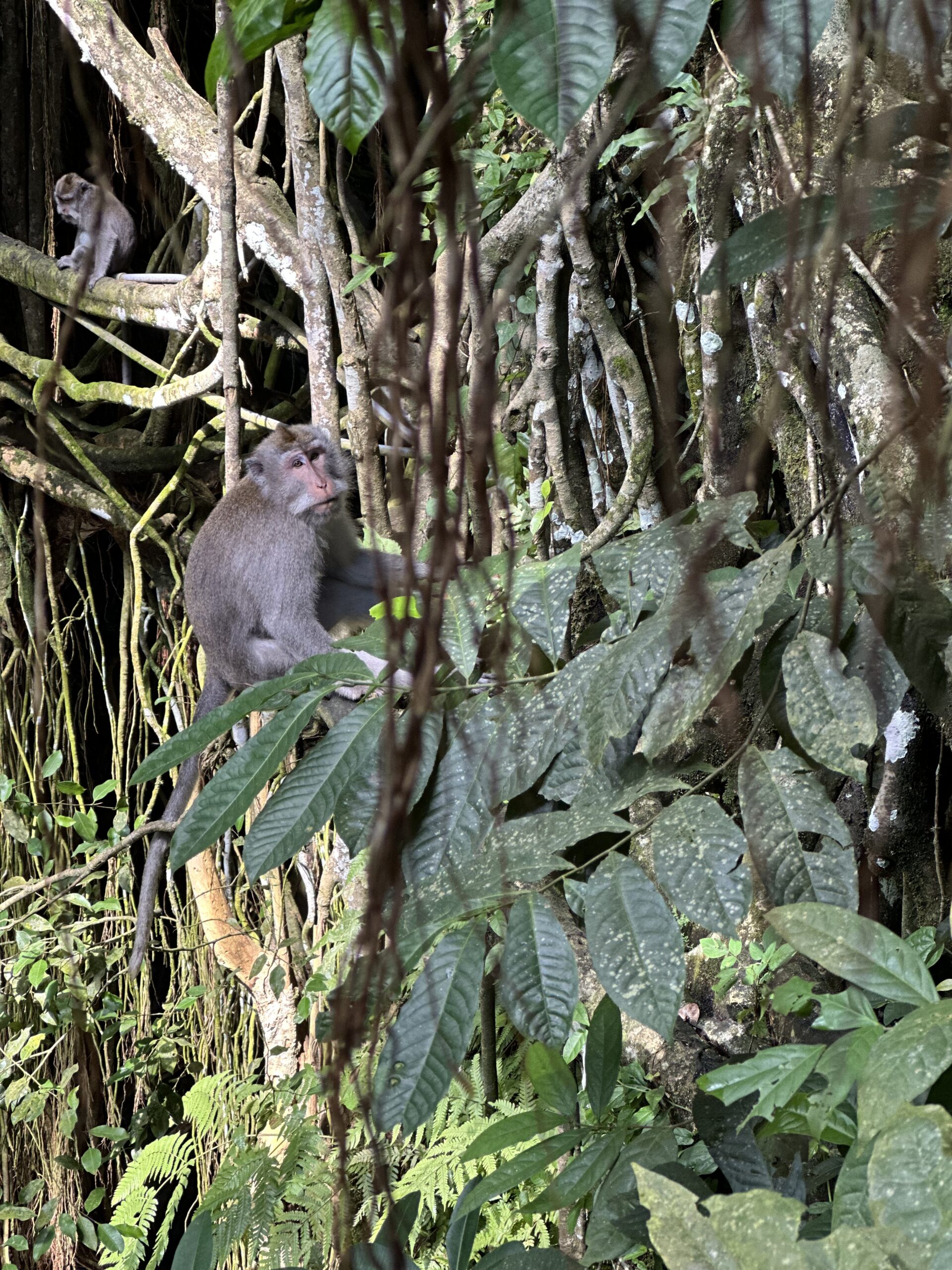
Just outside the centre is Ubud Monkey Forest, one of the town’s most visited attractions. This forest sanctuary is home to hundreds of macaques roaming freely among the trees and temples. Although it is very popular, we think it is worth visiting. Keep food, glasses and other easy-to-grab items secure: the monkeys are anything but shy.
What we love most about Ubud, though, are the walks through rice fields just minutes from the centre. Try the Rice Fields Walk and the Sari Organic Walk, which is much quieter and often has hardly anyone on it.
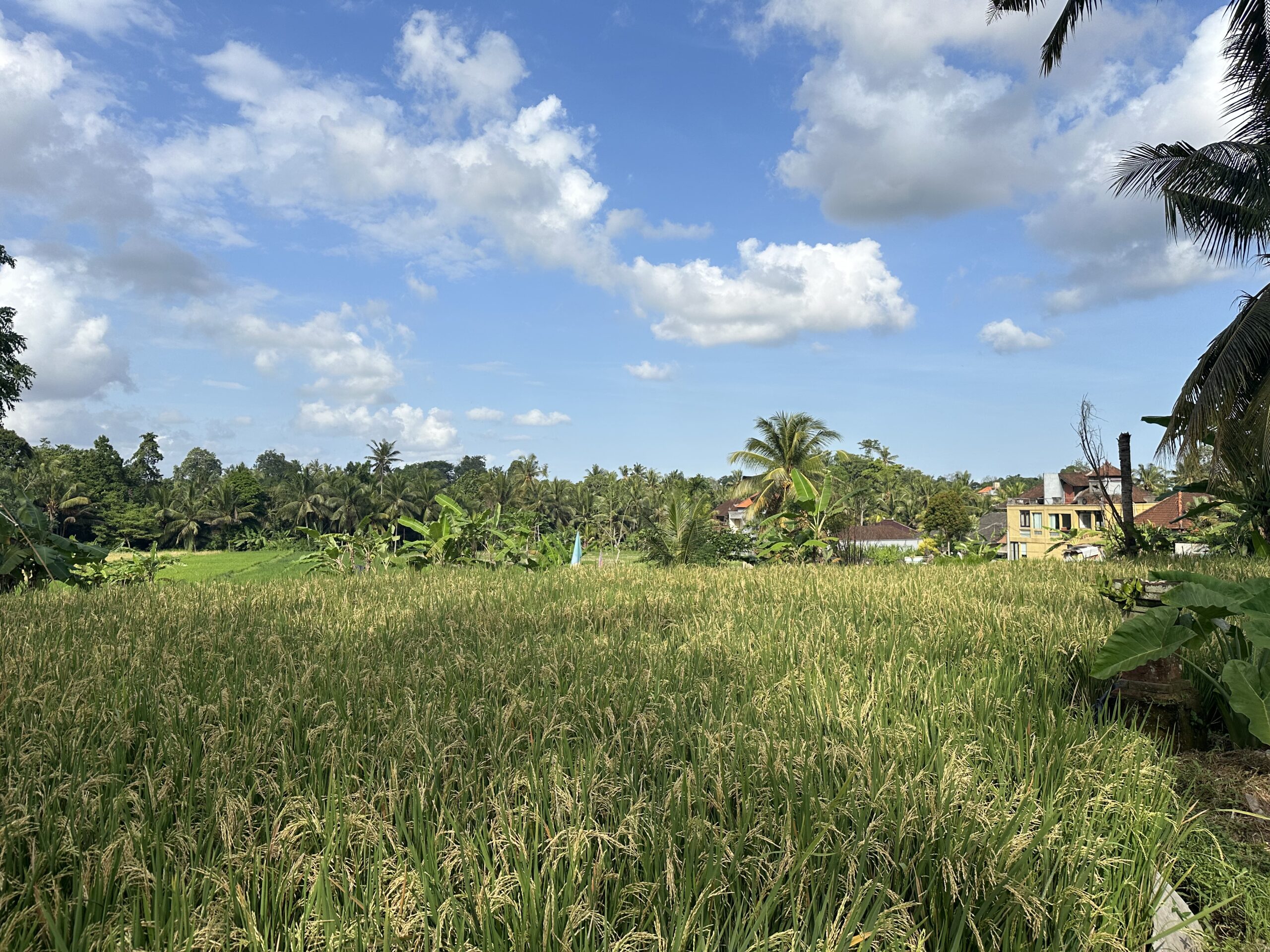
About ten kilometres from Ubud are the famous Tegallalang Rice Terraces, one of Bali’s most recognisable landscapes. Go early in the morning if you can, before most visitors arrive.
From there, you can continue to Tirta Empul, one of the island’s most important temples, known for its traditional water purification ritual. It gets busy; for a quieter experience, we really liked Pura Gunung Kawi Sebatu. Nearby, Goa Gajah and Gunung Kawi Tampaksiring are also worth a visit.
Another enjoyable stop is Pemulan Bali Coffee Plantation, where you can try a free tasting of local teas, herbal infusions and coffee. The famous Kopi Luwak is offered here too.
There are plenty of waterfalls around Ubud as well. Tegenungan, Tibumana and Kanto Lampo are among the best known.
Where to stay in Ubud
We have stayed in several places in Ubud over the years. Two affordable homestays we highly recommend are Frangipani Bungalow Ubud and Happy Inn 2. They are close to each other, simple, clean and very well located.
We have also stayed at Ubud Bungalow, a particularly lovely and more polished property that costs a little more than a typical homestay. If you want a bit more comfort, we think it is worth the extra money.
Where to eat in Ubud
After spending so much time in Ubud, we have tried plenty of warungs and small restaurants. Our favourites include Warung Gauri (try the vegetarian nasi campur), Papege’s Warung, Compound Warung and Puspa’s Warung. For a change, try the Mexican food at Taco Fiesta Bali. Gaees Burger Ubud serves excellent tofu and tempeh burgers. If you are craving a good pizza, head to L’Osteria Pizza e Cucina Ubud or ARTE Italian Restaurant | Ubud.
North Bali
North Bali is one of the island’s least touristy regions, apart from a few attractions often visited on day trips from Ubud. Move beyond the familiar stops and you will find villages, rice fields and far quieter roads than in the south.
Getting around takes more planning too: Grab and Gojek are limited or unavailable in some areas, so a scooter or a driver is useful.
Kintamani
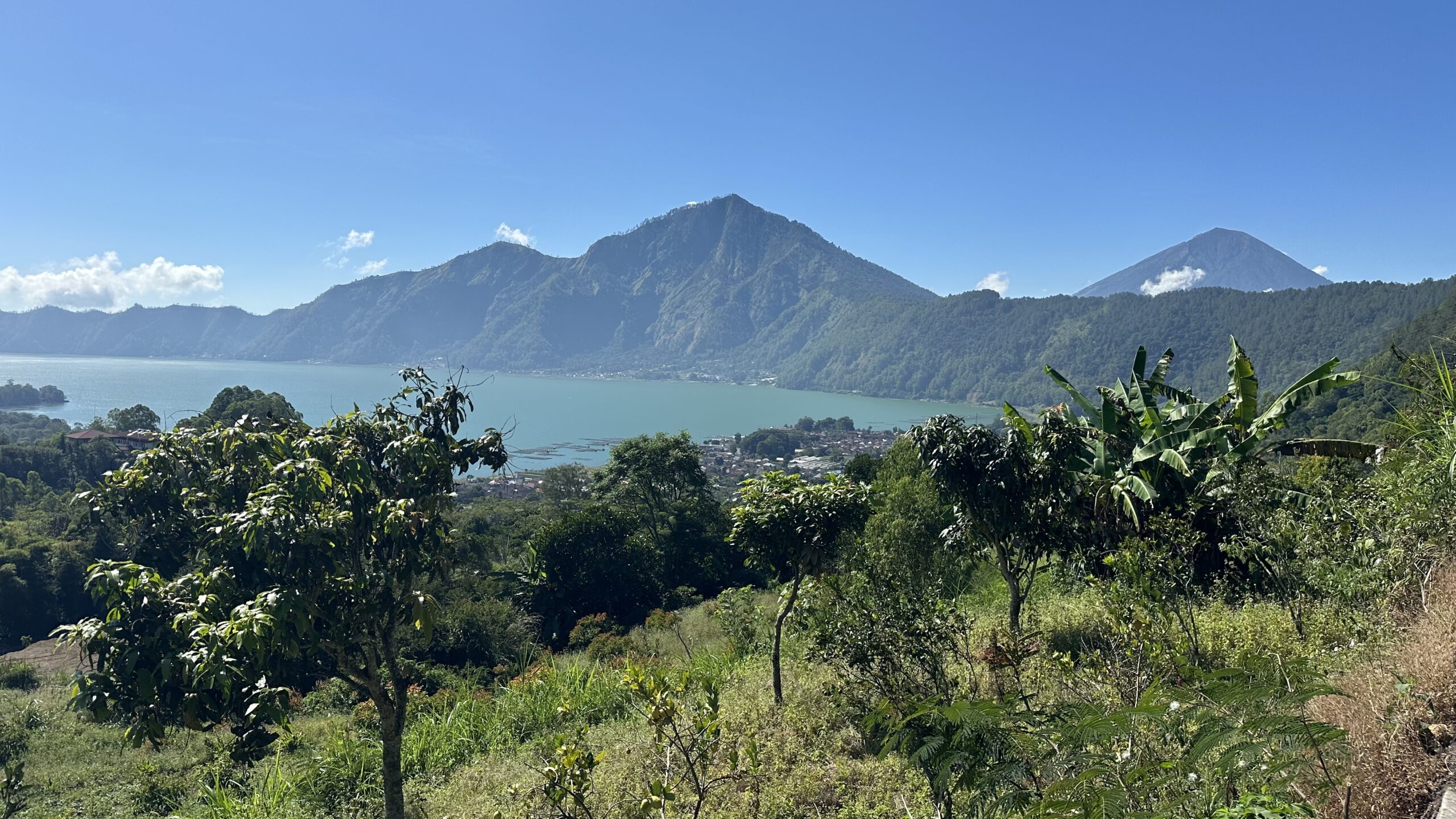
Kintamani is about an hour and a half from Ubud. This mountainous area has cooler temperatures and views dominated by Mount Batur and Lake Batur. Its best-known activity is hiking Mount Batur at sunrise. The volcano is still active, and the summit offers views of sunrise over the caldera. The trail is not particularly technical, but hikes are generally organised with a local guide.
The downside of Kintamani: our experience with Mount Batur was not a good one. We came from Ubud intending to climb it independently, but were told we could not go up without a local guide, even though we had read conflicting information about whether a guide was actually compulsory.
We also found reviews from travellers who said they had been stopped or intimidated while trying to set off without a guide. We decided to skip the hike rather than support a system that did not sit well with us.
We were told that tensions over very cheap tours sold in Ubud, compared with those arranged directly in Kintamani, may be part of the story. We cannot say how much truth there is to that, but unfortunately our experience in the area was not positive.
For us, Kintamani remains one of the few places in Bali we would give a miss.
Where to stay in Kintamani
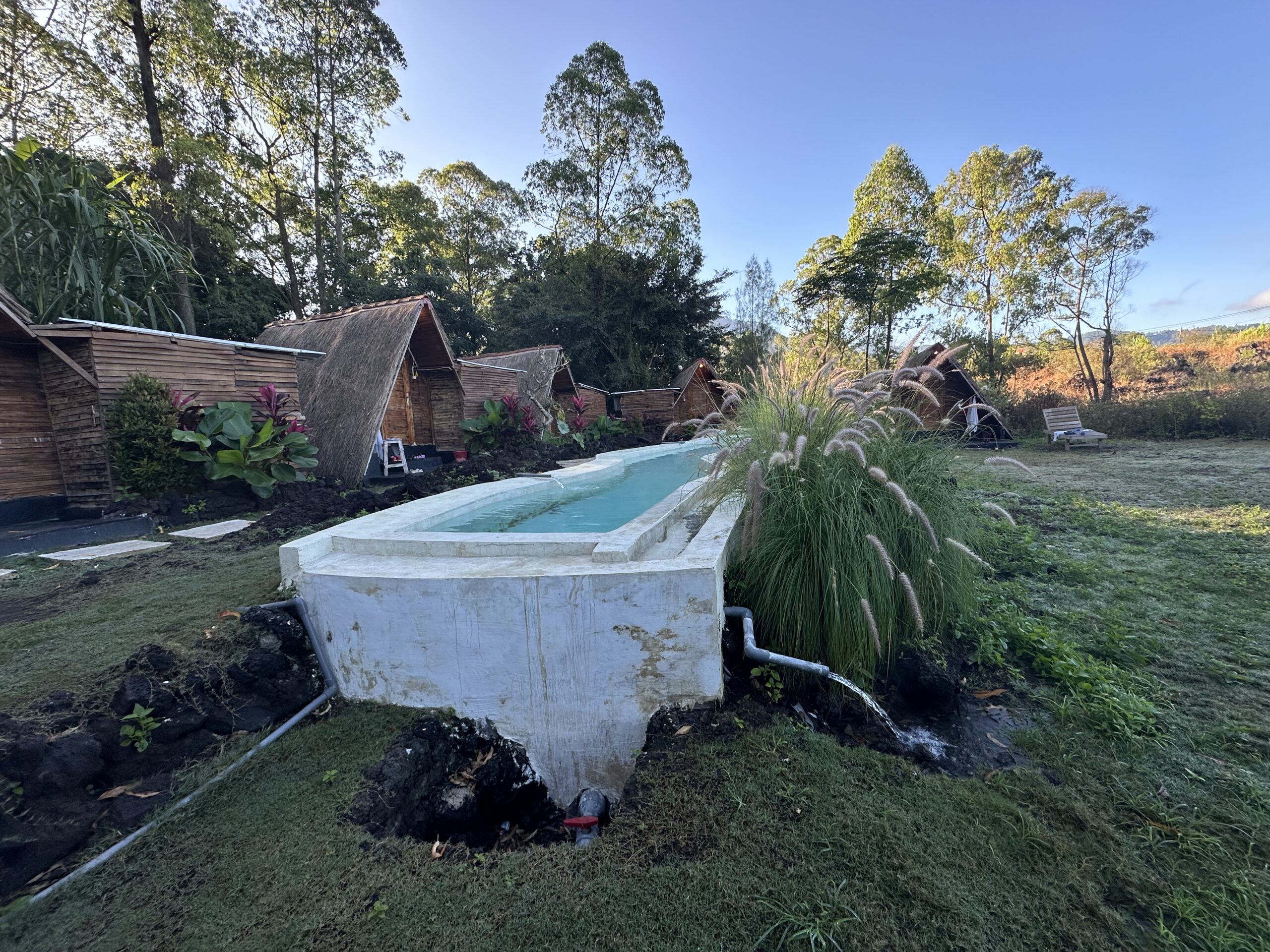
Despite our experience in Kintamani, we really liked our accommodation. We stayed at Triangle House and Private Hot Spring, in small huts with a hot-spring pool to relax in.
Bedugul and Munduk
Munduk and Bedugul are in northern Bali, an area of cooler temperatures, mountains, lakes and lush vegetation. The atmosphere is much more relaxed than in the south, and we think it is worth spending at least a couple of days here.
Bedugul
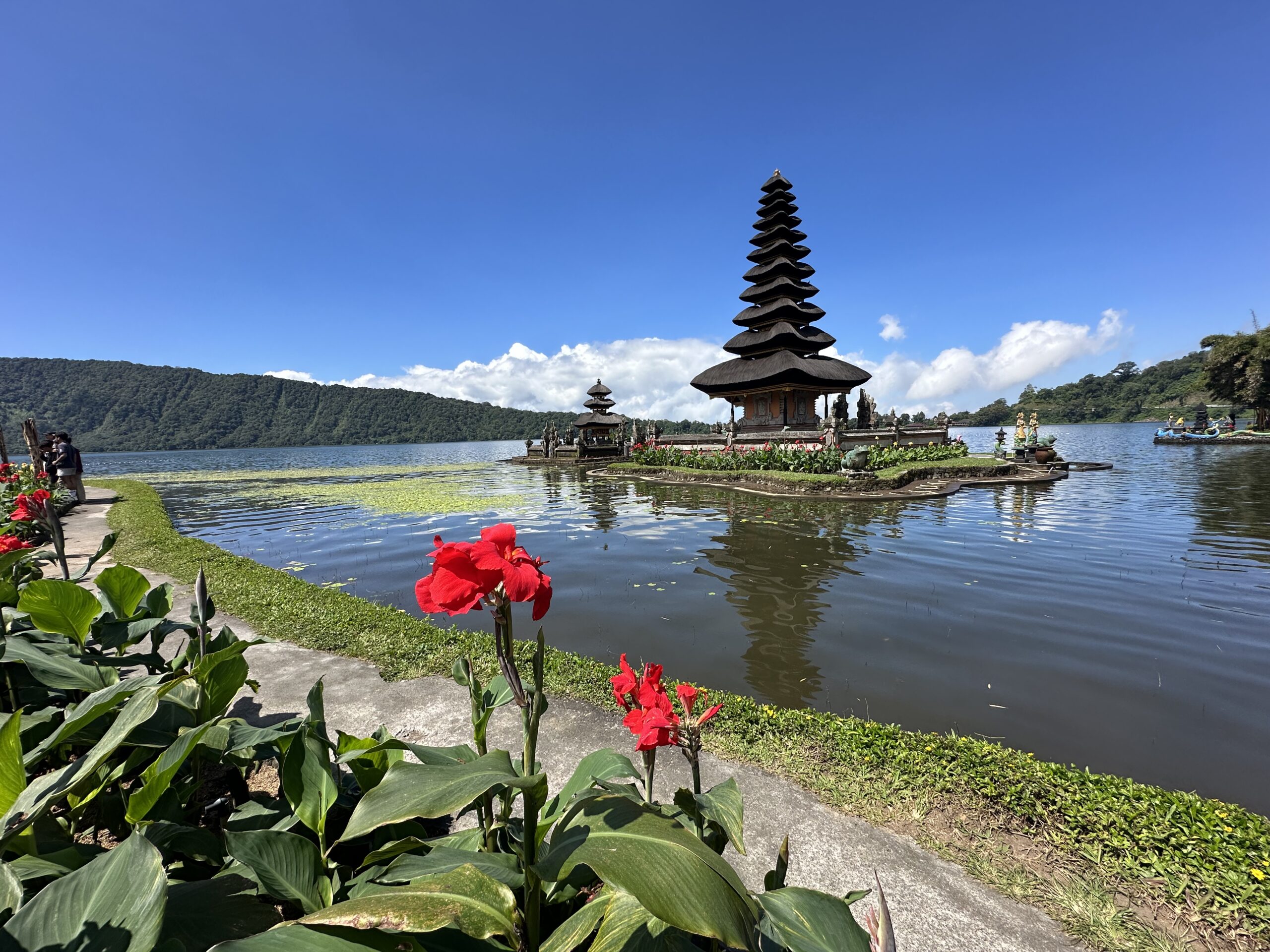
Bedugul is best known for Ulun Danu Bratan Temple, on the shore of Lake Bratan and one of Bali’s most photographed temples. Nearby is the Bali Botanic Garden, Indonesia’s largest botanical garden.
Jatiluwih Rice Terraces
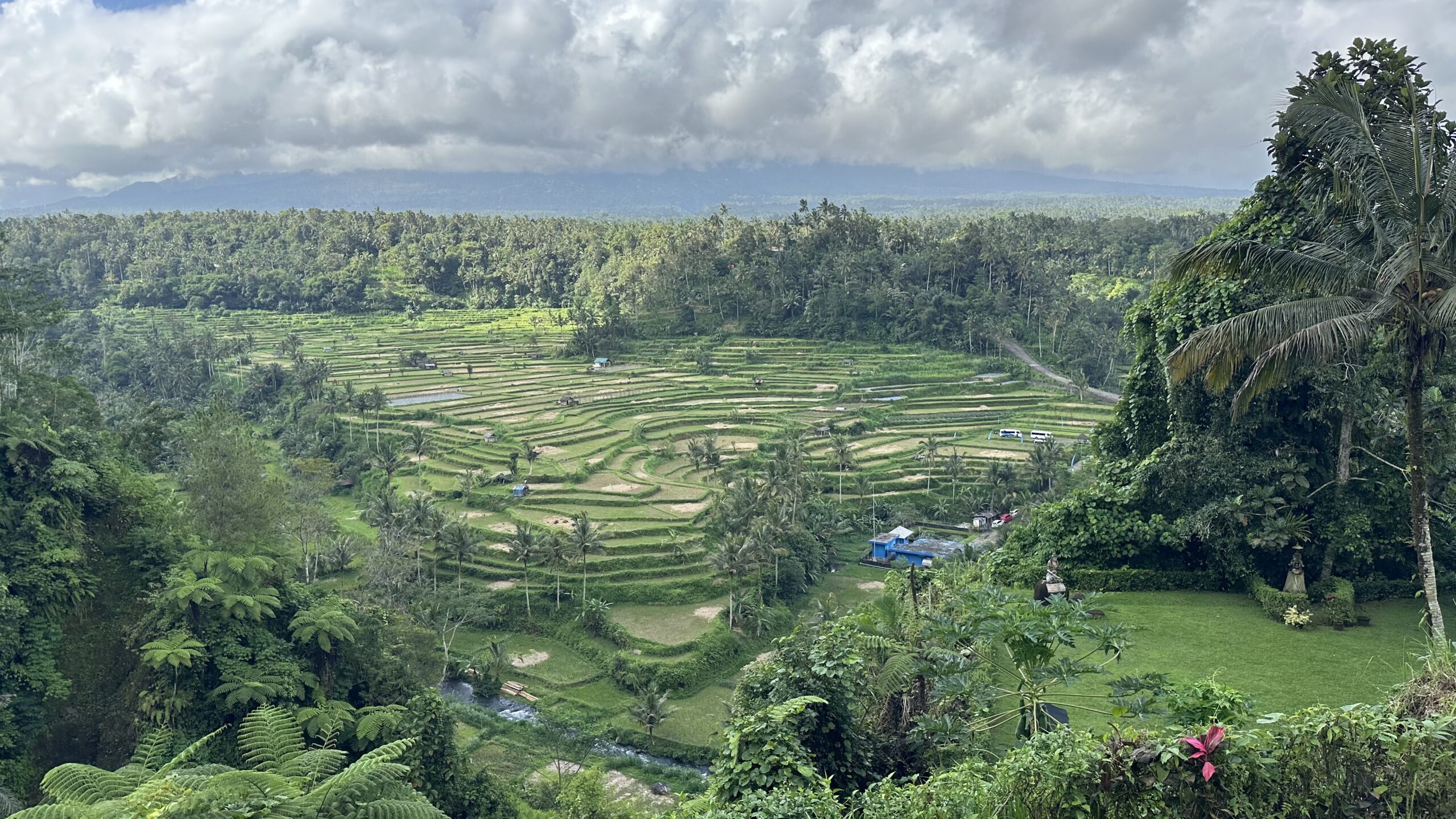
In the same area are the Jatiluwih Rice Terraces, the most beautiful in Bali in our opinion. They cover a much larger area than Tegallalang and are part of the UNESCO-listed cultural landscape associated with the traditional subak irrigation system.
You can follow several walking routes through the terraces. We visited on a day trip from Ubud, but you could easily stop here on your way to Bedugul or Munduk.
Munduk: waterfalls and rice fields
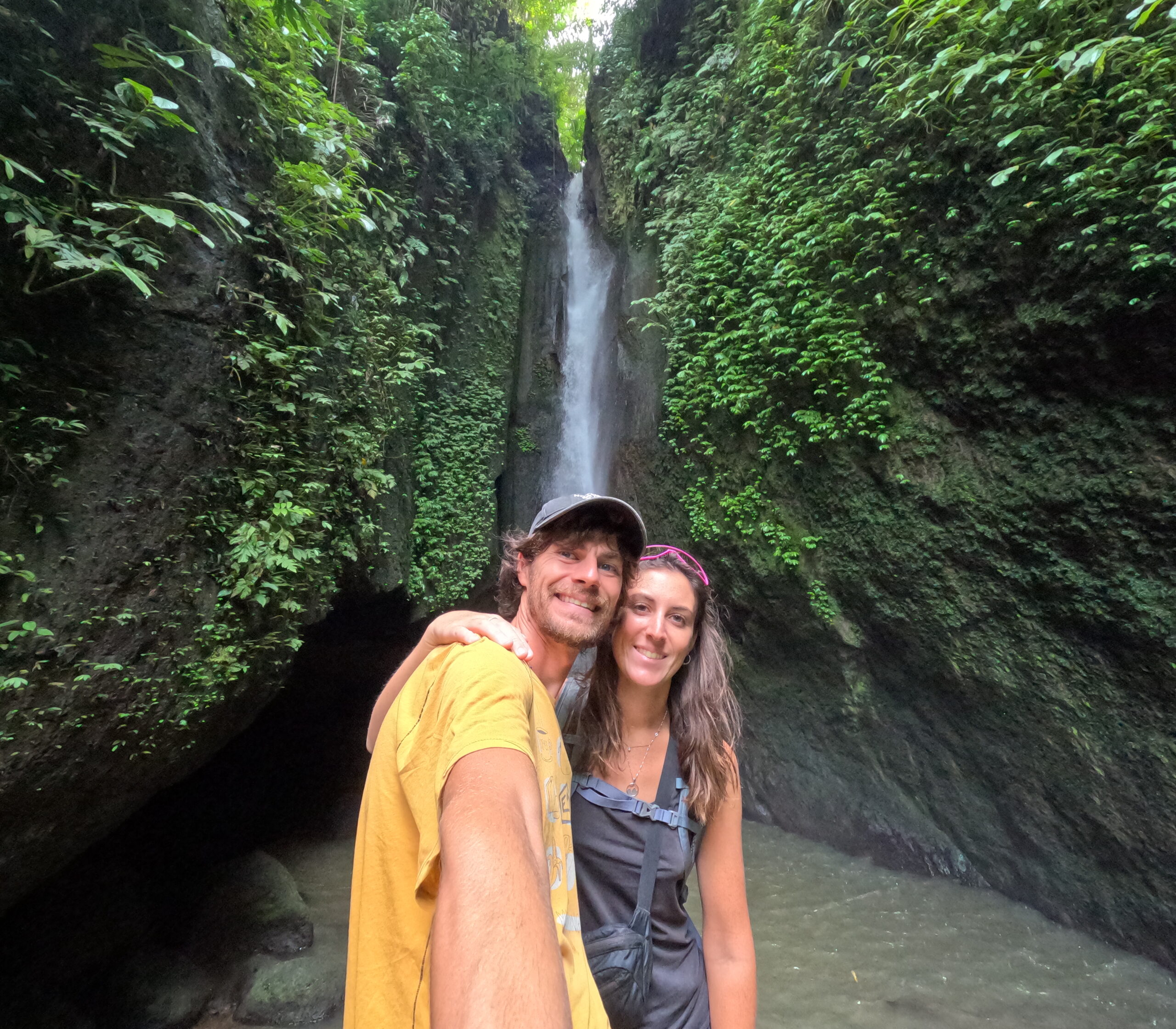
Munduk was one of the loveliest surprises of our most recent Bali trip. The small village is surrounded by rice fields, plantations and waterfalls, with several trails beginning almost in the centre.
We walked the trail linking Red Coral Waterfall and Melanting Waterfall. After returning to the parking area, we picked up our scooter and went to Golden Valley Waterfall too.
On an earlier trip, we also visited Leke Leke Waterfall (our favourite) and Nungnung Waterfall.
There are countless waterfalls in this part of Bali, but we do not think you need to see every one. After a while, they inevitably start to look a little similar. Choose a few and use the rest of your time to explore the area.
Another walk we recommend is the Rice Fields Loop, which starts in central Munduk and passes rice fields, small villages and plantations. Along the way you will see coffee, cacao, cloves and many spices growing. If you have time, stay at least two nights in Munduk instead of visiting on a day trip from Ubud.
Where to stay in Munduk
In Munduk we stayed at Guru Ratna Homestay, a simple place in a great location for exploring the village and surrounding area on foot. We enjoyed our stay and recommend it for a few nights. For what we think is the best nasi campur in Bali, try Warung Genitri.
Lovina
Lovina, on Bali’s north coast, is known for its black-sand beaches, calm sea and a much more relaxed atmosphere than the south.
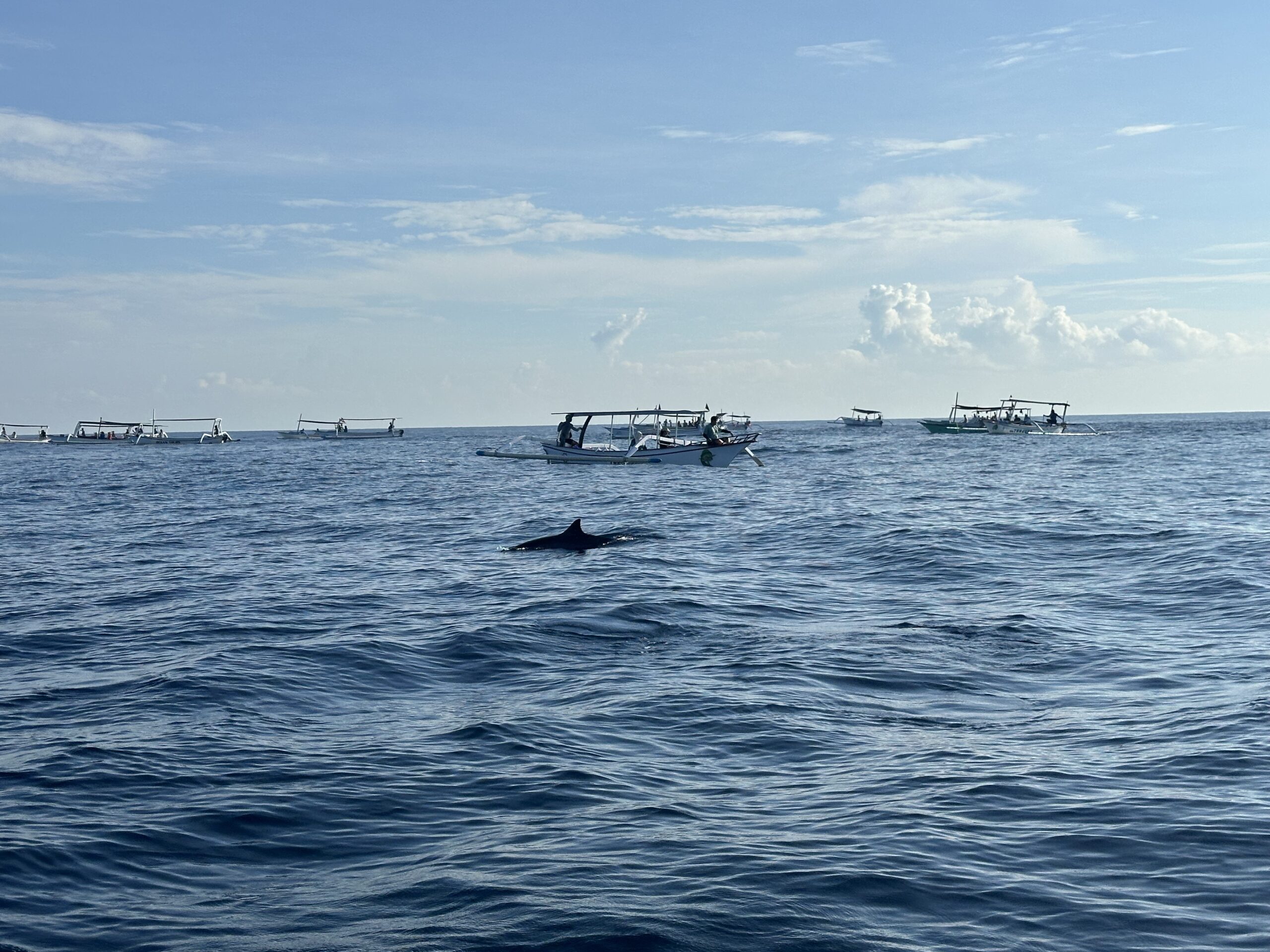
The best-known activity is dolphin watching. At dawn, traditional boats set off from the coast to look for the dolphins that frequent these waters. Keep in mind that the trip has become very popular and there can be an enormous number of boats on the water in the morning.
There are several waterfalls near Lovina, including Gitgit and Aling-Aling; the latter is also known for its natural pools and cliff jumping. Nearby are the Banjar Hot Springs, with warm pools surrounded by greenery. You can also reach West Bali National Park from Lovina, particularly known for its nature and the marine life around Menjangan Island. We decided not to visit because of the cost of the excursion and some disappointing reviews we had read.
Brahma Vihara Arama is worth a visit too. It is one of Bali’s main Buddhist temples and feels very different from the Hindu temples you will see elsewhere on the island.
Where to stay in Lovina
We spent a few relaxing days in Lovina and stayed at two places we recommend: Lovina Beach Hotel and Villa Jaya. In general, we found accommodation in this part of Bali cheaper than in the tourist areas of the south or in Ubud.
East Bali
East Bali is one of the island’s quieter and less visited regions, with far fewer tourists than Ubud or the south. The scenery is remarkably varied: volcanoes, rice fields, small villages, temples and a relatively peaceful coast. We think it deserves a few days, especially if you want to get away from the busiest destinations and see another side of Bali.
Amed and Tulamben
On the east coast are Amed and Tulamben, two laid-back places with dark-sand beaches. Do not expect the picture-postcard version of Bali with white sand and palm trees: people come here mainly for snorkelling and diving.
Amed stretches along the coast, with small hotels, warungs and numerous dive centres. Farther north, Tulamben is best known for the USS Liberty wreck, accessible directly from shore. You can see it while snorkelling, though diving is the best way to experience it.
On our second-to-last trip, we spent three nights in Amed after visiting the Gili Islands. It is a peaceful place to slow down for a few days and offers excellent snorkelling right from shore. We think it is worth staying at least a couple of nights rather than coming just for the day.
We stayed at Pondok Aldi, which has both private rooms and dorm beds. It is well located, close to the beach and restaurants.
Another landmark in East Bali is Lempuyang Temple, famous for its “Gates of Heaven”, which frame Mount Agung on clear days. The well-known gates are actually part of a much larger sacred complex, with several shrines spread across the mountain.
We decided not to visit. After reading other travellers’ experiences, it seemed too focused on tourism, particularly the famous photo at the gates. We preferred to spend our time at other temples that are less Instagram-famous and considerably quieter.
Padang Bai
Padang Bai is a small coastal village in southeast Bali, best known as a departure port for Lombok and the Gili Islands. If you have a few hours, nearby Blue Lagoon and Bias Tugel are two small beaches where you can snorkel. Just outside the village is Pura Goa Lawah, known as the Bat Cave Temple because of the large colony living in the cave inside. If you go, be prepared for the souvenir sellers outside: we found them particularly persistent. You can also visit Tenganan nearby, one of the traditional Bali Aga villages whose communities preserve traditions predating the influence of the Majapahit kingdom.
Sidemen
Head inland and you reach Sidemen, a valley of rice fields, small villages and mountains, with Mount Agung rising above the landscape. Often described as a quieter alternative to Ubud, it makes a good base for exploring East Bali. About 20 kilometres away is Pura Agung Besakih, known as the Mother Temple and regarded as Bali’s most important Hindu religious complex. It sits on the slopes of Mount Agung and comprises numerous temples and shrines. For us, it is one of Bali’s most beautiful temples and absolutely worth visiting.
Continuing towards the coast, you can visit Tirta Gangga and Taman Ujung, two scenic former royal water palaces, though both are quite touristy.
Our thoughts on Bali
You hear completely contradictory things about Bali. Is it touristy? Yes, extremely so in some places. But Bali is more than Kuta, Canggu and central Ubud. Travel a few kilometres farther and you will still find rice fields, small villages, ceremonies and everyday life continuing alongside tourism.
We have returned several times and, despite its problems and the changes of recent years, it remains one of the places we love most in Indonesia. Our advice is simply to look beyond the famous spots and give yourself time to explore at a slower pace.
Terima kasih, Bali. 🌺
Return to our complete country guide