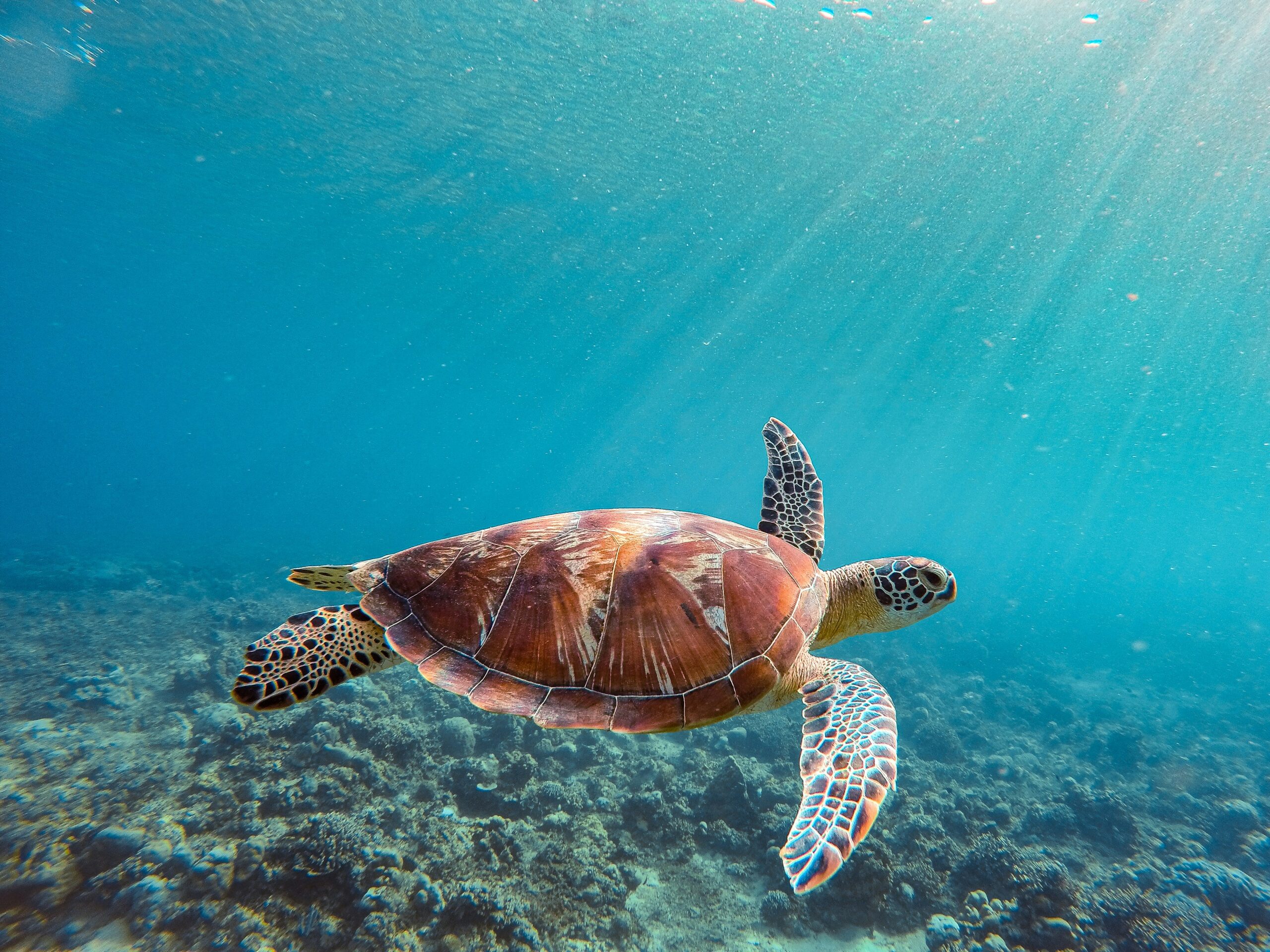
The Gili Islands lie off the northwest coast of Lombok. These three small islands have no motorized traffic and are known for their white sand beaches, clear water and excellent snorkeling and diving. Lombok is much larger and more mountainous, dominated by Mount Rinjani. It sees far fewer visitors than nearby Bali and offers untamed beaches, waterfalls, villages and volcanic landscapes.
Because they are so close to each other, we have put together one guide to the best things to do in the Gili Islands and Lombok, with practical information to help you plan your trip.
Gili Islands
The word “gili” means “small island” in Sasak, the language spoken in Lombok. The best-known three are Gili Trawangan, Gili Meno and Gili Air, off Lombok’s northwest coast.
Although they are close together, each island has a different feel. Where you stay will depend on the kind of trip you want. They have one thing in common, though: there are no cars or scooters, and most people get around on foot or by bicycle.
How to get to and around the Gili Islands
Fast boats connect the Gili Islands with Bali, Nusa Penida and Nusa Lembongan. From Bali, the main departure ports are Sanur and Padang Bai; there are also direct services from Nusa Penida and Lembongan. You can book through 12Go or one of the many local agencies. We usually buy tickets locally, where we have often found better prices.
If you are coming from Lombok, the main departure point is Bangsal port on the northwest coast, with frequent boats to all three islands.
One of the Gili Islands’ defining features is the absence of cars and scooters. The islands are small enough to explore on foot or by bicycle. You will also see cidomo, small horse-drawn carts used as taxis.
Things to do in the Gili Islands
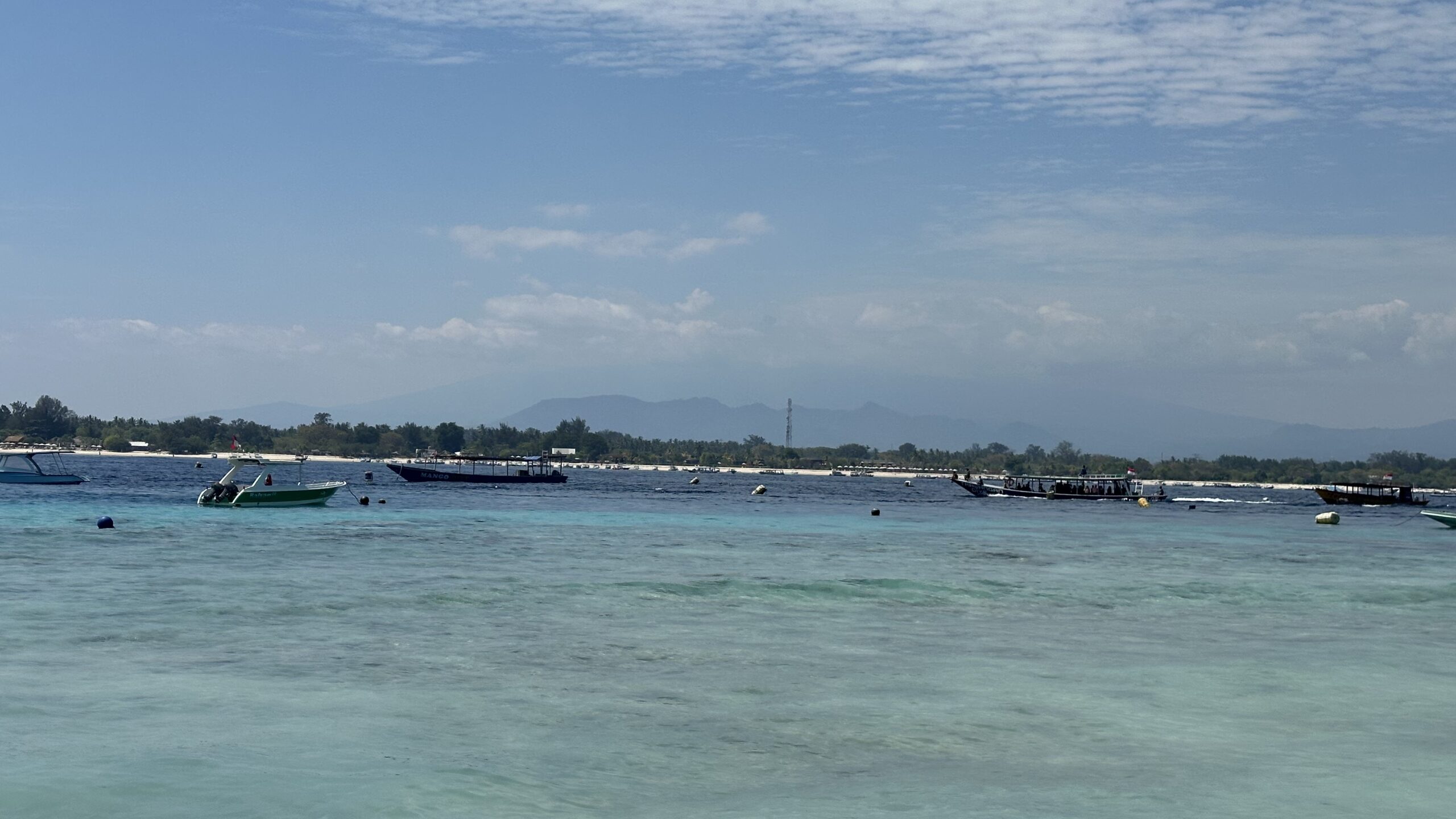
The three Gili Islands are close together, but their atmospheres are quite different.
Gili Trawangan (or simply Gili T) is the largest and most developed. It has the widest choice of restaurants, dive centers, accommodation and bars, and is particularly known for its nightlife.
Gili Meno is the smallest and quietest. With fewer places to stay and much less going on, it is a good choice if you mainly want the sea and a chance to relax.
Gili Air sits somewhere in between: it has a good selection of restaurants and accommodation, but feels far more laid-back than Gili T.
Apart from the beautiful beaches, there is not a long list of sights on the Gili Islands. That is part of their appeal. People come here to slow down, snorkel, dive and enjoy the sea, perhaps with a good book or a fruit shake.
Where to stay in the Gili Islands
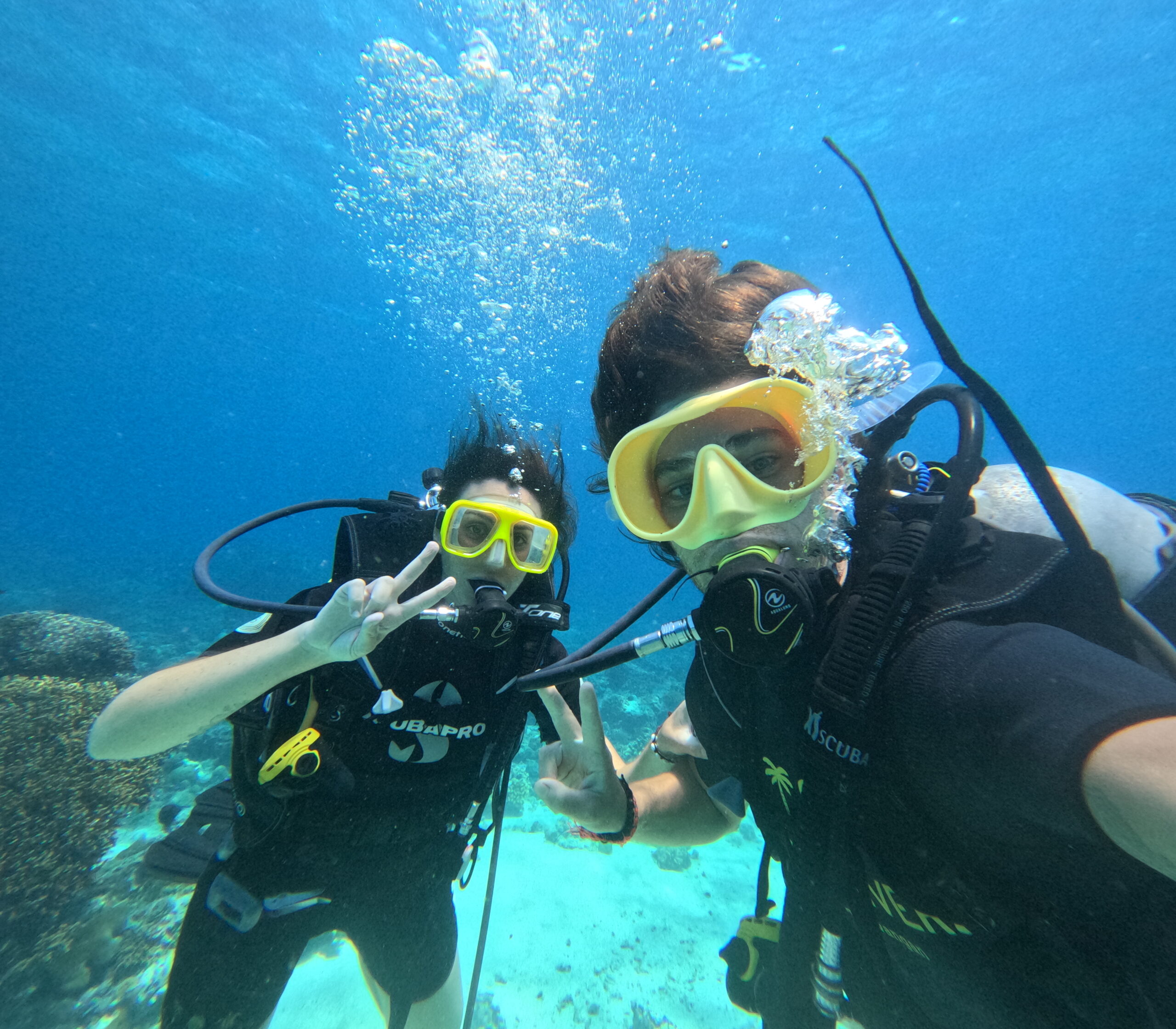
On our most recent trip we spent five nights on Gili Trawangan at the Gili Divers Hotel. It is conveniently located just a few minutes’ walk from the harbor. We chose Gili Divers mainly because we wanted to go diving, and had a great experience with the dive school too. We recommend it both for accommodation and for diving on Gili Trawangan.
Lombok
Lombok lies east of Bali, across the Lombok Strait. Most of its population is Sasak and Muslim. The island is less visited than Bali and has a quieter feel. It is best known for its southern beaches, surf and Mount Rinjani, the volcano that dominates the landscape and draws hikers from across Indonesia.
How to get to Lombok
From Bali, flying is the quickest way to reach Lombok. The flight from Denpasar takes around 30–40 minutes and lands at Lombok International Airport in the south of the island.
Alternatively, fast boats connect Bali with Lombok and the Gili Islands. We left from Padang Bai; in normal conditions the crossing takes around two to three hours. The sea was rough on our trip, however, and it took us more than five hours. A boat had sunk on the same route the previous month, so we cannot say it was a relaxing journey.
A slower, cheaper option is the public ferry from Padang Bai to Lembar, which also carries vehicles.
If you are already on the Gili Islands, getting to Lombok is straightforward: local boats regularly connect all three islands with Bangsal port. From there, you can continue to other parts of Lombok by taxi or private transfer.
How to get around Lombok
We visited Lombok with our parents and chose to travel with a private driver. It is a comfortable way to cover longer distances, although you have less freedom than you would on a scooter. If you want to explore independently, renting a scooter is one of the most practical and affordable options. Rental is easy to arrange in the main tourist areas, but some riding experience helps: road conditions vary considerably across the island.
If you would prefer a driver, we had a great experience with Nyatt. Leave us a comment if you would like his contact details.
Things to do in Lombok
Lombok is a fairly large island, with sights spread across very different areas. In the south you will find Kuta Lombok and some of the island’s loveliest beaches. Inland, the landscape gives way to rice fields, villages and waterfalls. The north is dominated by Mount Rinjani, with trekking routes and small mountain villages around it.
Kuta Lombok
Kuta Lombok, not to be confused with Kuta in Bali, lies on Lombok’s south coast. It was our favorite area and the place we recommend staying in Lombok. The compact center has plenty of restaurants and accommodation, while nearby you will find some of the island’s best beaches and several surf spots. The area is developing quickly. We saw many villas and resorts under construction during our visit, so it may feel quite different in a few years.
On the road to Kuta you pass Sade traditional village, home to a Sasak community. We did not visit it ourselves, but it may be worth a stop if you are interested in local culture.
If you enjoy motorsport, Pertamina Mandalika International Circuit is nearby. We happened to arrive during a Ducati event and were lucky enough to get in for free.
Beaches near Kuta Lombok
One of the main reasons to base yourself in Kuta is the many beaches along the south coast, which are easy to reach by scooter.
Tanjung Aan is one of the best known and one of our favorites: a long pale-sand beach surrounded by hills. The nearby headlands also offer views over the coast.
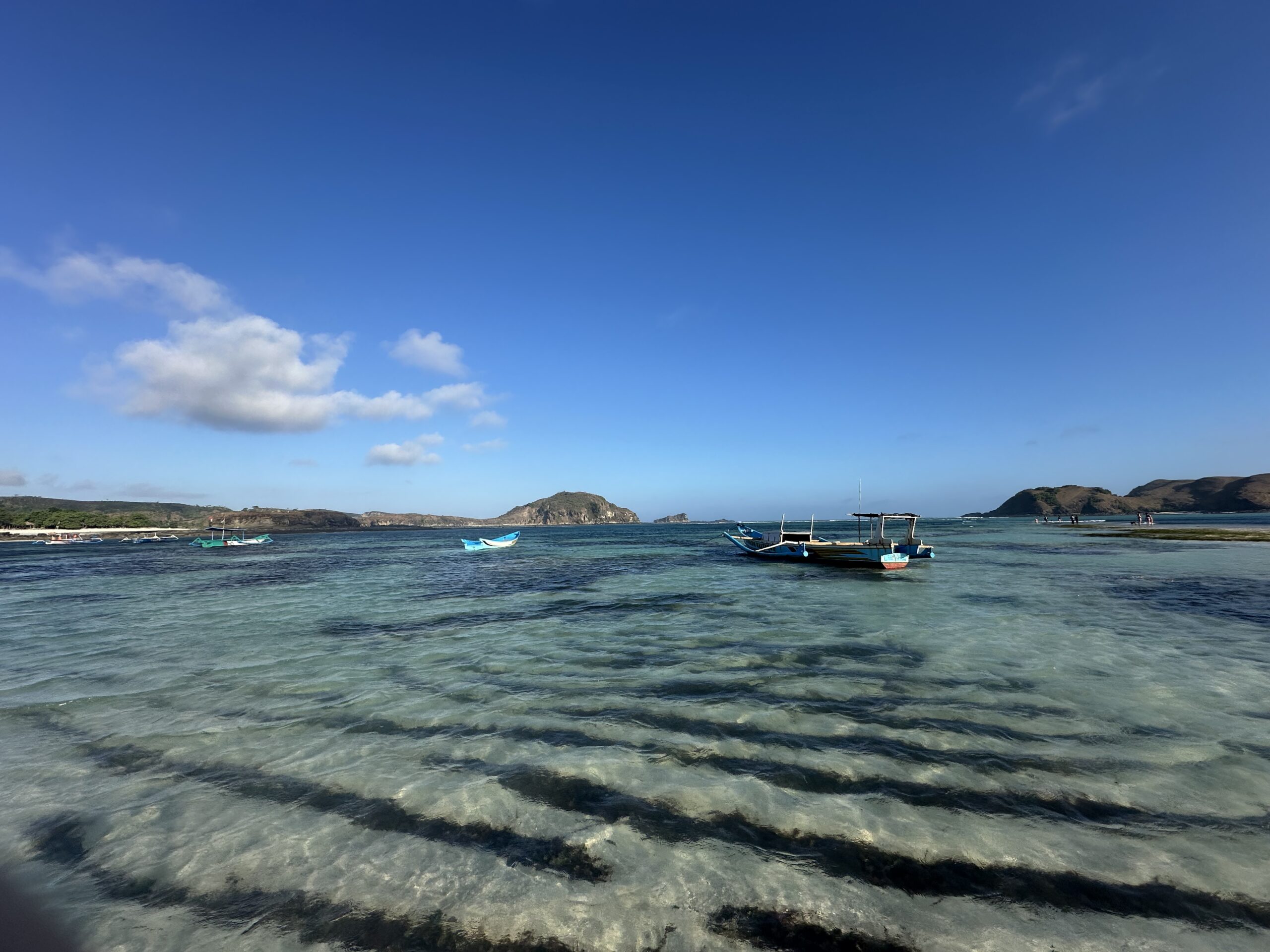
Gerupuk is best known for surfing. Its breaks are offshore and are usually reached by boat from the small fishing village.
Mawun Beach, tucked between two hills, is a peaceful beach. Selong Belanak is one of the best-known places to learn to surf, thanks to the usually gentler waves close to shore.
Seger Beach is also close to Kuta. For us, the best reason to go is to climb the small surrounding headlands for views along the coast. The traditional Sasak Bau Nyale festival is held here each year.
Lombok’s pink beaches
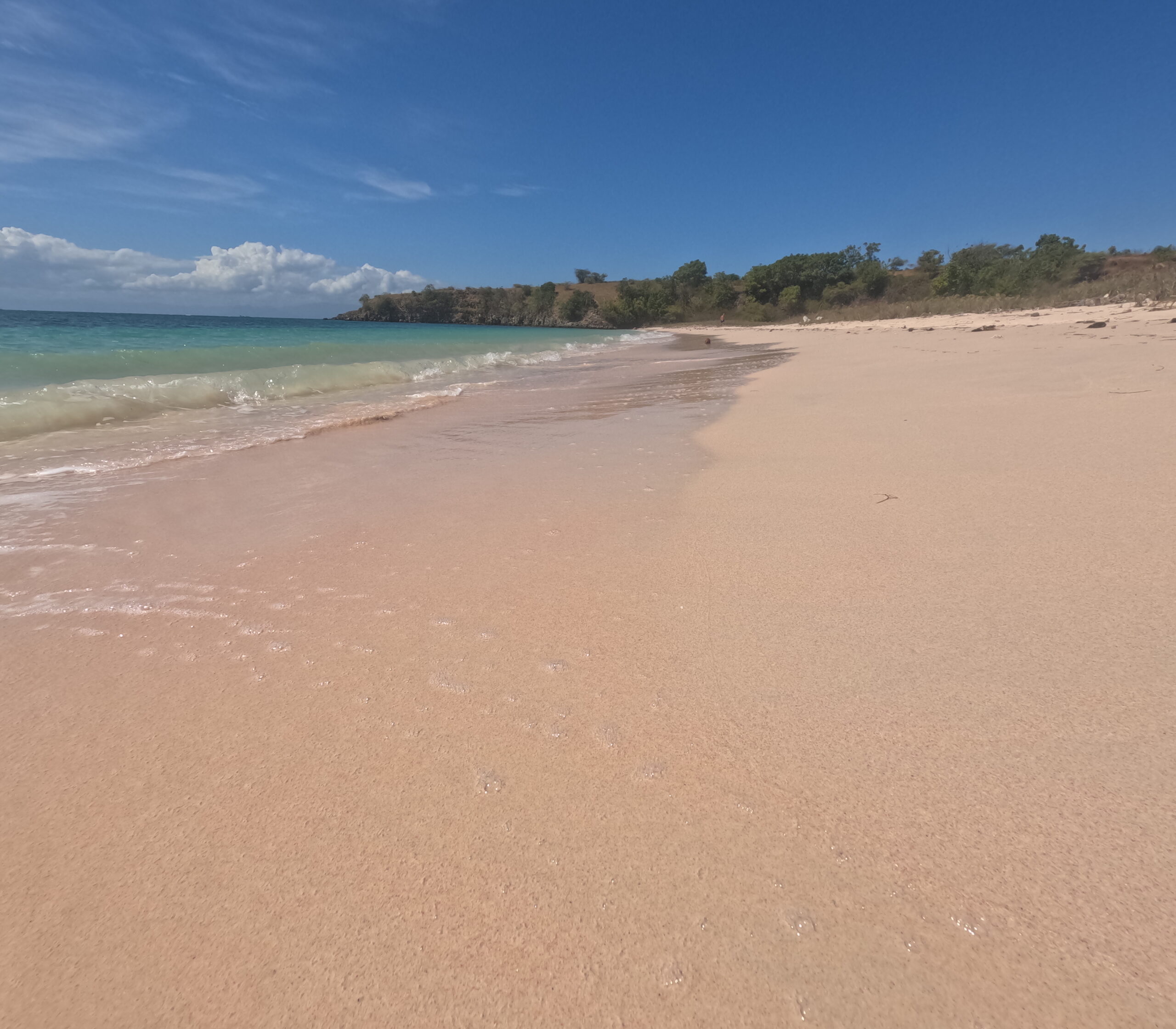
In southeastern Lombok there are several beaches with pinkish sand. The color is less vivid than what we saw in Komodo, but they are worth seeing if you are exploring this part of the island.
The main ones are Pink Beach, Pink Beach 2 and Pantai Pink 3. Pantai Pink 3 was our favorite of the three.
The Secret Gilis
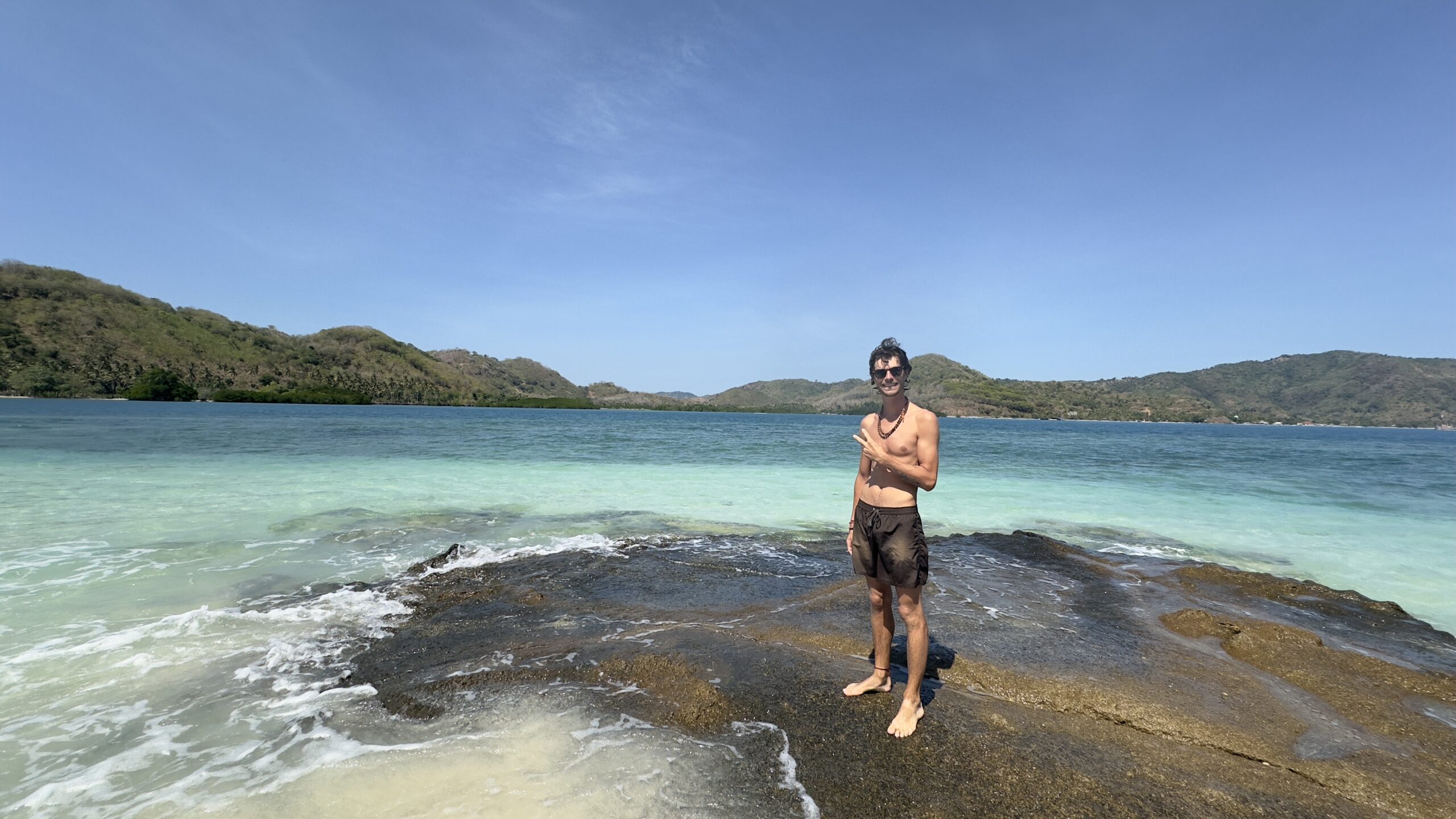
When people mention the Gilis, they usually mean Trawangan, Air and Meno. But several lesser-known islets lie off Lombok’s southwest coast and are often called the “Secret Gilis”. We visited Gili Nanggu, Gili Sudak and Gili Kedis.
Gili Nanggu is the largest of the three, with good snorkeling straight from the beach. Gili Sudak is nearby, while Gili Kedis is tiny: a little strip of white sand you can walk across in minutes.
Day trips usually leave from the Sekotong area, as ours did, and are easy to arrange locally. The islands were very quiet when we visited: we came across just a couple of Western tourists and a local school group.
Where to stay in Kuta Lombok
In Kuta Lombok we stayed at Honeybee Rent Scooters & Homestay, a simple, affordable place where we felt very welcome. The staff were lovely, breakfast was good and you can rent a scooter directly from the property.
Our parents stayed at El Tropico Hotel, a more polished and comfortable hotel. It is a beautiful place and we recommend it if you want something a little more upscale and have a bigger budget.
Tetebatu
Tetebatu is a small rural village at the foot of Mount Rinjani, surrounded by rice fields, plantations and lush greenery. It is much quieter than southern Lombok, with relatively little tourism.
It is a lovely place to walk through rice fields and small villages, get a glimpse of rural life and discover a side of Lombok that feels very different from the coast.
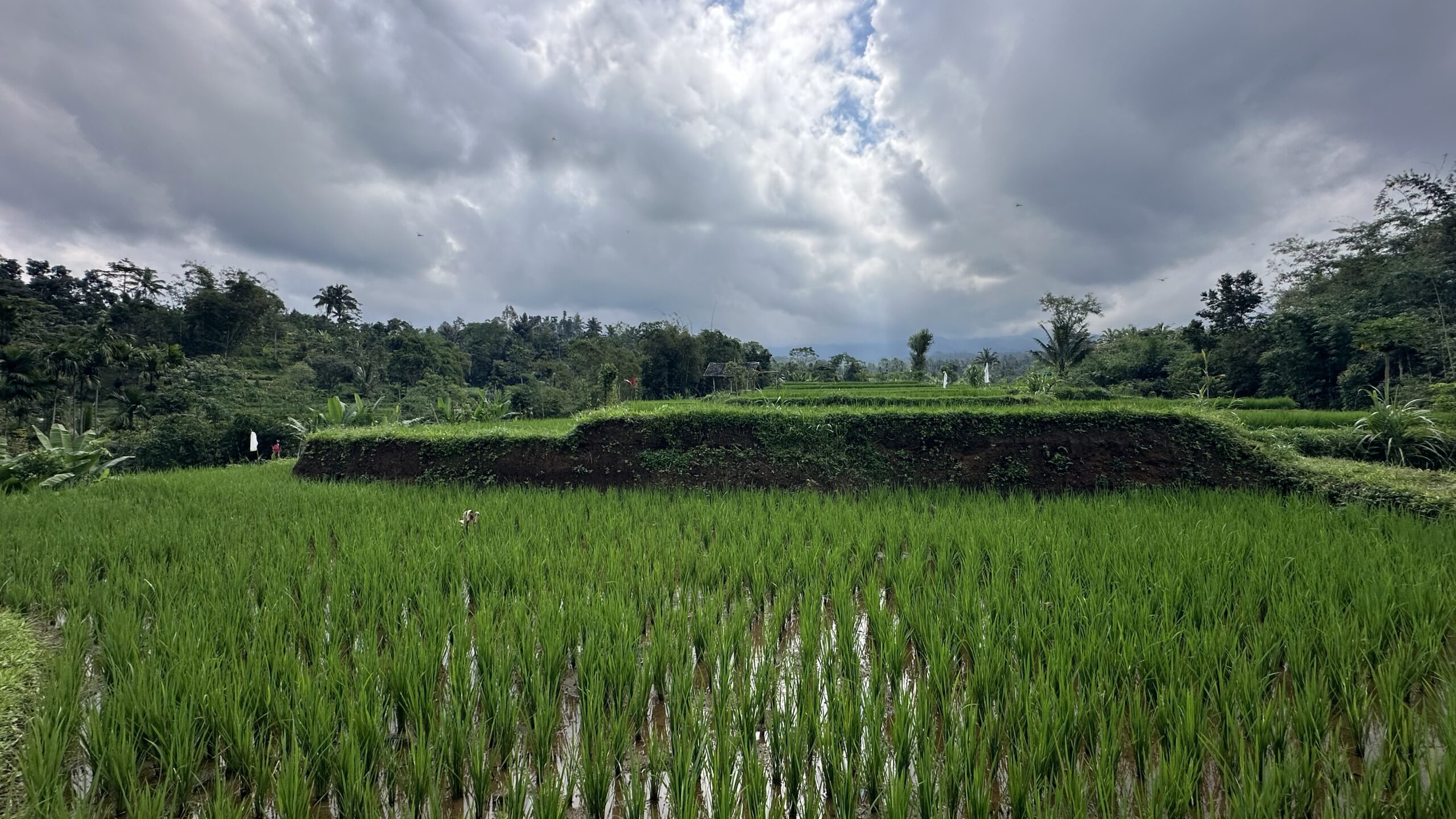
We started at Warung Monkey Forest, which we also recommend for a meal. From there we walked to Tetebatu Monkey Forest, where you may spot black monkeys. The trail then continues through the forest and rice fields, passing waterfalls where you can swim. We visited Big waterfall and Tetebatu Waterfall.
Nearby, Benang Stokel and Benang Kelambu are two more waterfalls that can be reached on short walks.
Our tip: we found the arrangements for entering the forests and waterfalls in this area rather pushy and unclear. In our experience, it was easier to agree on a price for a local tour than negotiate and pay separately at every entrance. That is what we did in the end.
Mataram
Mataram is Lombok’s main city and the capital of West Nusa Tenggara province. You can see its main sights in a day, and it makes a convenient stop on the way to Bangsal port.
Highlights include the Islamic Center NTB and its large gold-domed mosque, Pura Meru, Lombok’s largest Hindu temple, and Pura Lingsar, a site connected with both Hindu and local Muslim traditions.
If you have more time, you could also visit Mayura Water Palace and Taman Narmada, two historic complexes with gardens and pavilions.
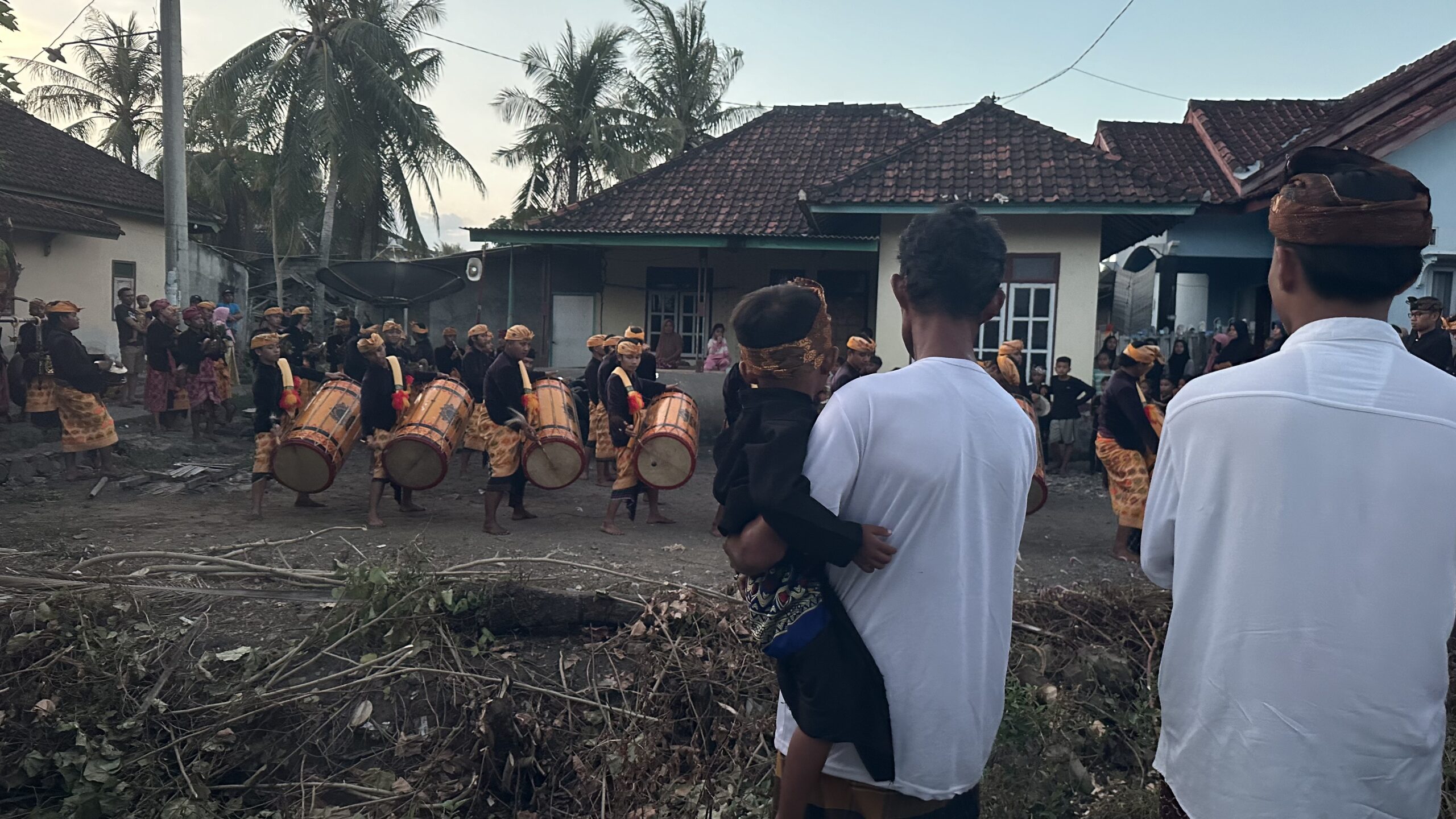
Mount Rinjani
As mountain lovers missing the Dolomites, we were disappointed that we could not climb Mount Rinjani. We did, however, gather some useful information for planning the trek. Mount Rinjani, in northern Lombok, is Indonesia’s second-highest volcano at 3,726 meters. The main trailheads are Sembalun and Senaru, used for different routes.
Sembalun is the most common starting point for the summit, usually on a multi-day trek that takes in the crater and Lake Segara Anak. Senaru is more often used for trails to the crater rim and lake, or as the endpoint of a traverse across the mountain.
The summit climb is physically demanding, especially the final section on loose volcanic ground, and normally takes several days.
You need a guide to trek Mount Rinjani. Nearly every guesthouse and agency in the area can arrange a trip. We suggest comparing prices and negotiating, as the packages offered are often very similar.
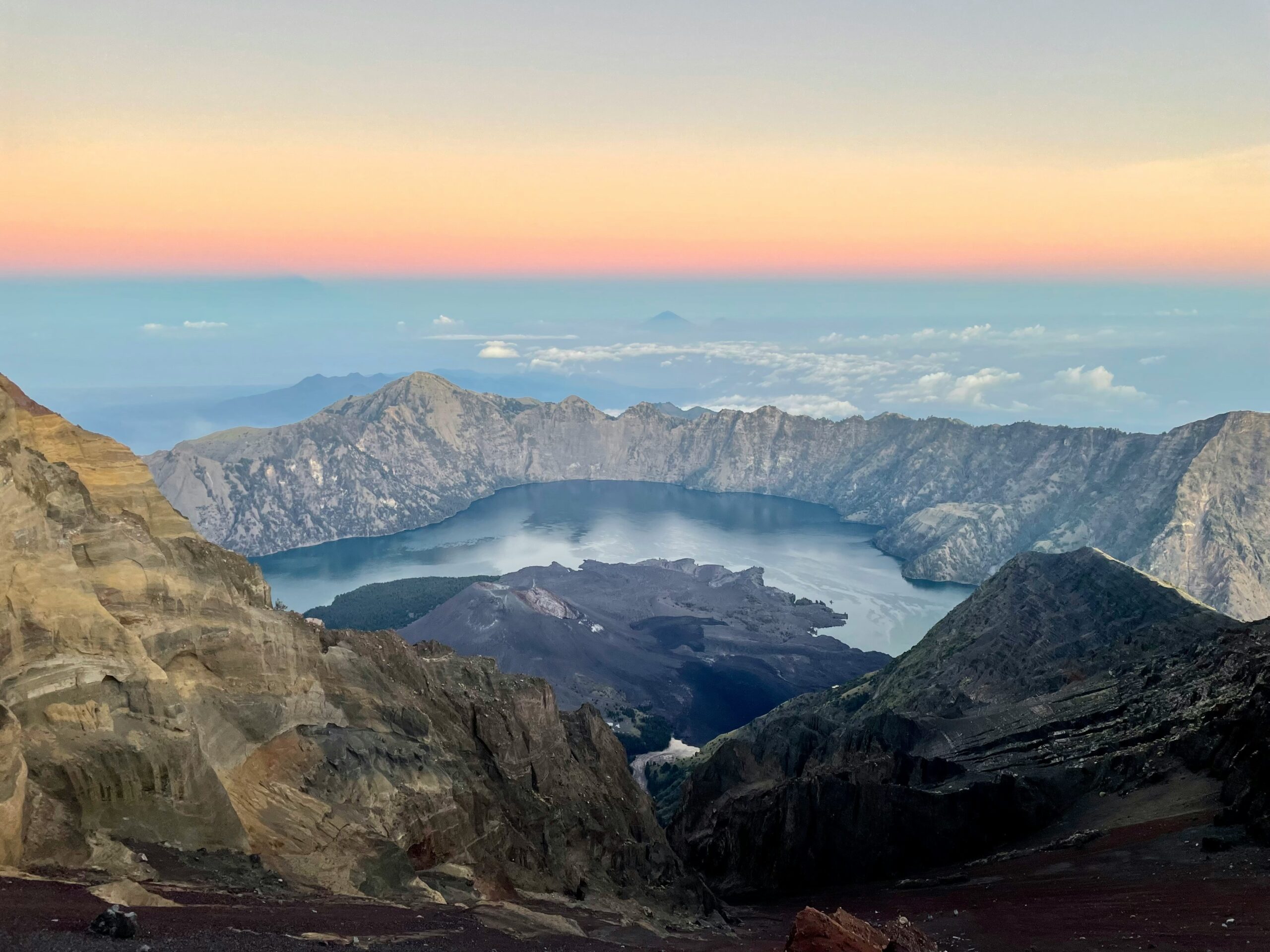
Sembalun Lawang
The Mount Rinjani trek from Sembalun Lawang starts at around 1,100 meters above sea level. On the first day, hikers reach the crater rim at around 2,600 meters and usually spend the night in a tent.
The summit attempt starts in the middle of the night, aiming to reach Rinjani’s 3,726-meter summit at sunrise. The last stretch is particularly tiring because the volcanic ground is steep and unstable.
From there, routes vary. You can return to Sembalun or continue towards Lake Segara Anak and Senaru on a longer trek.
Do not underestimate the ascent: the summit stands roughly 2,600 meters above the starting point, and longer routes add more climbing and descending. Good physical preparation matters.
Senaru
Senaru lies on Rinjani’s northern side at around 600 meters above sea level and is the other main trailhead for the volcano.
The trail first passes through tropical forest, then climbs to the crater rim, with views over Lake Segara Anak and the volcanic cone. Unlike a summit route starting from Sembalun, the usual Senaru route does not climb Rinjani’s main summit. Depending on the trek you choose, you can turn back at the crater or continue to the lake and hot springs. This is still a demanding hike with considerable elevation gain.
Even if you do not trek Rinjani, Senaru is worth visiting for its waterfalls. Sendang Gile is the easiest to reach; continue through the forest to Tiu Kelep, one of Lombok’s best-known waterfalls. Nearby is the traditional Senaru village, where you can see distinctive Sasak houses.
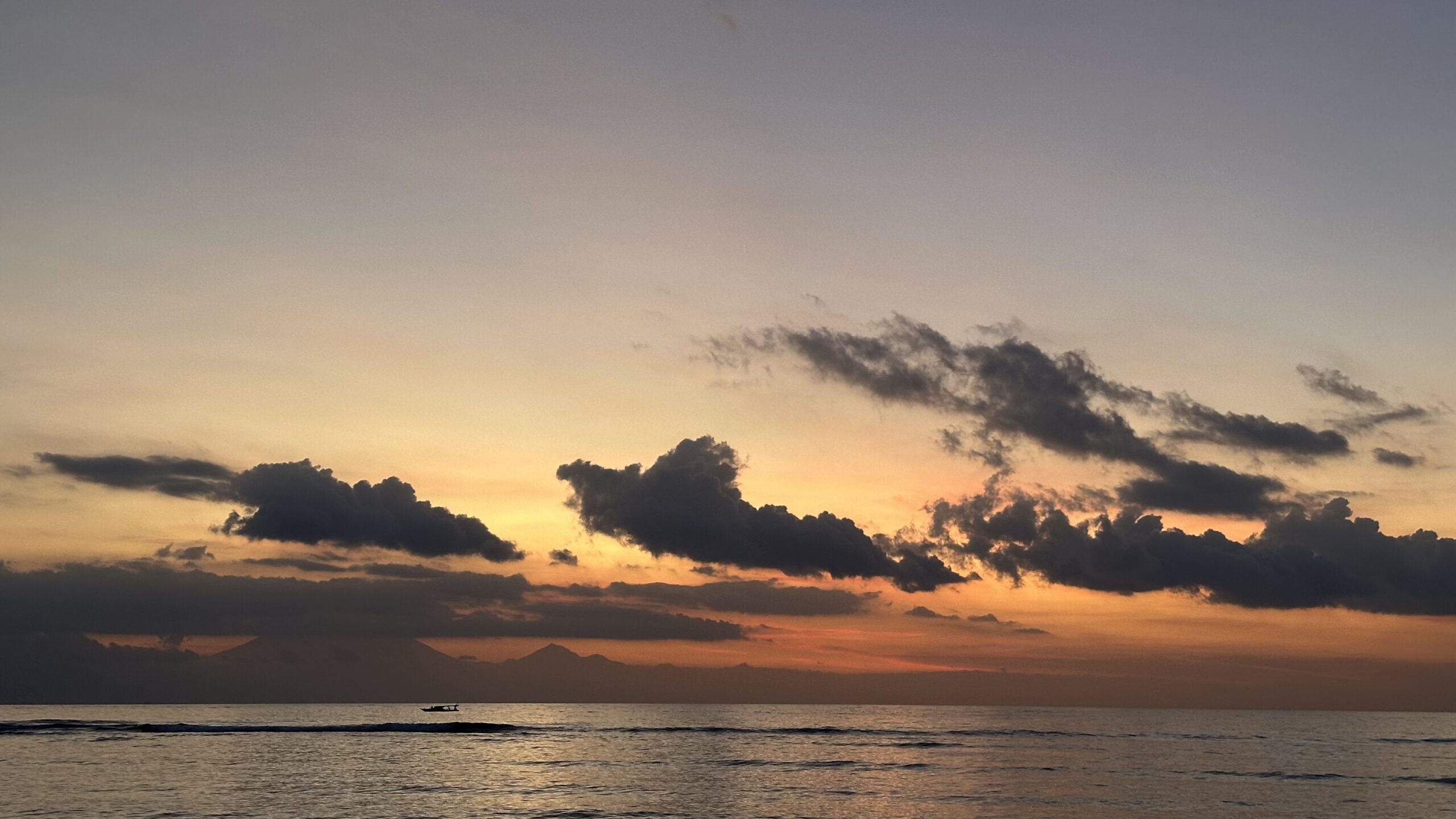
Senggigi
Senggigi is one of the main destinations on Lombok’s west coast, known for its beaches and sunsets. It is a useful base for exploring this part of the island.
Besides Senggigi Beach, there are several more beaches and viewpoints farther north, including Nipah Beach and Malimbu Hill. Just south of Senggigi is Pura Batu Bolong, a small Hindu temple right on the coast.
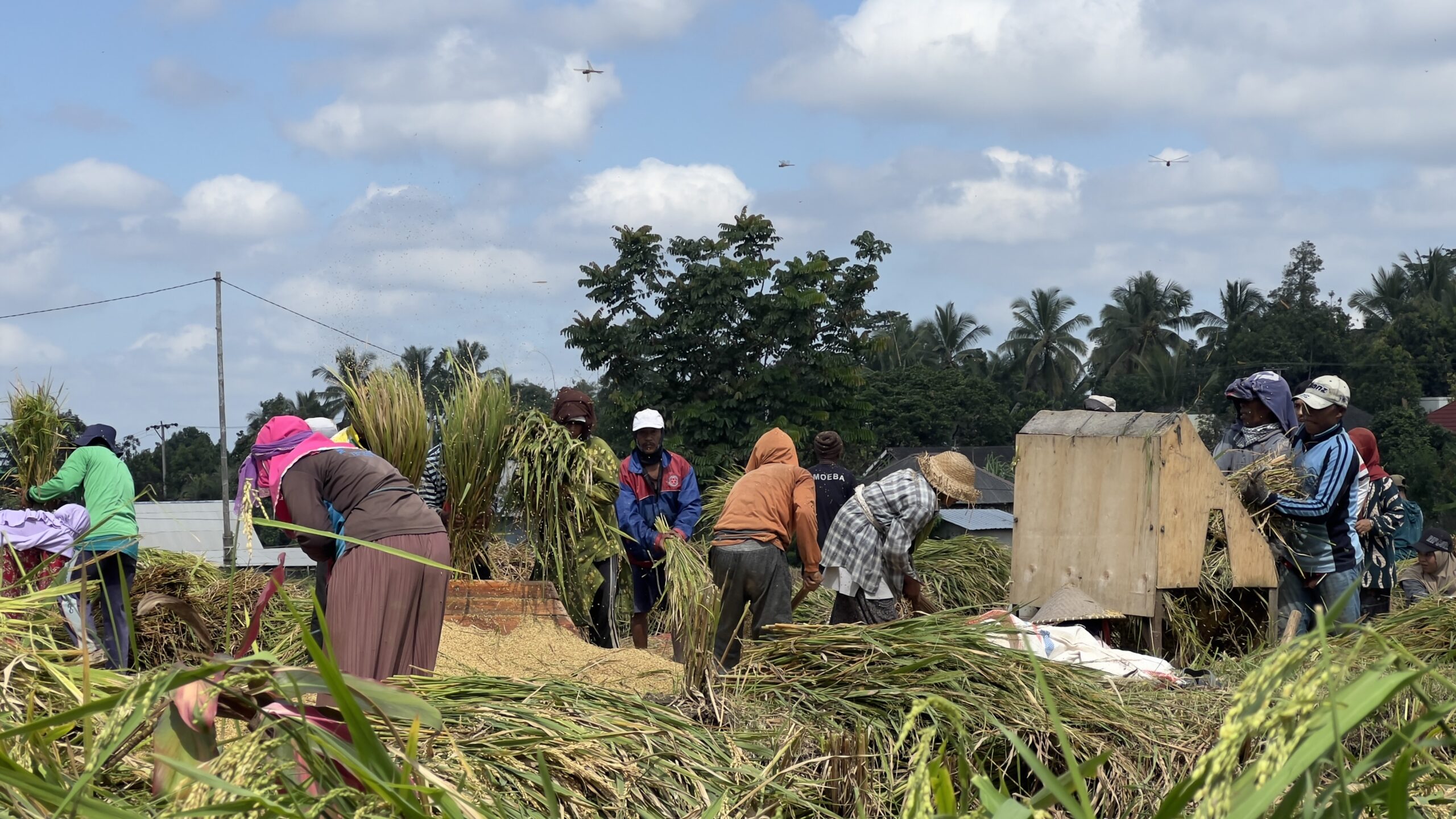
Our thoughts on Lombok
We really enjoyed Lombok, especially how the landscape changes within a short distance: from the southern beaches to Tetebatu’s rice fields and the mountains around Rinjani in the north.
It is still much less visited than nearby Bali, although some places, particularly Kuta and Mandalika, are changing fast. Kuta Lombok was our favorite area, but if you have enough time, it is worth heading inland as well.
Our one regret? We did not manage to climb Mount Rinjani. A good reason to come back.
See our complete guide to the country