
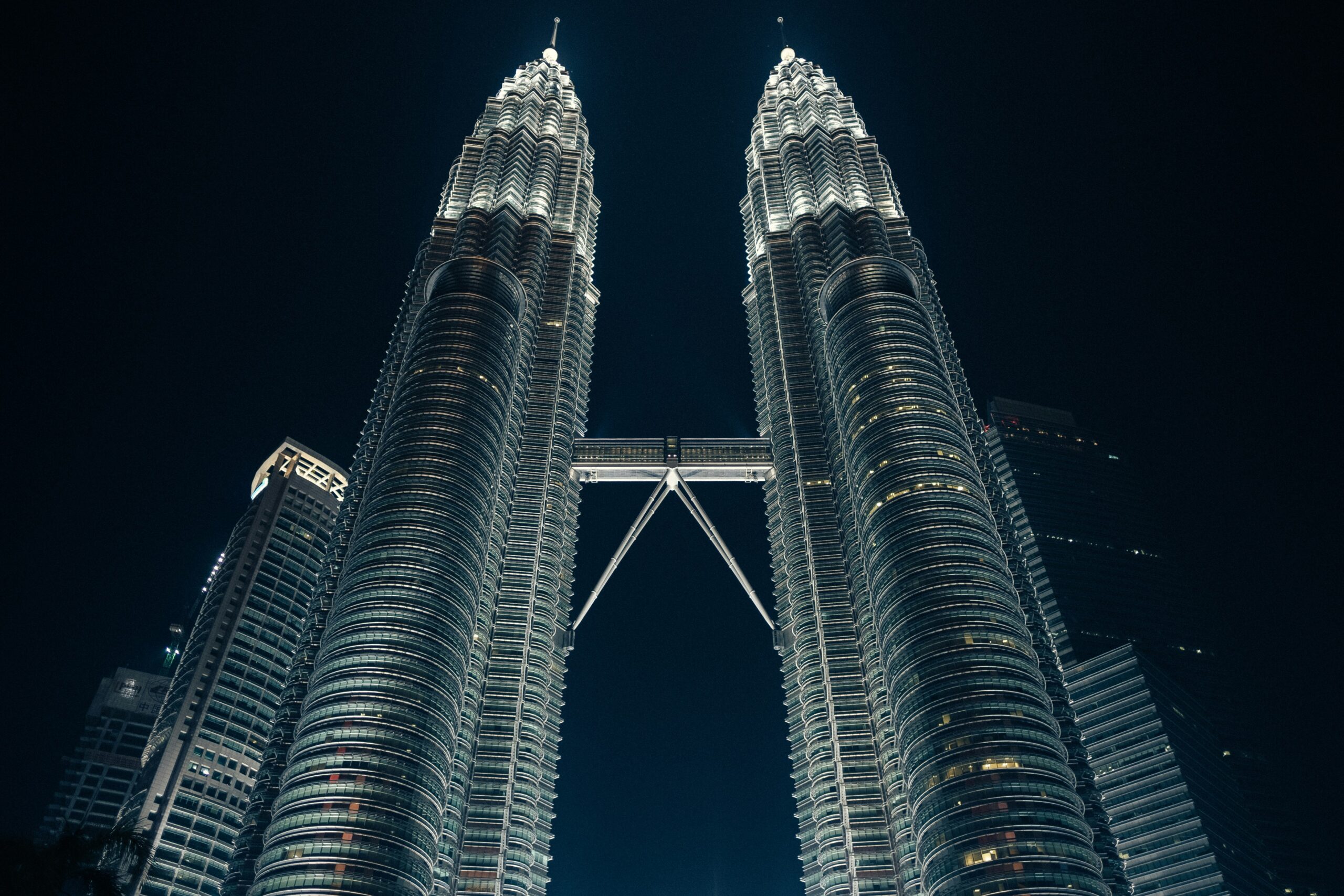
Kuala Lumpur, often simply called KL, is the capital of Malaysia and a modern, multicultural city. Malay, Chinese and Indian communities live side by side here, a mix reflected in the food, neighbourhoods, temples and architecture. With its skyscrapers, markets, mosques and temples, Kuala Lumpur is often the starting point for a trip around Peninsular Malaysia.
The city’s undisputed symbol is the Petronas Twin Towers, but Kuala Lumpur has much more to offer. Two or three days are enough to see the main things to do in Kuala Lumpur, depending on how much time you have.
How to get to and around Kuala Lumpur
Kuala Lumpur is served by Kuala Lumpur International Airport (KLIA), one of Southeast Asia’s major airports. The city is also well connected by bus and train with the main destinations in Peninsular Malaysia.
From the airport, the fastest way to reach central Kuala Lumpur is the KLIA Ekspres, which connects the terminals with KL Sentral in around 30 minutes. A one-way adult ticket costs 55 MYR. Alternatively, you can take the KLIA Transit, which uses the same line but makes several intermediate stops and takes a little longer.
For travellers who want to save money, several buses run from the airport to KL Sentral and other parts of the city. The journey usually takes around an hour, although traffic can make it much longer. It is the cheapest way to reach central Kuala Lumpur, but it is considerably slower than the KLIA Ekspres.
Another option is to use Grab, which is widely available in Malaysia, or take a taxi directly from the airport. In normal conditions, the journey to the centre takes around 45–60 minutes, although traffic can have a big impact on travel times.
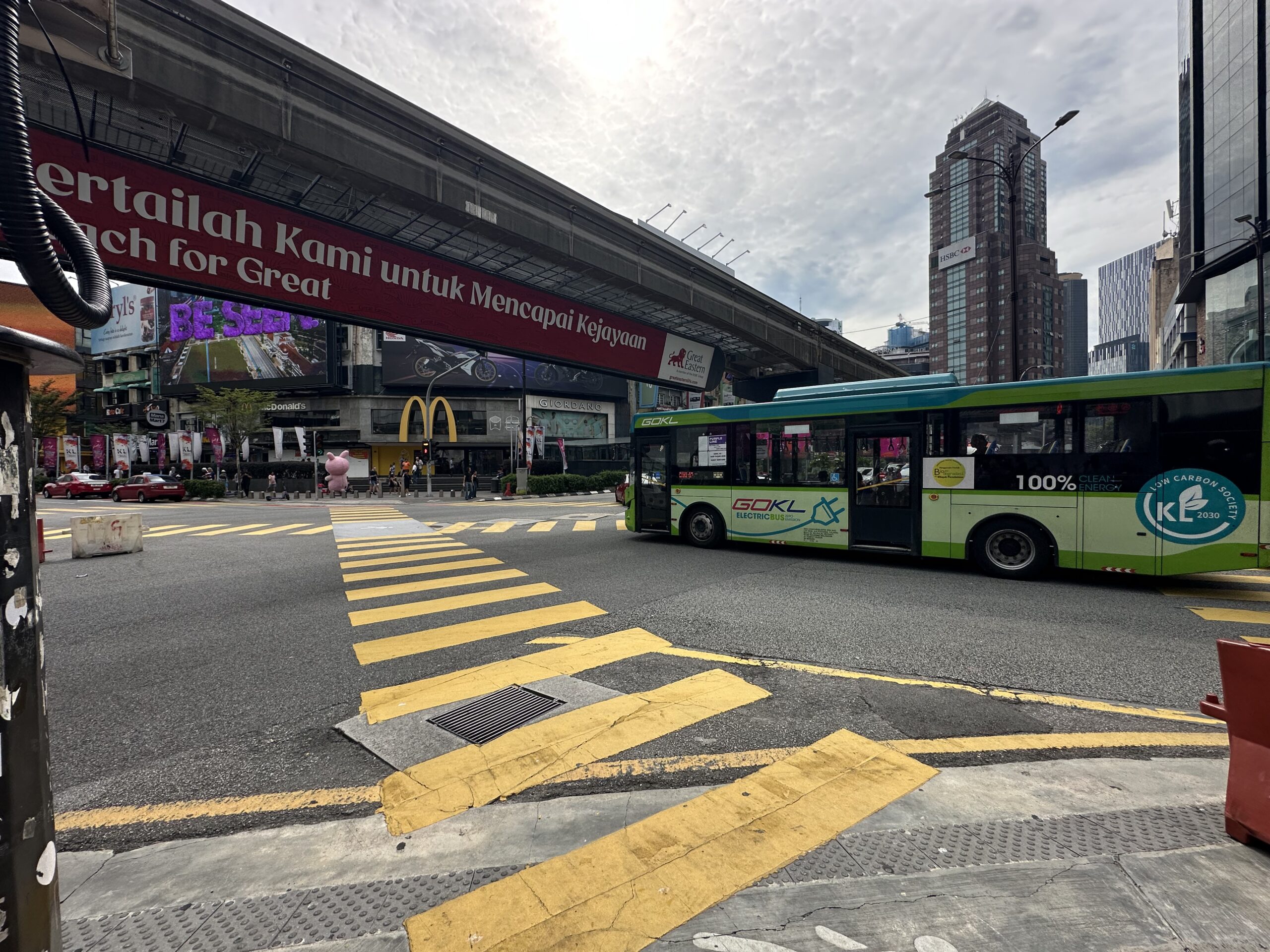
Once in the city, getting around Kuala Lumpur by public transport is fairly easy. The network includes LRT, MRT and monorail lines that reach many of the main attractions. There are also public buses and the GoKL City Bus, which is useful for travelling around central areas.
For journeys that were not convenient by public transport, we often used Grab, which was practical and generally inexpensive. Some central areas are easy to explore on foot, although Kuala Lumpur’s heat and humidity can make walking surprisingly tiring.
Things to do in Kuala Lumpur
Petronas Twin Towers
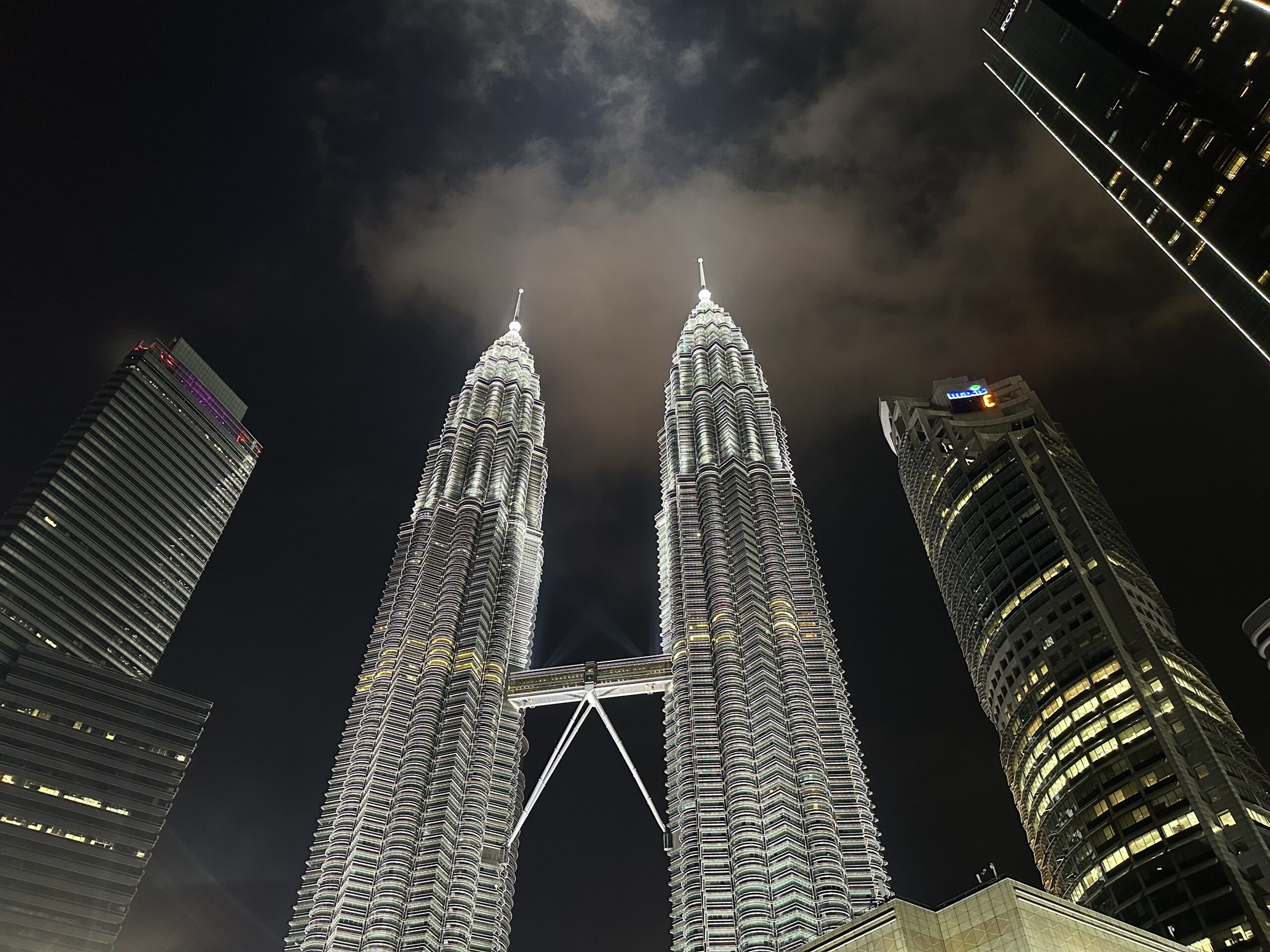
The Petronas Twin Towers are the undisputed symbol of Kuala Lumpur. At 452 metres tall and with 88 floors, they were the tallest buildings in the world from 1998 to 2004 and remain the world’s tallest twin towers. You can visit the Skybridge, which connects the two towers on the 41st and 42nd floors, and continue up to the Observation Deck on the 86th floor for panoramic views over Kuala Lumpur. Places are limited, so we recommend buying your ticket in advance. BOOK HERE!
At the base of the towers is the large Suria KLCC shopping centre, with KLCC Park behind it. The Petronas Twin Towers are easy to reach on the Kelana Jaya LRT line by getting off at KLCC.
KLCC Park
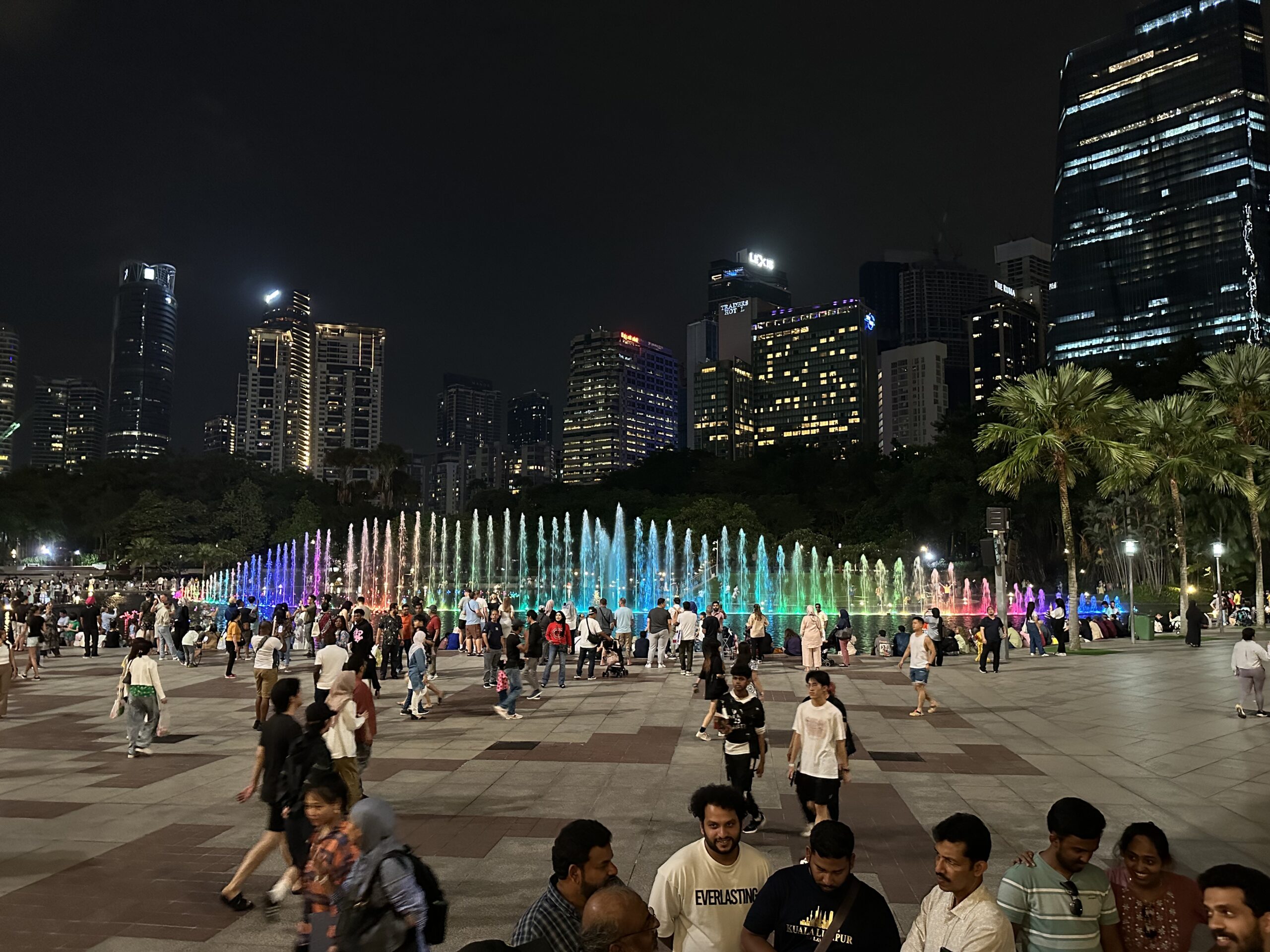
KLCC Park is a large public park at the foot of the Petronas Twin Towers, with green spaces, walking paths and fountains. It is a pleasant place for a walk and one of the best spots to see the towers from a different perspective. Every evening, the lake in front of Suria KLCC hosts the Lake Symphony, a free fountain, light and music show. The main shows generally take place at 20:00, 21:00 and 22:00 and last around 10 minutes. We still recommend checking the latest times before your visit.
The park is free to enter and easy to reach from the KLCC LRT station.
Menara Kuala Lumpur
Menara Kuala Lumpur, also known as the KL Tower, is a 421-metre communications tower and one of the city’s best-known viewpoints. Its observation decks offer 360° views across Kuala Lumpur, including the Petronas Twin Towers. If you want to see Kuala Lumpur’s skyline from above with the Petronas Towers in the background, KL Tower is a good alternative to going up the Twin Towers. There is also a revolving restaurant inside the tower.
To get there, take the monorail to Bukit Nanas and continue on foot, or use Grab or a taxi from the city centre.
KL Forest Eco Park e Canopy Walk
The KL Forest Eco Park, also known as Bukit Nanas Forest Reserve, is a small area of tropical forest in the heart of Kuala Lumpur, right at the foot of KL Tower. Inside you will find several trails and the famous Canopy Walk, a series of suspended walkways among the trees with the city’s skyscrapers in the background. Unfortunately, we could not walk it because we happened to visit on a Friday, when the park was closed. So if you want to visit, make sure you plan it for another day of the week.
Bukit Bintang
Bukit Bintang is Kuala Lumpur’s main shopping and entertainment district, filled with large shopping centres, shops, restaurants and bars. One of the best known is Pavilion Kuala Lumpur, one of the city’s largest and busiest malls. The area becomes especially lively in the evening thanks to its many bars and nearby Jalan Alor, famous for street food.
Bukit Bintang is easy to reach by MRT and monorail. Get off at Bukit Bintang station.
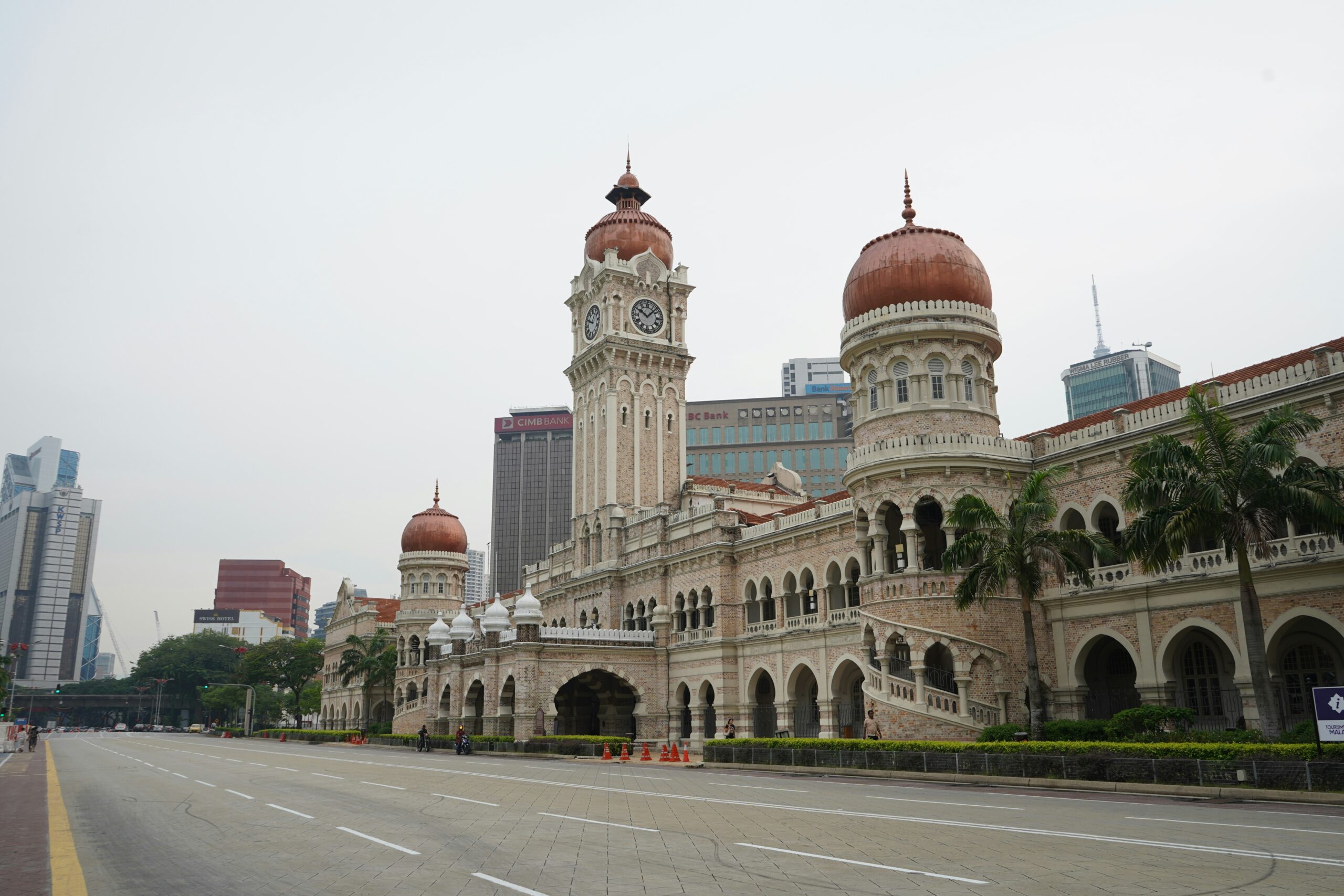
Merdeka Square
Merdeka Square is one of Kuala Lumpur’s most important historic sites. At midnight on 31 August 1957, the flag of the Federation of Malaya was raised here, marking independence from British rule. The square is surrounded by several colonial-era buildings, including the distinctive Sultan Abdul Samad Building, known for its domes and clock tower and now one of the city’s architectural landmarks.
Merdeka Square is in Kuala Lumpur’s historic centre. You can reach it on the KTM Komuter by getting off at Kuala Lumpur station, or more conveniently by Grab.
Central Market and Petaling Street (Chinatown)
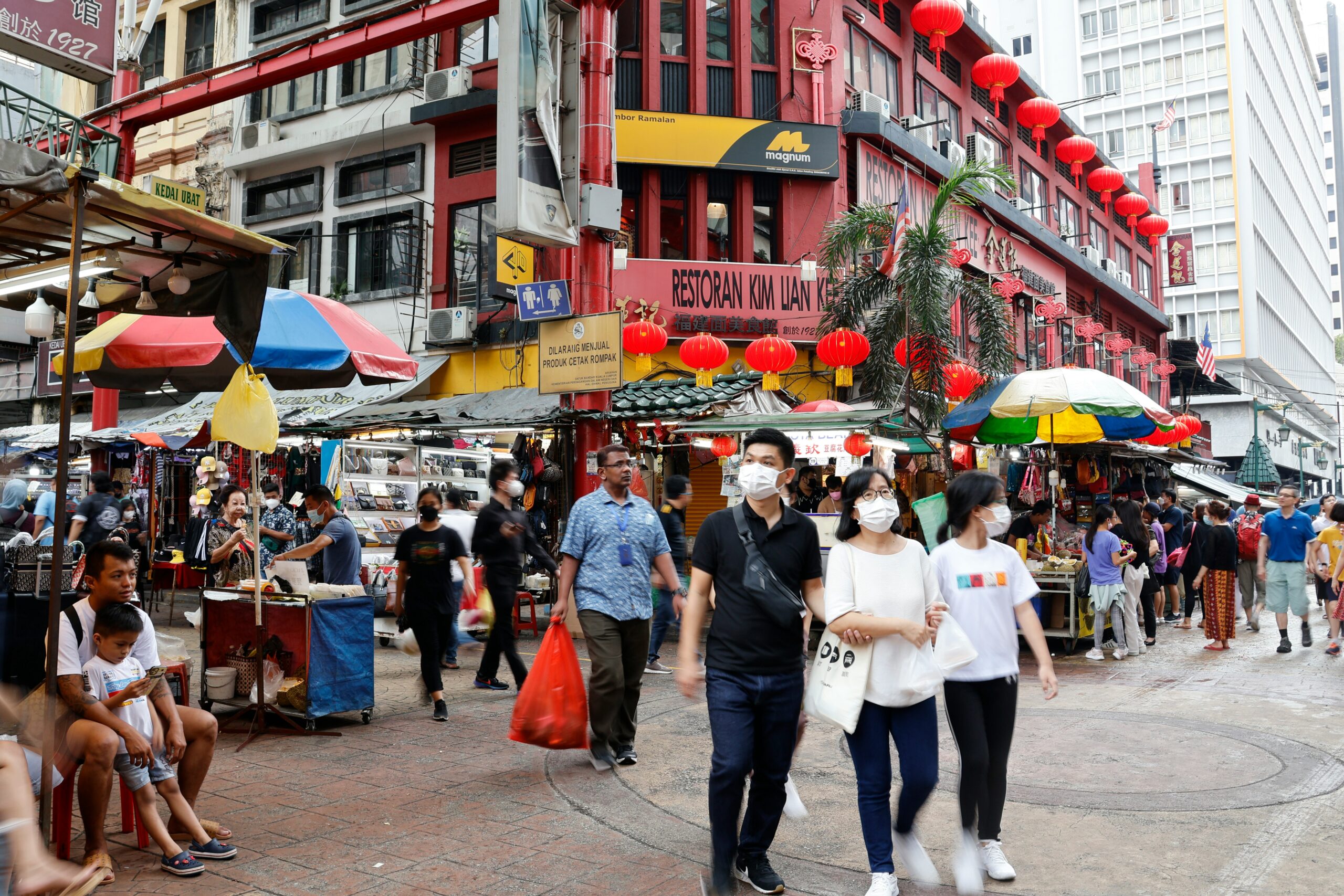
Central Market is a historic covered market in Kuala Lumpur, now mainly dedicated to local handicrafts, souvenirs and traditional Malaysian products. A short walk away is Petaling Street, the best-known street in Chinatown, packed with stalls, shops and places to eat. The area becomes particularly lively in the late afternoon and evening.
Central Market and Petaling Street are easy to reach by LRT or MRT. Get off at Pasar Seni; both are only a few minutes’ walk from Merdeka Square.
Batu Caves
The Batu Caves are a complex of Hindu caves and temples around 13 km from central Kuala Lumpur and one of Malaysia’s most important Hindu places of worship. At the entrance stands the enormous golden statue of the god Murugan, around 42 metres high, next to the famous colourful staircase of 272 steps leading to the main cave. The climb is not especially long, but Kuala Lumpur’s heat and humidity can make it fairly demanding. Entry to the main cave and temple is free. Watch out for the many monkeys in the area and avoid approaching them or showing them food.
The easiest way to reach the Batu Caves is to take the KTM Komuter from KL Sentral and get off at Batu Caves station, just a few minutes’ walk from the entrance. The journey takes around 30 minutes.
Mosques in Kuala Lumpur
Masjid Negara, the National Mosque of Malaysia, is one of the country’s main Islamic places of worship. Built in 1965, it can accommodate up to 15,000 worshippers and has a modern design, including a distinctive star-shaped roof and a 73-metre minaret. Non-Muslim visitors can enter for free outside prayer times. Appropriate clothing is required, and covering garments are provided at the entrance if needed.
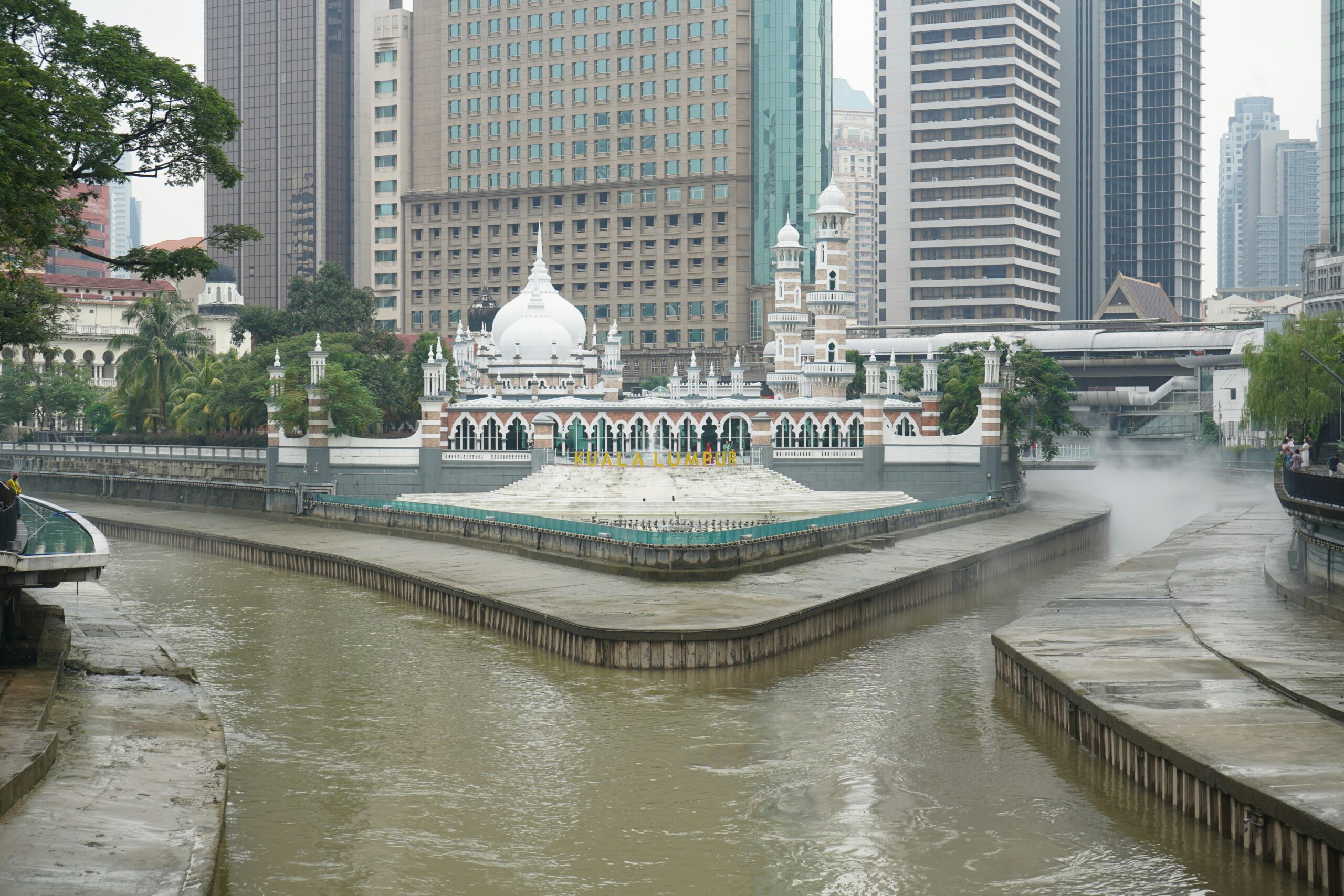
Masjid Jamek is one of Kuala Lumpur’s oldest mosques. Built in the early 20th century, it stands at the confluence of the Klang and Gombak rivers, in the area where the city was founded. It is easy to reach from the Masjid Jamek LRT station.
Finally, Masjid Wilayah Persekutuan, also known as the Federal Territory Mosque, is in the Jalan Duta area and is easy to recognise by its large blue domes. Its architecture combines Ottoman and Malay influences and also draws inspiration from Istanbul’s Blue Mosque. It is farther from the main attractions in the centre and generally sees fewer tourists, but we think it is worth adding to your Kuala Lumpur itinerary.
Temples in Kuala Lumpur
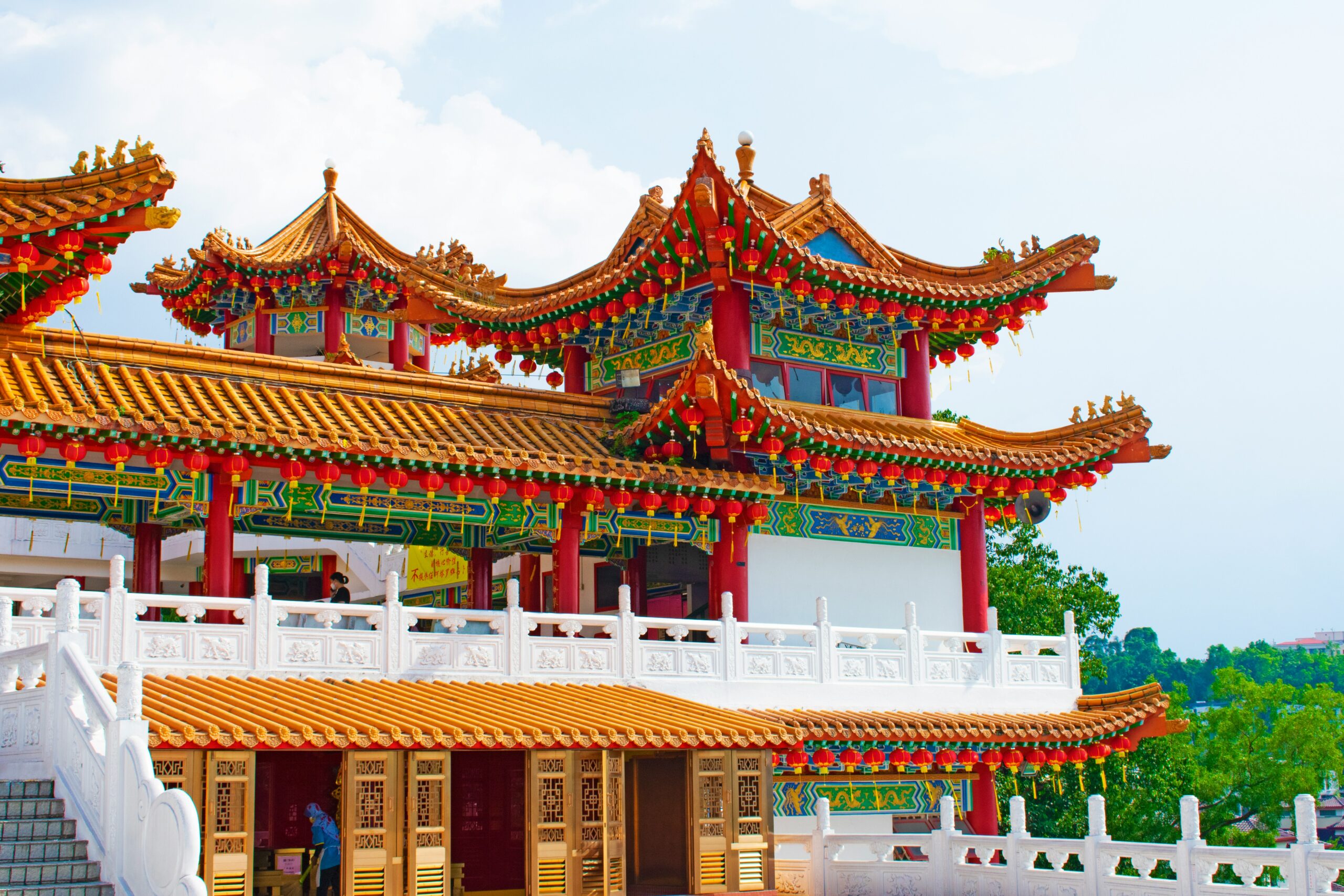
The Thean Hou Temple is one of Kuala Lumpur’s best-known Chinese temples. Built on a hill and dedicated to the sea goddess Mazu, also known as Thean Hou, it is richly decorated with red lanterns and colourful details. The temple remains an important place of worship and is used for traditional ceremonies and festivals. As it is slightly outside the centre, the easiest way to reach it is by Grab.
In our opinion, the most beautiful is the Sri Maha Mariamman Temple, the oldest Hindu temple in Kuala Lumpur. It is in Chinatown, just a short walk from Petaling Street, and is immediately recognisable by the large gopuram at the entrance, covered with colourful statues of Hindu deities.
In Brickfields, also known as Little India, you will find the Buddhist Maha Vihara, one of the city’s main Buddhist temples and an important religious centre for the local Buddhist community.
Finally, near Chinatown is the Sin Sze Si Ya Temple, one of Kuala Lumpur’s oldest Taoist temples, founded in the 19th century. Smaller and less striking than the others, it retains a traditional atmosphere and makes a pleasant stop while exploring the historic centre.
Kuala Selangor and the fireflies
Malaysia is home to one of the world’s largest firefly colonies. The Kampung Kuantan Firefly Park, around 7 km from Kuala Selangor, is one of the most atmospheric places in the country to see these small glowing insects in their natural habitat.
The fireflies gather mainly on berembang trees along the Selangor River. Once darkness falls, they begin to light up, creating a very unusual spectacle.
The park opens at 19:30, and visits take place aboard a small traditional non-motorised boat called a sampan. The river trip lasts around 20 minutes and costs 100 MYR per boat for foreign visitors, with up to four people per boat. During busier periods, it is best to book in advance.
There is not a huge amount to see in Kuala Selangor itself. You can walk through a few streets decorated with murals and visit Bukit Melawati, where you will find the remains of an old fort, a lighthouse and several viewpoints. For us, though, the real reason to come here is still the firefly experience.
How to get to Kuala Selangor
From Kuala Lumpur, you can reach Kuala Selangor on bus 100 from Hab Lebuh Pudu. The journey takes roughly 2.5–3 hours and costs around 9 MYR each way. Because of the journey time and the evening firefly visits, check the available return services carefully before you leave.
Alternatively, you can use Grab or, if you have limited time, join an organised excursion from Kuala Lumpur. You can book a Kuala Selangor excursion through Civitatis.
Where to stay in Kuala Lumpur
Both times we visited Kuala Lumpur, we stayed at the Rain Forest Hotel in Chinatown. It is a simple, inexpensive place to stay, but clean and in an excellent location for exploring the city, just a short walk from Petaling Street and Pasar Seni station.
The Filipino woman at reception was incredibly kind, and the hotel also offers a convenient laundry service. If you are looking for a simple place with good value for money, we think it is a solid choice.