
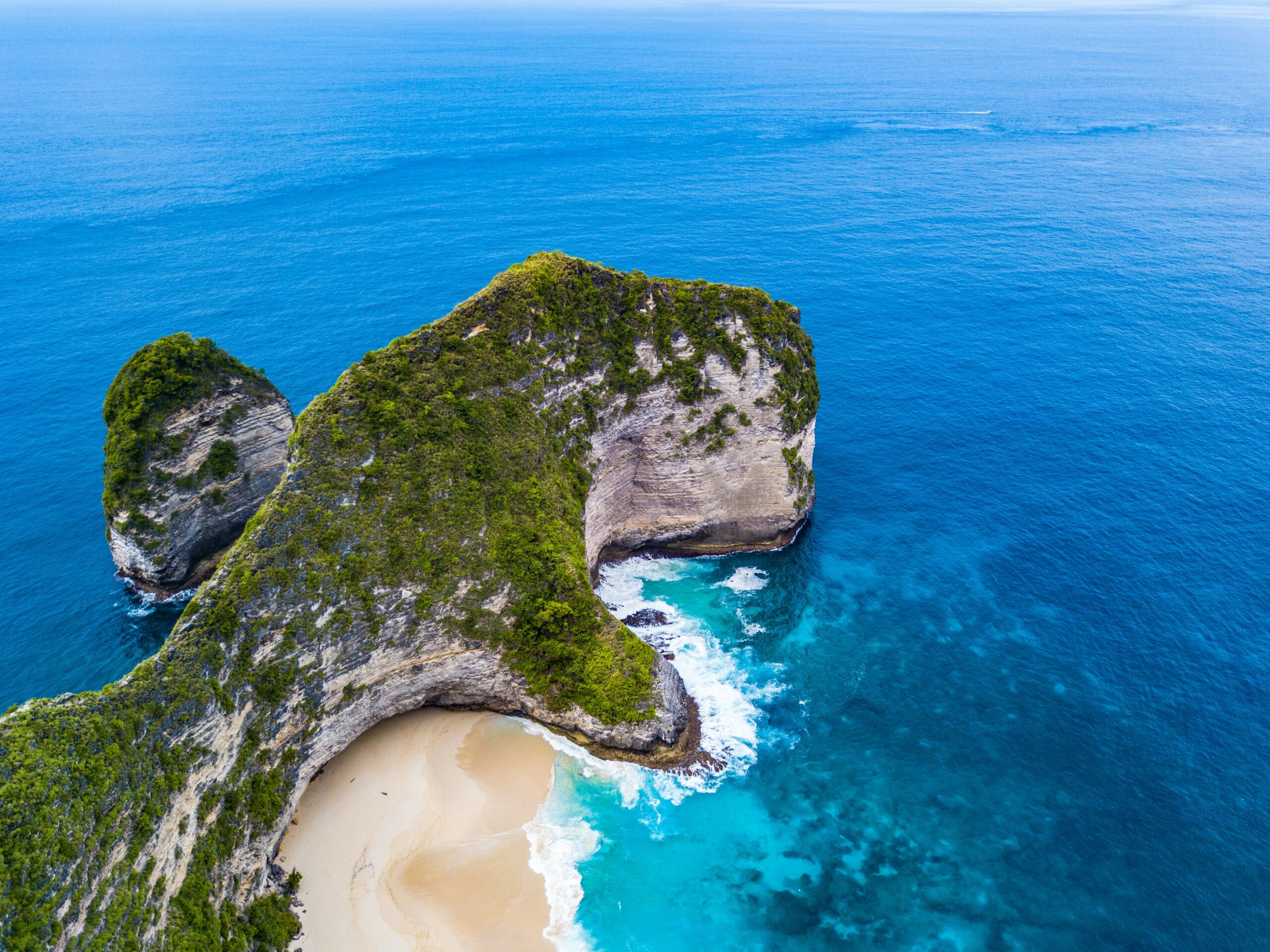
Off Bali’s southeast coast, Nusa Penida is the largest and wildest of the three Nusa Islands, alongside the smaller Nusa Lembongan and Nusa Ceningan. In recent years it has become one of the most visited destinations around Bali, largely thanks to places made famous on social media, such as Kelingking Beach. Tourism has inevitably changed the island, especially its best-known sights, but step away from the usual stops and you can still find very quiet corners.
We really liked it and even found a few places with almost no other visitors. Here are our favourite things to do in Nusa Penida.
How to get to Nusa Penida
The easiest way to reach Nusa Penida is by fast boat from Sanur Harbour. The crossing usually takes around 40–50 minutes, with numerous departures throughout the day. In high season, it is worth booking a few days ahead. There are also boats from Padangbai and connections between Nusa Penida, Nusa Lembongan, the Gili Islands and Lombok. This makes it easy to include the island in a longer trip around Indonesia.
Getting around Nusa Penida
Most people get around Nusa Penida by scooter, which gives you the most freedom to explore independently. We would recommend it only if you are an experienced rider: some roads are narrow, steep or damaged, and traffic can be chaotic. Alternatively, you can hire a car with a driver, a common choice even for people visiting on a day trip from Bali.
Keep in mind that many day tours are on the island between about 10 a.m. and 5 p.m., and roads leading to the main attractions can become very busy. If you ride a scooter, take particular care around cars and minivans on the narrowest roads.
Things to do in Nusa Penida
Nusa Penida is not huge, but the sights are spread out and getting between them takes time. We think it is worth staying at least a couple of days, so you can also visit the famous places outside the busiest hours for day tours from Bali.
Foreign visitors to the Nusa Penida tourism area pay a levy of IDR 25,000 per adult and IDR 15,000 per child. An electronic ticket and payment system was introduced in February 2026; updated rules took effect on 1 September 2026. Individual attractions may charge a separate entrance fee, so check the current payment instructions before travelling.
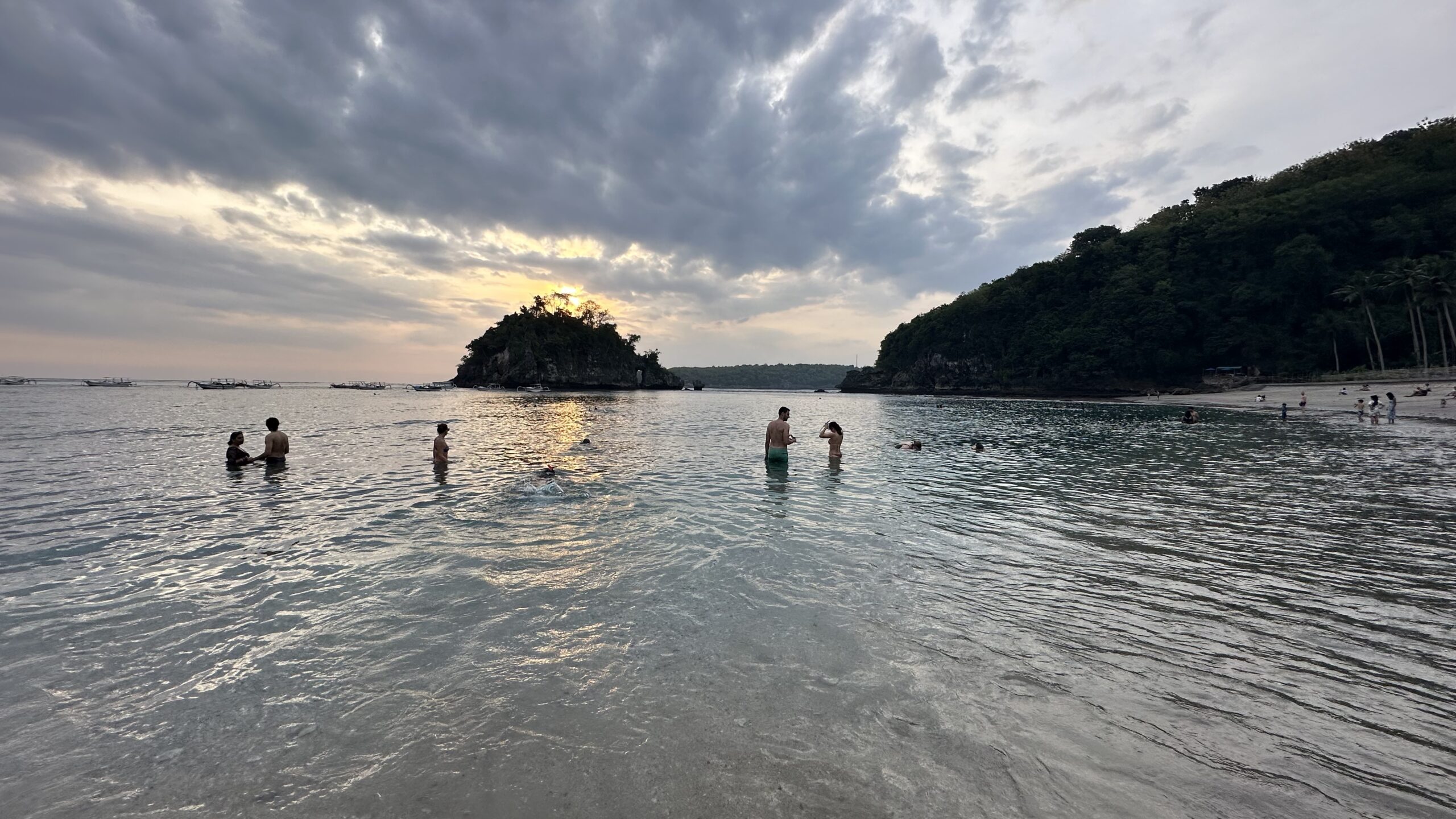
Crystal Bay, Pandan Beach and Puyung Beach
Staying in the north-central part of the island, we began at Crystal Bay, one of Nusa Penida’s best-known beaches. A trail through the greenery starts at the left end of the beach and leads to Pandan Beach, which is much quieter and less visited. From there, you can continue on foot to the even more secluded Puyung Beach.
We think it is worth walking beyond Crystal Bay: a short hike leaves most of the crowds behind.
Broken Beach and Angel's Billabong
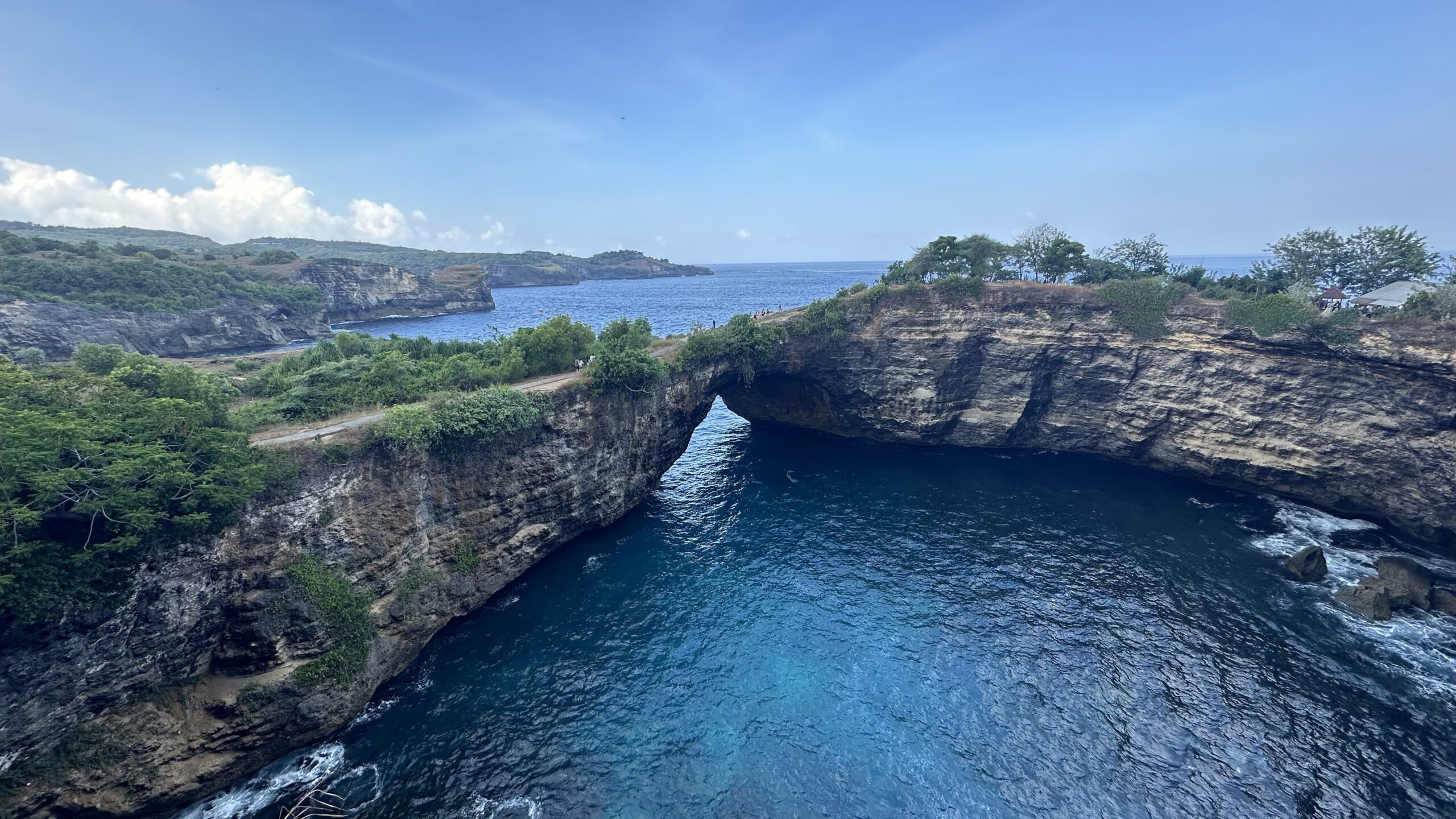
Broken Beach is one of Nusa Penida’s most famous natural sights: a circular cove enclosed by cliffs and connected to the sea through a large natural arch. A short walk away is Angel’s Billabong, a natural pool carved into the rock. The two sights are practically next to each other and easy to visit together.
Both are striking, but they are also among the island’s busiest spots in the middle of the day. Unfortunately, when we visited there was quite a lot of litter, which took away some of the beauty of the place.
Kelingking Beach
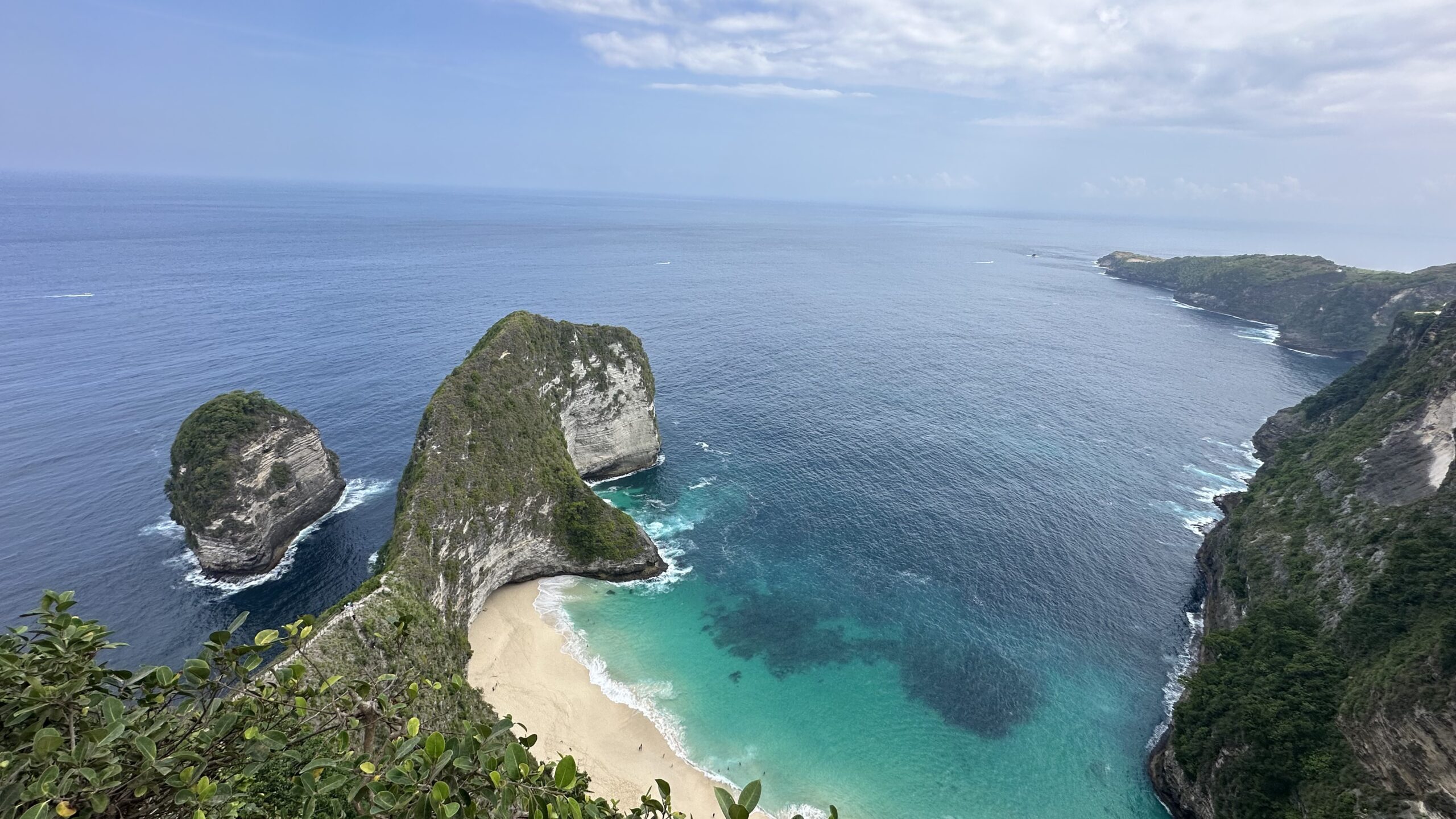
Kelingking Beach, also known as T-Rex Beach because of the shape of its headland, is probably Nusa Penida’s most famous sight.
From the viewpoint, you can descend to the beach along a very steep and demanding trail. The descent requires care, and crowds can make it even more difficult. The sea can be rough too, so be especially cautious if you decide to go all the way down.
If you would rather stay at the top, the view alone is worth the trip. The main viewpoint gets crowded, especially when the day tours arrive. Nearby Paluang Cliff gives you a different angle on Kelingking. There was almost nobody there when we visited, and the view was still spectacular.
Diamond Beach, Atuh Beach and Suwehan Beach
In the southeast of the island, Diamond Beach and Atuh Beach are two of Nusa Penida’s best-known beaches. We chose to skip them and spend our time in less crowded areas instead. We went to Suwehan Beach, which feels much more remote and wild. Reaching it involves a descent of around 150 metres in elevation, but at the bottom the atmosphere is considerably quieter than at the island’s main sights.
Gamat Bay
Our favourite beach on Nusa Penida was Gamat Bay. There were very few people when we visited, and we spent several hours swimming and snorkelling.
The underwater scenery is beautiful, and with a little luck you might see turtles. You can rent snorkelling gear nearby, so you do not need to bring it from Bali.
Nusa Penida is also famous for its manta rays, which you may spot on snorkelling and diving trips. From a few cliff viewpoints, you can also look for them from above. We visited this viewpoint on the island’s south coast. There was nobody else there when we arrived, so it is worth adding if you want a break from the busier places.
In the southeast are the Teletubbies Hills, a series of rounded green hills named for their resemblance to the landscape in the television series.
Their appearance changes throughout the year: they are much greener in the rainy season, while in drier months the landscape turns yellow and brown.
Where to stay in Nusa Penida
We stayed at Wahyu Masari Homestay, easily among the three best places we have ever stayed. The owners are incredibly kind, the rooms are spotless, and breakfast is served on the little terrace outside your room each morning.
The homestay also offers transfers to and from the harbour, scooter rental and laundry service. We highly recommend it.
Where to eat in Nusa Penida
We found some of our favourite small restaurants in Indonesia on this island: Warung DJ, Red Pomelo Bar & Restaurant, Vegan Soul Kitchen (our favourite) and Father Field Bistro.
Return to our complete country guide