
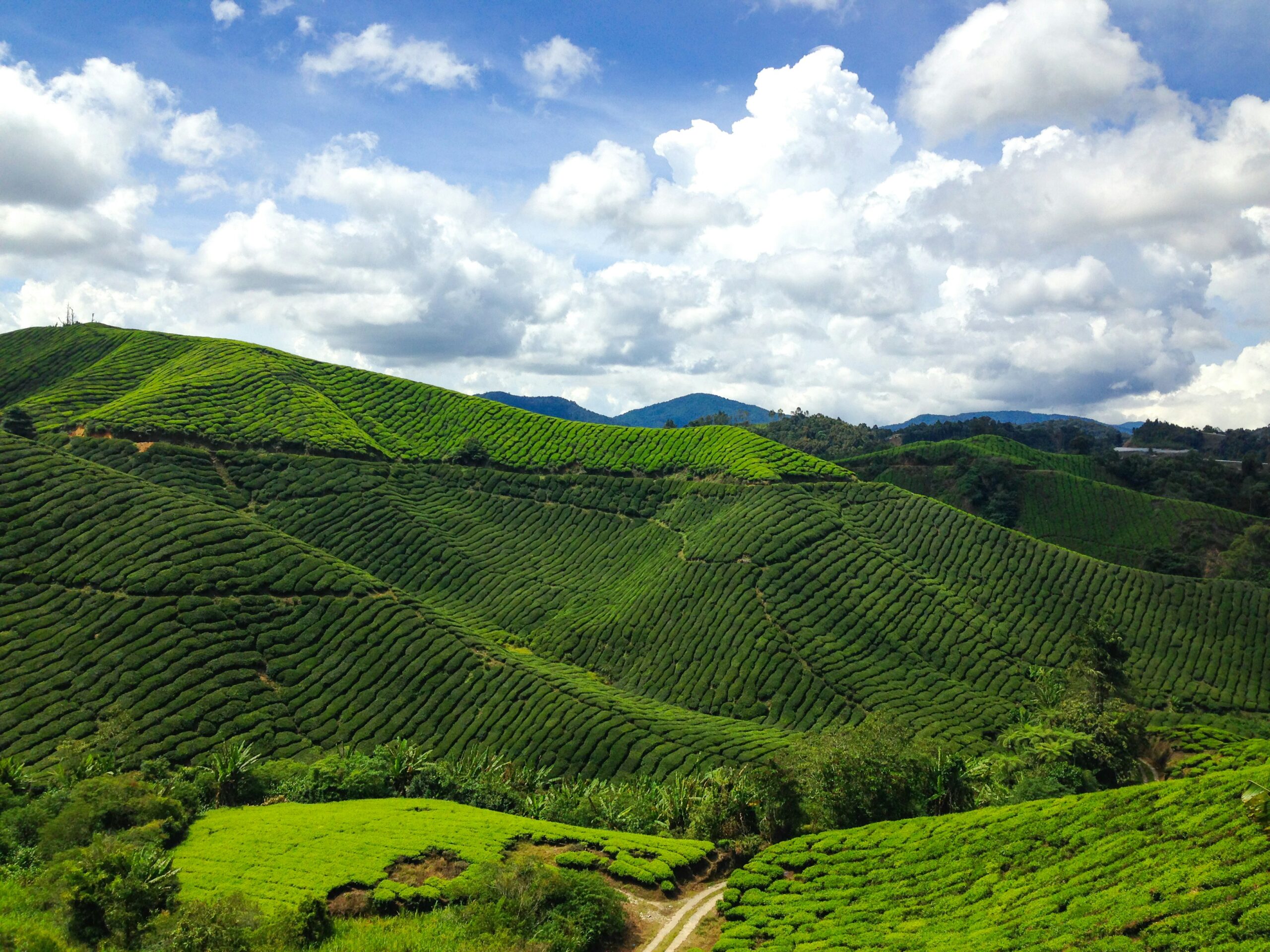
Ipoh and the Cameron Highlands are two of the most interesting destinations in Peninsular Malaysia and, thanks to the connections between them, they can easily be included in the same itinerary. Ipoh is known for its colonial architecture, local food and unusual temples built inside limestone caves. A few hours away, the Cameron Highlands offer a completely different landscape of mountains, cooler temperatures and vast tea plantations. In this article, we share the best things to do in Ipoh and the Cameron Highlands, two very different stops to include in a trip around Malaysia.
Information and prices can change over time, so always check the linked official websites for the latest details.
Ipoh
Ipoh, the capital of Perak state, is known for its colonial architecture, street art and local food, shaped especially by the Chinese and Malay communities. It is the birthplace of the famous Ipoh white coffee, one of the city’s best-known specialities. Around Ipoh, the limestone hills are home to several unusual temples built inside caves, while the historic centre is easy to explore on foot. Ipoh is also a convenient stop on the way to the Cameron Highlands or George Town.
How to get to and around Ipoh
Whether you are coming from Kuala Lumpur or George Town, the easiest way to reach Ipoh is by train. The trains are modern, comfortable and affordable and, most importantly, they arrive directly at Ipoh railway station, just a short walk from the historic centre. Tickets can be purchased on the official KTMB website.
One tip: the air conditioning on Malaysian trains is often freezing, so keep a sweatshirt or light jacket within easy reach!
The bus station, on the other hand, is outside the centre and requires an additional transfer. You can reach it by Grab or use public buses, checking routes and timetables on Google Maps. Once you arrive, central Ipoh is compact and easy to explore on foot. To reach the temples and other attractions outside the city, we used Grab.
Things to do in Ipoh
Historic centre and street art
Concubine Lane is one of the best-known streets in Ipoh’s historic centre. According to local stories, its name comes from the practice of wealthy Chinese merchants housing their concubines here. Today, the narrow lane looks very different, with souvenir shops, cafés and street-food stalls.
A short walk away are Han Chin Pet Soo, a museum dedicated to Ipoh’s tin-mining history, and the Birch Memorial Clock Tower, built in 1909 in memory of James W. W. Birch, the first British Resident of Perak.
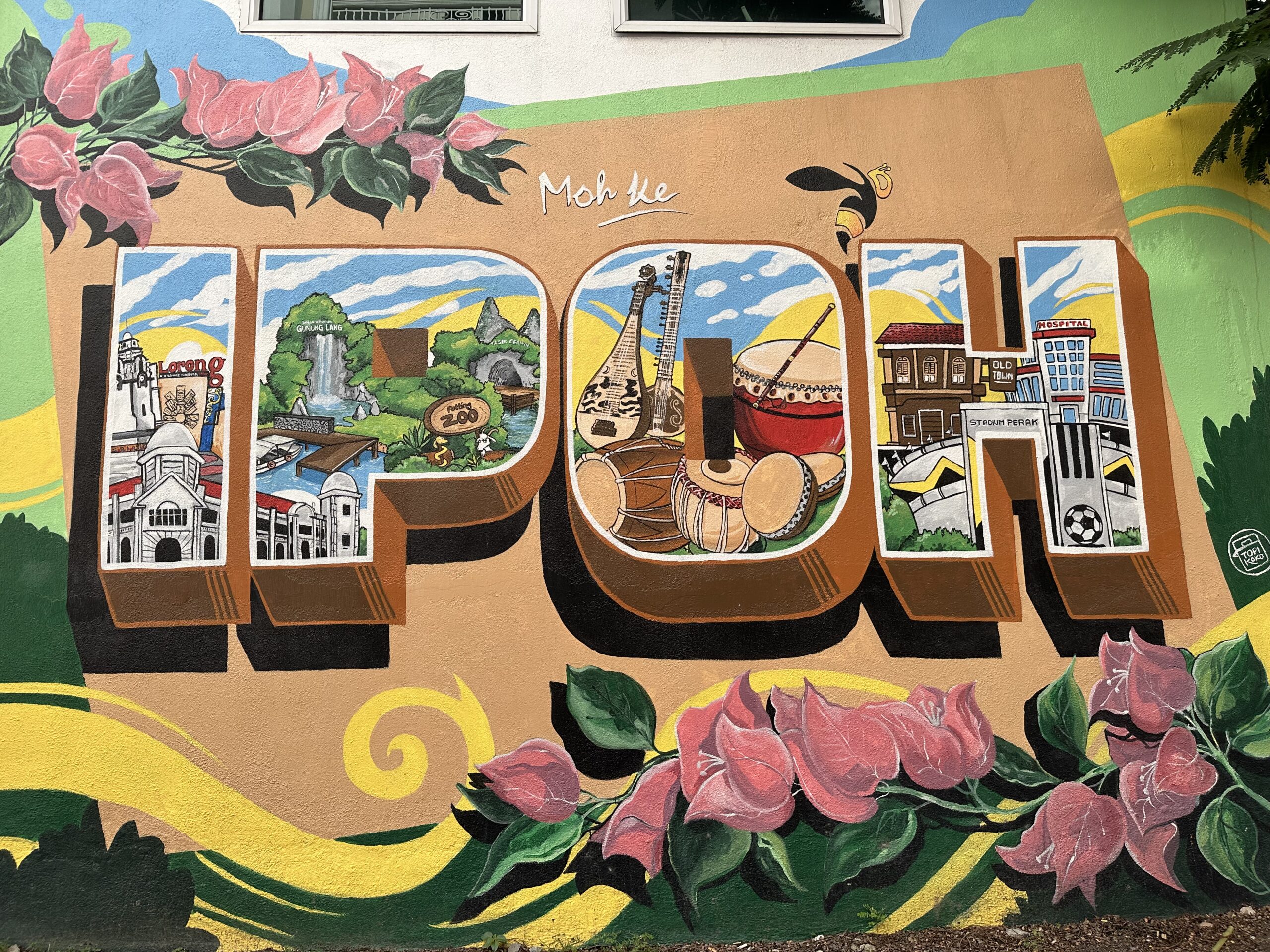
Ipoh is also known for its street art. In the historic centre, you can find several murals by Ernest Zacharevic, the Lithuanian artist who became famous especially for his work in George Town. Some of the best known are Old Uncle Drinking Coffee, Paper Plane, Hummingbird and Evolution. The artworks are scattered around the Old Town, and the best way to discover them is simply to wander through the centre.
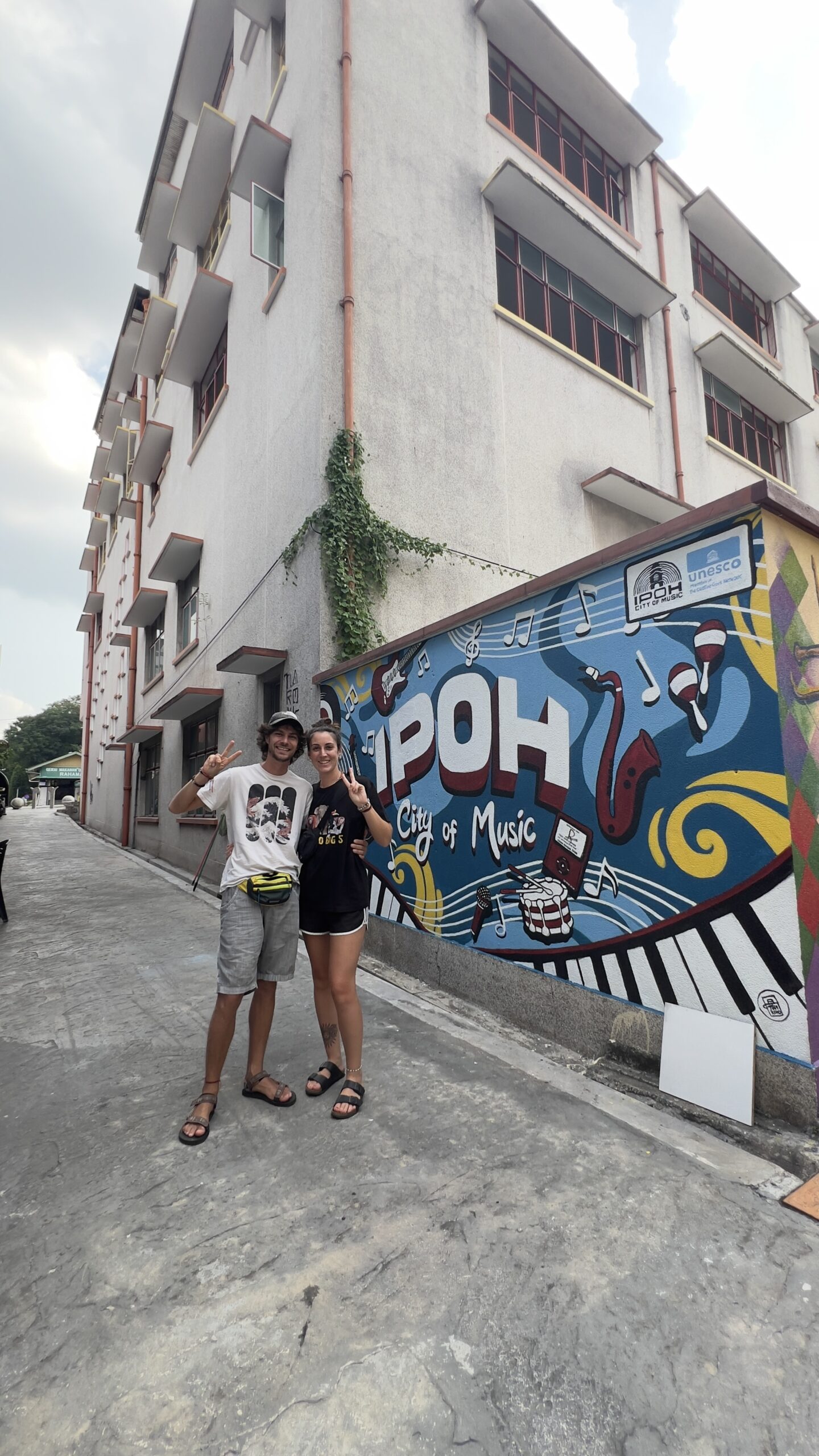
Also worth visiting is Mural Art’s Lane, a small street covered in murals created mainly by local artists. The works depict scenes of everyday life, traditions and Malaysian culture, making this one of the most distinctive corners of Ipoh.
Cave temples
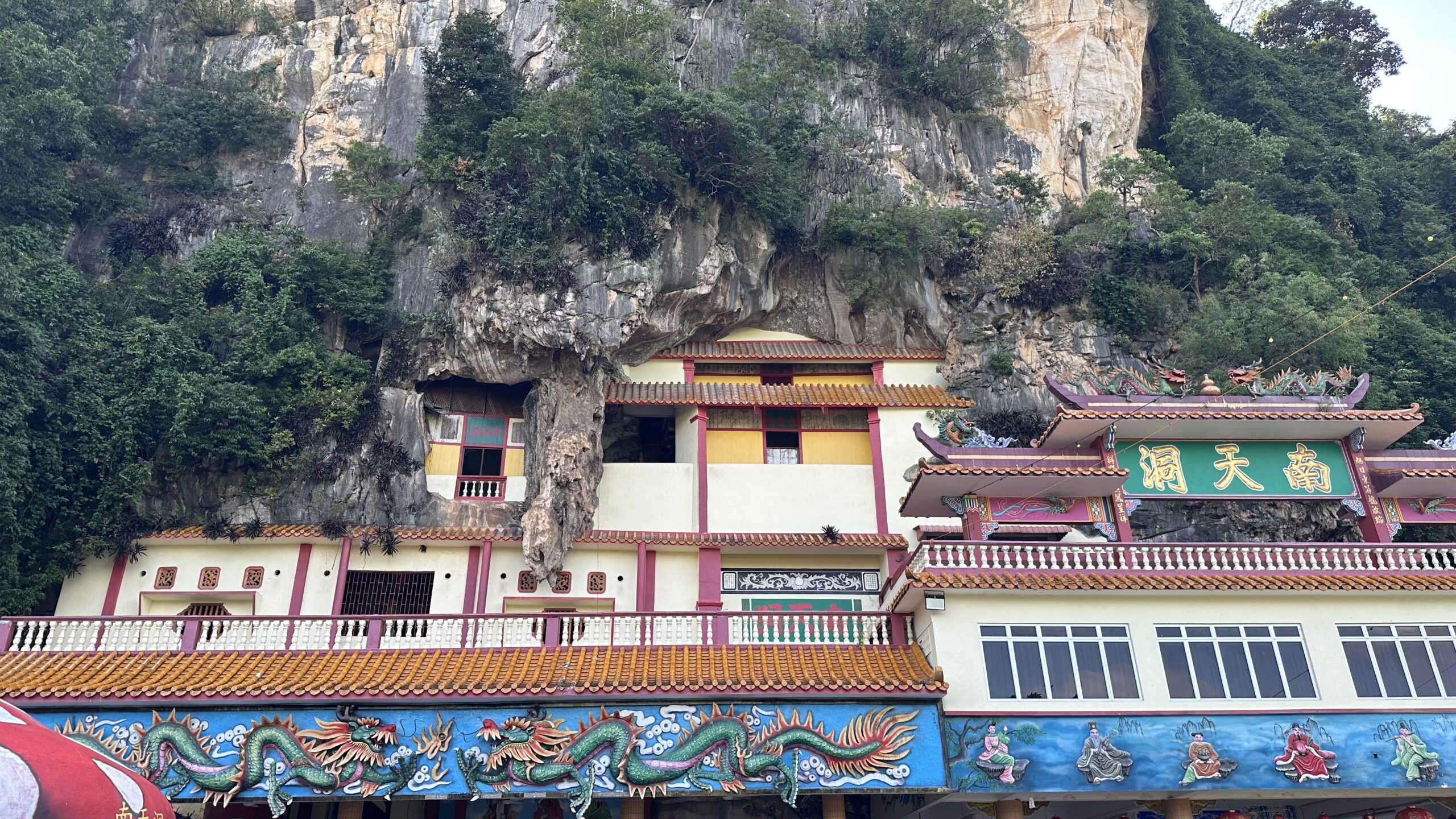
Around Ipoh, the limestone hills are home to numerous temples built inside natural caves, one of the city’s most distinctive features.
Perak Tong is one of the best known. Inside the main cave is a large golden Buddha statue surrounded by other sacred figures and murals painted directly onto the rock walls. A steep staircase leads to the top of the hill, where you get panoramic views over Ipoh.
Another famous cave temple is Kek Lok Tong, built inside a huge limestone cavern that opens onto a large garden. At the time of writing, the temple is temporarily closed, so check whether it has reopened before visiting.
In the Gunung Rapat area, several temples are located close together. Sam Poh Tong is one of Ipoh’s oldest and best-known cave temples, with Buddhist statues, a pagoda and an outdoor garden. Nearby are Perak Guanyin Cave, dedicated to Guanyin, Nam Thean Tong and Ling Sen Tong, the latter easy to recognise thanks to the many colourful statues surrounding the temple.
How to reach the cave temples
From central Ipoh, the easiest way to reach the cave temples is by Grab. Once you reach the Gunung Rapat area, several temples are close enough to visit on foot. For Perak Tong and the more distant temples, Grab remains the most convenient option, especially if you want to visit several in the same day without too much hassle. Alternatively, you can rent a scooter and travel independently.
Where to stay in Ipoh
We spent a couple of nights at GRAYHAUS SOHO Ipoh, a simple place to stay that was clean and in an excellent location for exploring the centre on foot. The rooms have a shower, while the private bathroom is located at the end of the corridor. There are several restaurants, shops and a 7-Eleven nearby, so the location is also convenient for food and everyday essentials.
Cameron Highlands
The Cameron Highlands are in the interior of Peninsular Malaysia, around 200 km from Kuala Lumpur. This mountain region, more than 1,000 metres above sea level, is best known for its vast tea plantations, strawberry farms, gardens and many nature trails. Thanks to the altitude, the climate is much cooler than in the rest of Malaysia, and evening temperatures can drop noticeably. After the heat and humidity of Malaysia’s cities, the Cameron Highlands are a welcome chance to enjoy some fresh air.
How to get to and around the Cameron Highlands
The easiest way to reach the Cameron Highlands is by bus, with connections from the main cities in Peninsular Malaysia. The main terminal is in Tanah Rata, the region’s main tourist town. From Kuala Lumpur, the journey takes around 4–5 hours, while from Ipoh it takes roughly 2–3 hours. You can also travel from Penang/George Town, usually in around 4–5 hours. There is no railway service to the Cameron Highlands.
We recommend using Tanah Rata as your base, as this is where you will find most accommodation, restaurants and services, as well as the starting points for several trails and tours.
Getting between the different attractions is a little less straightforward. You can use taxis, join organised tours or rent a scooter, which is convenient if you want to travel independently. Grab may be available, but it is not as widespread or reliable as in Malaysia’s larger cities.
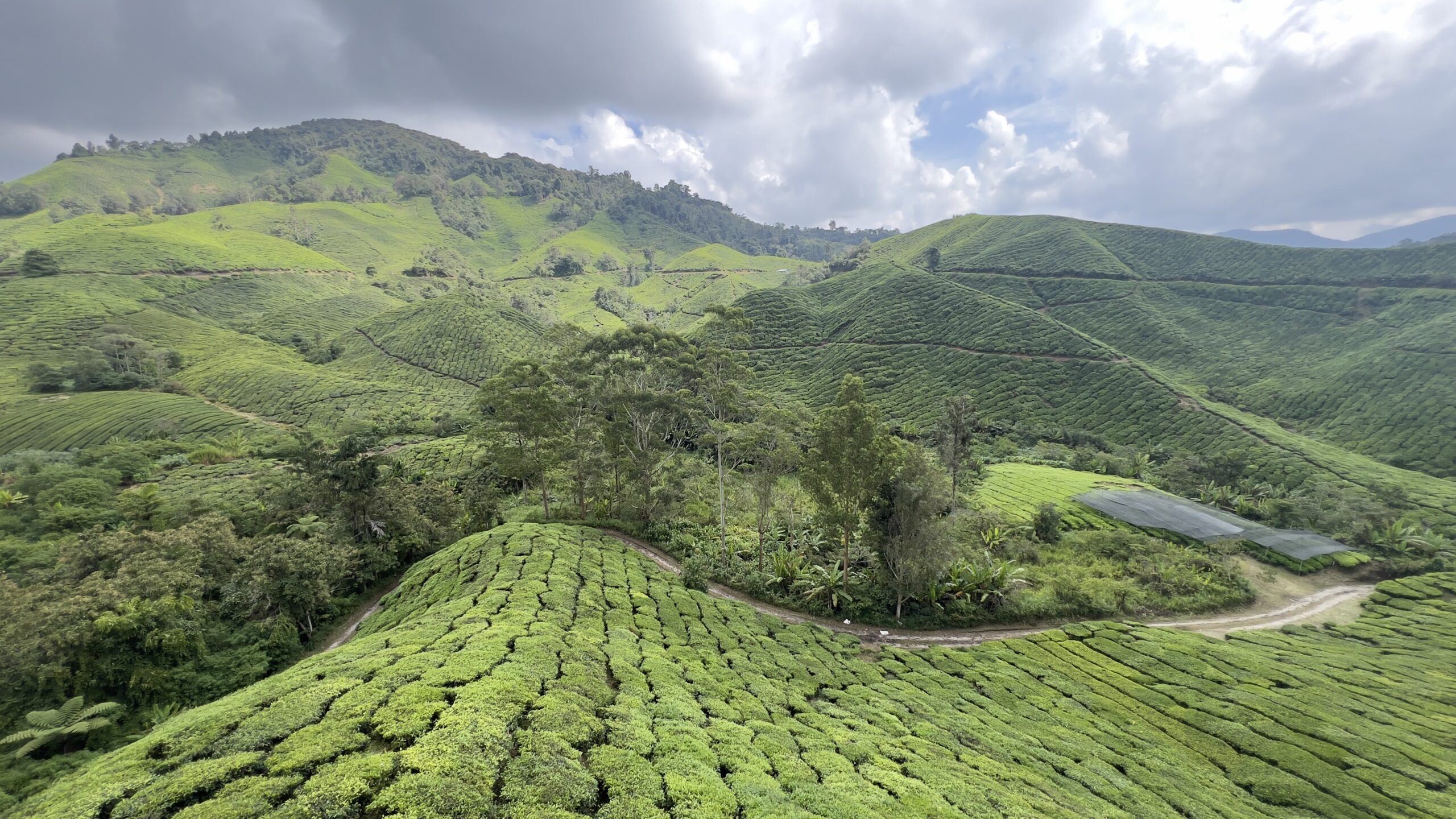
Things to do in the Cameron Highlands
Trekking
The Cameron Highlands have a historic network of 14 numbered trails, mainly around Tanah Rata and Brinchang. The routes vary greatly in length and difficulty. Some are easy walks, while others pass through jungle and climb mountains such as Gunung Jasar, Gunung Berembun and Gunung Brinchang. One of the best known is Trail 10, which starts near Tanah Rata and climbs towards Gunung Jasar. Trails 3, 5 and 6 are also popular and are often combined to create longer routes. Not every trail is always open or maintained to the same standard. Vegetation grows quickly, and after heavy rain some sections can become very muddy and difficult to follow. Download an offline map, such as Maps.me, before setting off.
For routes that enter protected forest reserves (HSK), you need to obtain a permit from the Cameron Highlands District Forest Office in Tanah Rata. Rules can vary by trail, so always check access conditions and permit requirements before setting out on the official Pahang Forestry Department website.
Mount Irau, reached through the Mossy Forest area, deserves a separate mention. Access and hiking here are more strictly regulated. The Mossy Forest also has a raised boardwalk that can be visited without doing the full trek.
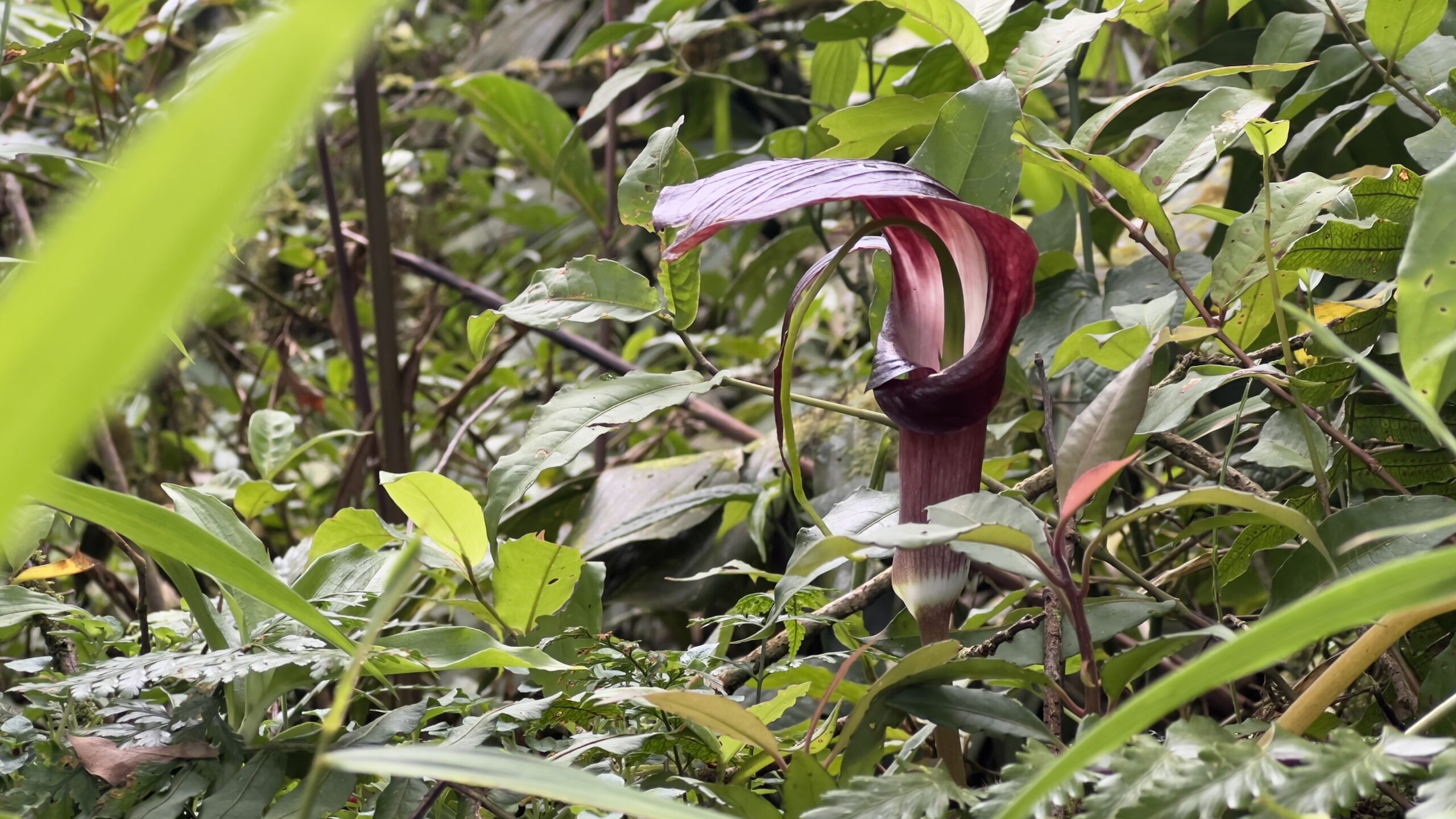
If you have limited time, one of the best-known routes is Trail 10, which starts near Tanah Rata and climbs towards Gunung Jasar. From there, you can continue onto other trails and create a longer route descending towards the tea plantations. It is a good choice if you want to spend a few hours hiking without going too far from Tanah Rata.
Another well-known route is Trail 9, which passes near Robinson Falls. For something shorter, consider Trail 5 near MARDI, which can easily be combined with other trails in the area.
If you are looking for a more demanding hike, you can climb Mount Irau, at 2,110 metres, the highest point in the Cameron Highlands. The route passes through the Mossy Forest, a distinctive mountain forest covered in moss, ferns and dense vegetation. For this hike, check permit requirements, access rules and any guide requirements in advance.
Before choosing a hike, always check whether the trail is open and what condition it is in, as access and regulations can change, especially after heavy rain or maintenance work.
Mossy Forest
The Mossy Forest is one of the Cameron Highlands’ best-known natural attractions, located in the highlands around Gunung Brinchang at roughly 2,000 metres. What makes this forest special is its dense vegetation covered in moss, ferns and lichens, along with the mist that often surrounds the trees. The result is a landscape very different from the tropical forests at lower elevations.
The easiest part to access can be visited along a raised boardwalk of around 600 metres, with several viewpoints along the way. This means you do not need to do a proper hike to experience the Mossy Forest. The more demanding route to Gunung Irau also starts from this area, but separate rules and permits apply.
You can visit the Mossy Forest independently, but we recommend joining an organised tour. It saves time on transport, and having a local guide adds useful context about the nature and features of the area. Tours usually combine the visit with the nearby BOH Tea Plantation and, in some cases, strawberry farms or other attractions in the region.
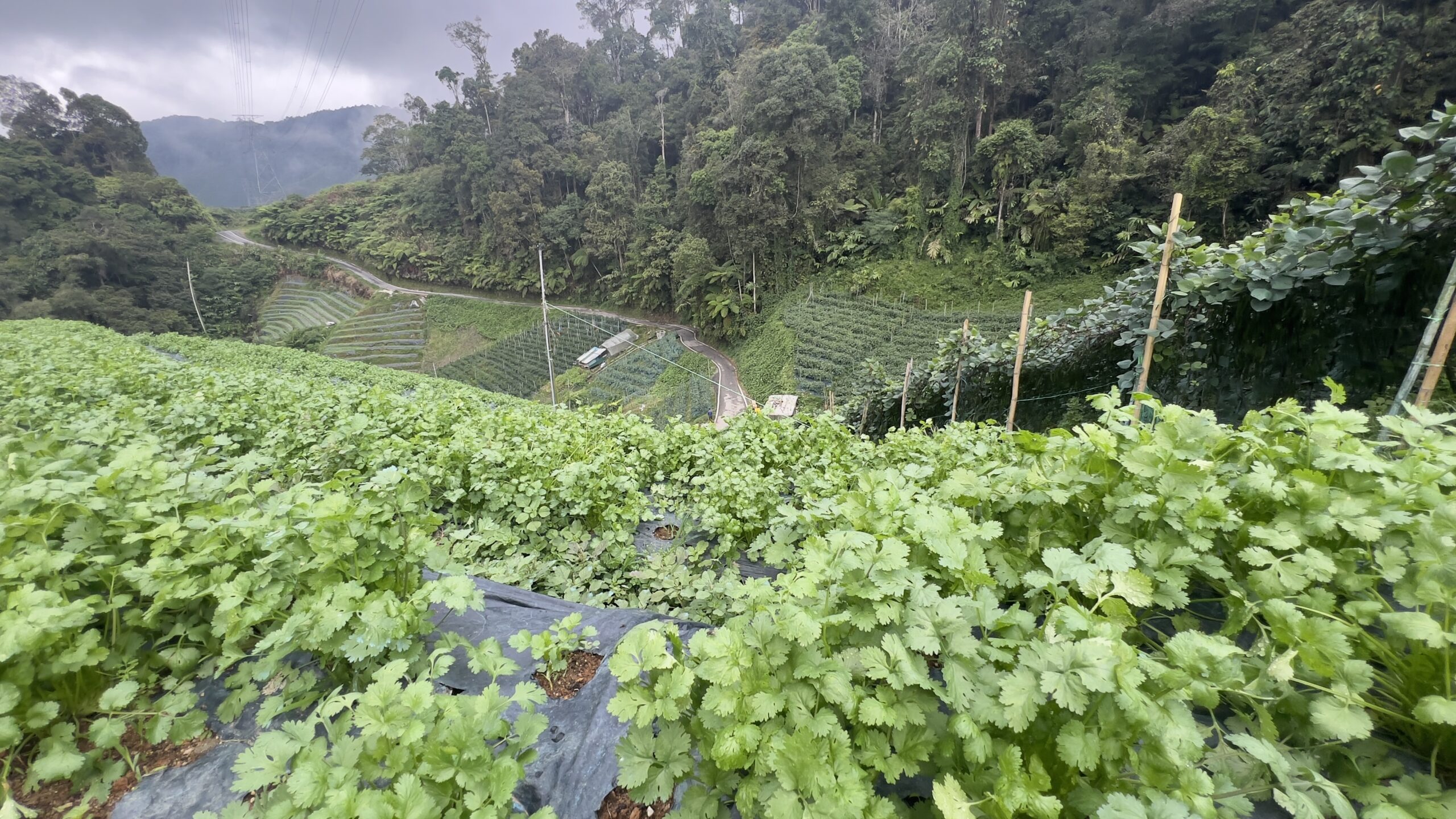
Most agencies offer very similar itineraries, so compare the options and choose the one with the best price. We booked directly through our hostel. Alternatively, you will find plenty of local agencies in Tanah Rata and Brinchang where you can compare prices and itineraries.
We recommend starting early in the morning, especially to avoid the busiest hours. Bring shoes with good grip and something waterproof: it rains frequently in the Cameron Highlands and the weather can change quickly.
Other things to do in the Cameron Highlands
Besides tea plantations and hiking, the Cameron Highlands are home to many strawberry farms, where you can pick the fruit yourself or try local strawberry products.
Tanah Rata and Brinchang also have markets where you can buy locally grown fruit and vegetables, tea, local products and souvenirs. Other attractions include the Cameron Highland Butterfly Farm and Cactus Valley, a large garden with many varieties of cacti, plants and flowers.
Where to stay in the Cameron Highlands
We stayed at Bricks Backpackers Hostel, right in the centre of Tanah Rata. It is a simple, clean hostel with private rooms, dormitories and shared bathrooms. The location is very convenient for restaurants, shops and the bus station. The hostel also organises Cameron Highlands tours and transfers to other destinations in Malaysia, including the Perhentian Islands. We also booked our Mossy Forest tour directly through the hostel.