
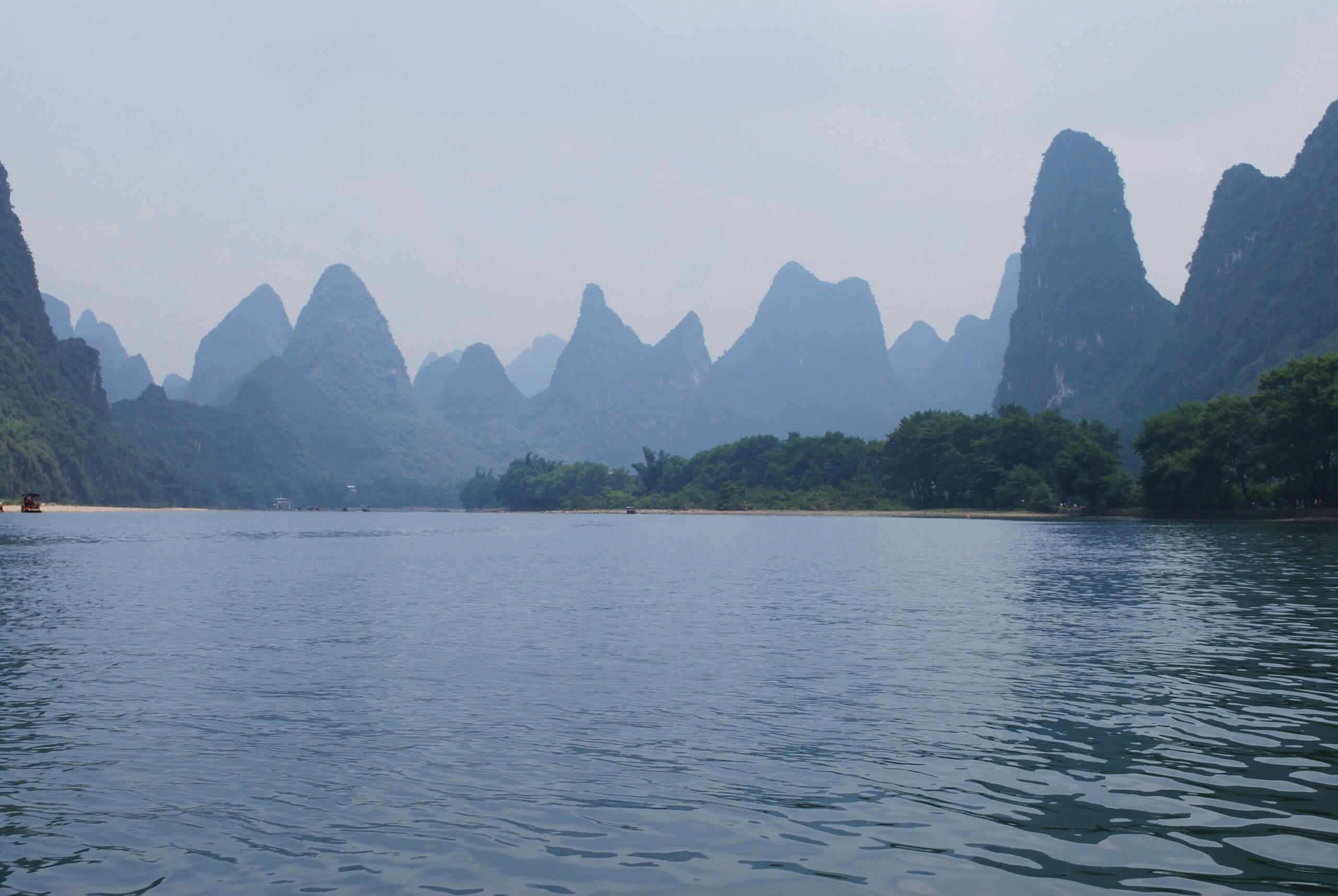
Guilin is a city in southern China, in the Guangxi region, famous for the distinctive karst hills rising along the Li River. This landscape, so different from the rest of our itinerary, was exactly why we wanted to include Guilin in our trip. We had very high expectations for this area, but of course you cannot control the weather. Unfortunately, we spent a good part of our stay in the hotel waiting for the storms to pass. We still managed to see a few things, though.
In this guide, we share our experience and practical tips on the best things to do in Guilin and the surrounding area.
How to get to and around Guilin
We travelled from Leshan to Guilin by high-speed train, which took a little over five hours. We arrived at Guilin West station, which is connected to the city centre by bus.
Once in Guilin, we got around almost entirely on foot. The main sights in the centre are fairly close to one another and, for what we visited, we did not need any other transport. To travel between the railway station and our accommodation, we used public buses. The fare was 4 yuan per person, but because we could not work out how to pay, the drivers simply let us ride for free. It was a very kind gesture and we really appreciated it.
For our final transfer, from our accommodation to Guilin Liangjiang International Airport (KWL), we asked the hotel to call a taxi for us.
Things to do in Guilin
There are not many major sights in central Guilin and, in our opinion, the real beauty of this area lies mainly in the landscapes surrounding the city. It is still worth spending a few hours in the centre, especially in the evening, and then using Guilin as a base for exploring the region. If you have a few extra days, you can also visit the famous Longji Rice Terraces in Longsheng County. We were unable to see them because of the bad weather, but they can be another worthwhile addition to your itinerary.
Things to see in central Guilin
In the city centre you will find two lakes, Shanhu (Cedar Lake) and Ronghu (Banyan Lake), surrounded by bridges, small islands and pleasant walking paths.
The symbol of this area is the Sun and Moon Pagodas, two twin pagodas overlooking Cedar Lake. We especially recommend visiting in the evening, when they are illuminated and reflected in the water.
Guilin is relatively compact, and the centre is easy to explore on foot. One of the main shopping streets is Zhongshan Road, lined with shops, restaurants and small businesses selling local products and handicrafts.
Another symbol of the city is Elephant Trunk Hill, a distinctive karst formation at the confluence of the Li and Taohua rivers. Its name comes from the shape of the hill, which from the water resembles an elephant drinking from the river with its trunk.
Li River cruise and Yangshuo
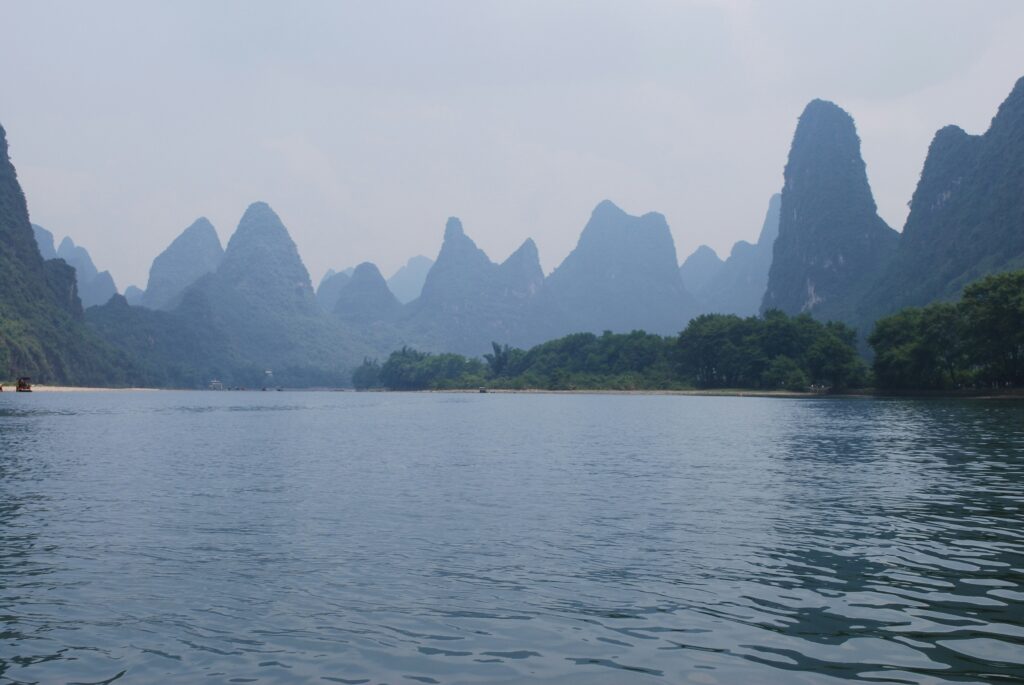
Guilin’s most famous attraction and, in our opinion, the main reason to come here is the Li River cruise to Yangshuo.
There are several types of cruise, mainly differing in the level of comfort offered on board. We chose a 3-star cruise and bought the package directly through our hotel. During our trip, we paid around €35 per person. This included the transfer from our hotel to the departure point, tea on board and around four hours of cruising along the Li River.
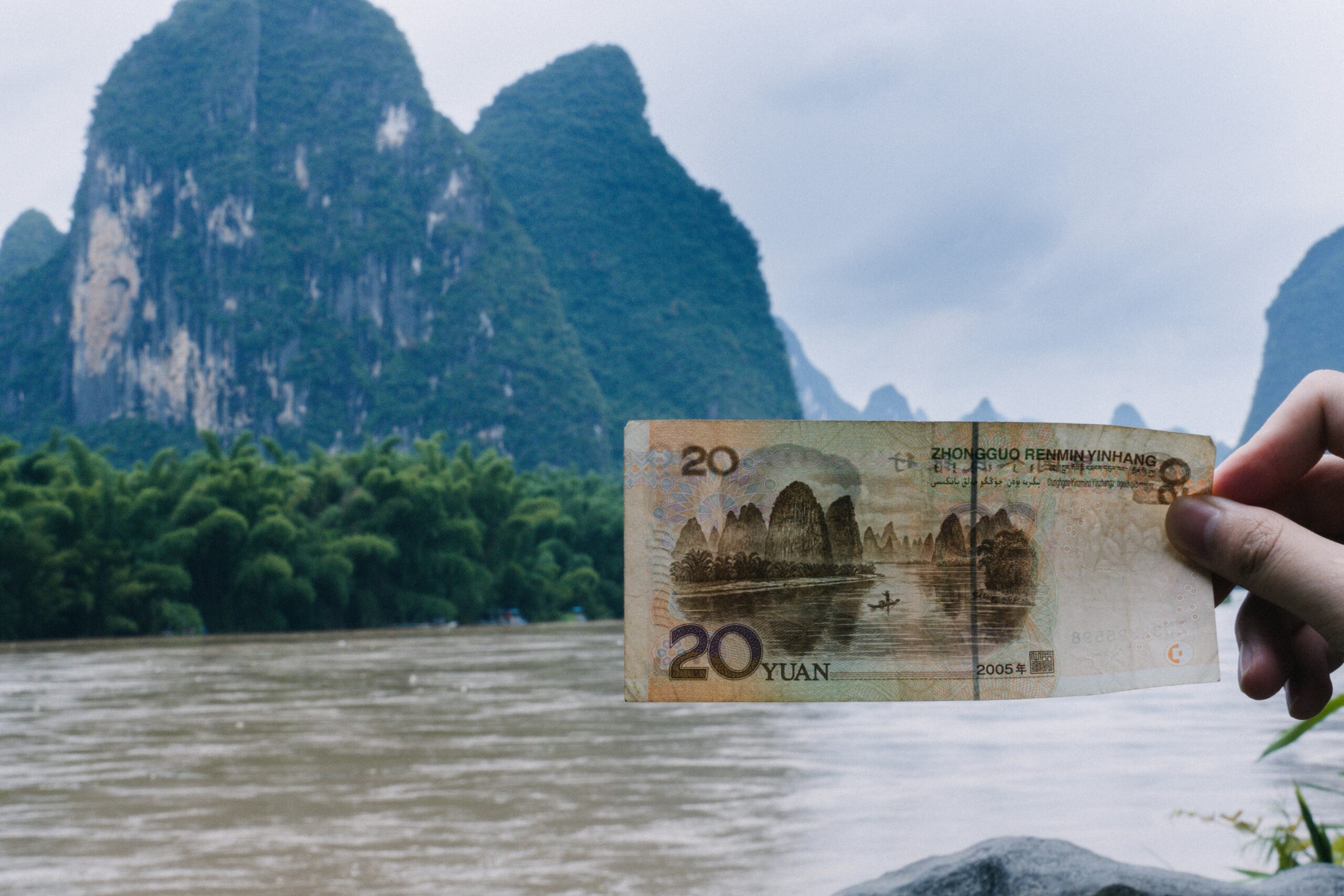
The cruise is slow, giving you plenty of time to admire the distinctive karst mountains surrounding the river. Towards the end of the journey, keep a 20-yuan banknote ready. The landscape shown on the back is inspired by one of the views along this stretch of the river. You will know when you reach it because suddenly almost everyone on board will have a banknote in their hand.
The cruise ends in Yangshuo, a small town surrounded by karst mountains and countryside. We stayed for only a few hours, but it was one of the areas we liked most during our trip to China. The heart of town is West Street (Xi Jie), one of Yangshuo’s oldest and best-known streets, now filled with restaurants, shops and bars. The centre is worth exploring, but the best of Yangshuo is really found in the surrounding countryside.
With more time, you can explore the countryside along the Yulong River on foot or by bicycle, visit Moon Hill, a distinctive karst formation with a large natural arch, or join one of the bamboo-raft trips on the river. Another well-known area is Xingping, an old village on the Li River surrounded by karst mountains.
We did not manage to see all of this and returned to Guilin the same day. With hindsight, we would have happily spent at least one night in Yangshuo so that we had more time to explore the surrounding area. We returned by bus. The station was around a 30-minute walk from central Yangshuo, and services to Guilin were frequent. Alternatively, once you get off the boat you will also find plenty of taxis heading back to Guilin.
Where to stay in Guilin
For our stay, we chose the Travel Light Inn Guilin, now called Guilin Travel Light Hostel. It is a great place to stay slightly outside the most touristy part of the city. We had a very good experience there: the staff spoke excellent English and knew the local attractions very well. They even helped us organise our Li River cruise and recommended an excellent vegetarian buffet in the city. The location is also convenient for transport, just a few minutes’ walk from Guilin railway station.
Back to our complete China travel guide